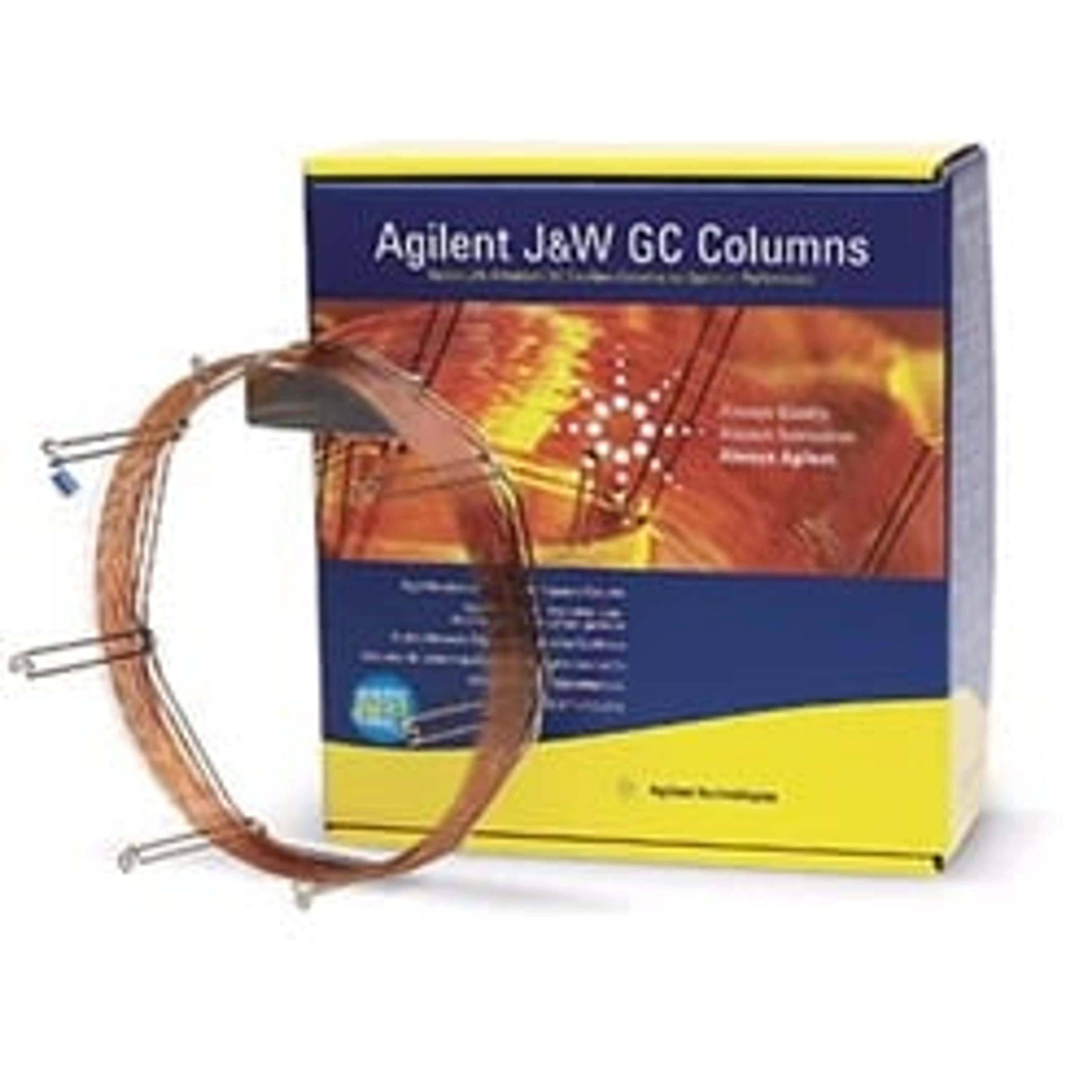
J&W DB-FastFAME Columns
Agilent J&W DB-FastFAME is a cyanopropyl phase engineered for the fast and selective separation of polysaturated and unsaturated FAMEs—even challenging cis and trans FAME isomers—without sacrificing the resolution generally achieved with traditional 100 meter long columns.



Receive your quote directly from the manufacturer.
This looks to be a big support to manufacturing
Testing Fatty Acid Methyl Esters in shortening and oil.
I have found this column to provide better separation and a faster analysis. I have had better results using an automated integration profile which makes review and data release faster. The turnaround time is important since we are tracking quality during production.
Review Date: 17 Mar 2023 | Agilent Technologies
Agilent J&W DB-FastFAME is a cyanopropyl phase engineered for the fast and selective separation of polysaturated and unsaturated FAMEs—even challenging cis and trans FAME isomers—without sacrificing the resolution generally achieved with traditional 100 meter long columns.
With DB-FastFAME, it is possible to separate traditional FAMEs in under 8 minutes, including C18:1 and C18:2 cis-trans isomers and FAMEs commonly found in milk fat, vegetable oil, and fish oil, such as DPA and EPA.
Features:
- Cyanopropyl phase (G48) engineered for the fast and selective separation of FAMEs
- Individually tested with a FAME mixture to ensure reproducible FAME equivalent chain length (ECL) values
- Meets the requirements of AOAC, AOCS, and IOC regulatory methods
- Bonded, crosslinked, and solvent rinseable
- Also available in Intuvo configuration