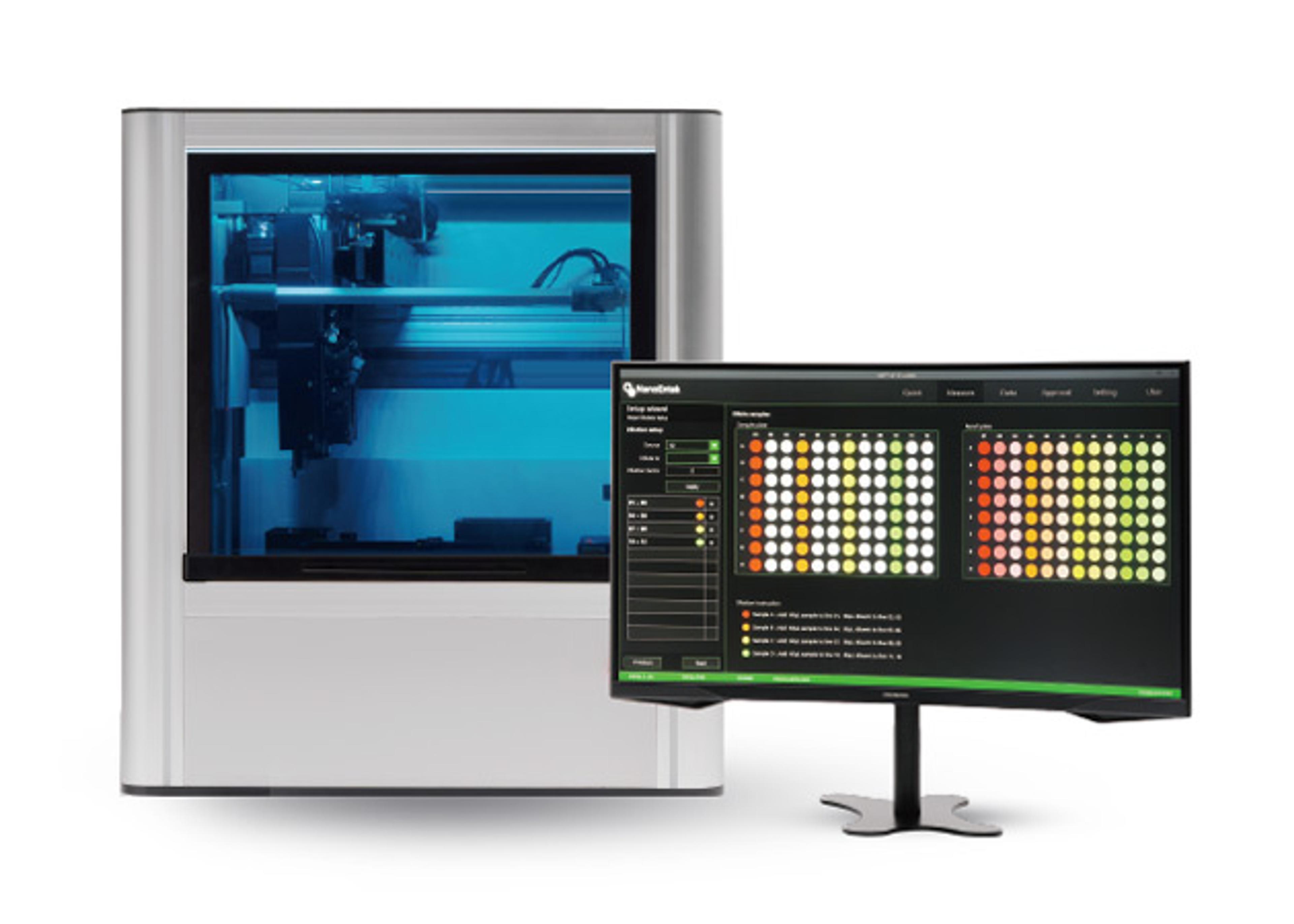
Gyrolab® Bioaffy™ 4000
Gyrolab® Bioaffy™ 4000, the newest member of the Gyrolab Bioaffy family, offers 2-6 fold extended sensitivity for PK and biomarker analysis compared to Gyrolab Bioaffy 1000.


The supplier does not provide quotations for this product through SelectScience. You can search for similar products in our Product Directory.
Gyrolab Bioaffy 4000 CD, the newest member of the Gyrolab Bioaffy CD family, offers 2-6 fold extended sensitivity for PK and biomarker analysis compared to Gyrolab Bioaffy 1000.
Key Features:
- Gyrolab Bioaffy 4000 extends immunoassay sensitivity 2-6 fold over Gyrolab Bioaffy 1000 CD
- The analytical range for biomarker and PK assays is now extended down to low- to sub-pg/mL
- The Gyrolab Bioaffy 4000 CD is based on proven and robust design, allowing seamless assay transfer between CDs

Rapid and sensitive multi-biomarker analysis powered by Gyroplex panels on Gyrolab Bioaffy 4000 CD
Biomarker research has accelerated in recent years, driving the development of novel biomarker candidates and panels for the study of a wide range of diseases. Discover how Gyroplex™ panels from Gyros Protein Technologies enable multiple biomarkers to be analyzed using very low volumes of samples. Explore how combining Gyroplex panels with Gyrolab® Bioaffy™ 4000 CD means that goals for assay sensitivity can be met when running biomarker panels such as cytokines.
Oligonucleotide quantification: Flexibility for microfluidic dual hybridization assays
The development of oligo-based therapeutics is a rapidly growing effort, with a need for improved bioanalysis methods for pharmacokinetic (PK) and pharmacodynamic (PD) analysis. Gyros Protein Technologies presents a feasibility study where a hybridization ligand-binding assay was developed and evaluated for the detection of the anti-sense oligonucleotide (ASO) drug casimersen (Amondys 45™) for the treatment of Duchenne muscular dystrophy (DMD) using two labeled oligonucleotide probes with offline incubation followed by an automated microfluidic method. The investigation shows that offline incubation of the sample and capture probe followed by an automated microfluidic method is effective in generating robust data with minimal labor in a short space of time.

How immunoassay innovation has expanded the biotherapeutic development toolbox
Experts share how commitment to bioanalytical innovation and quality has enabled success in biotherapeutic development