Products & ReviewSeparations
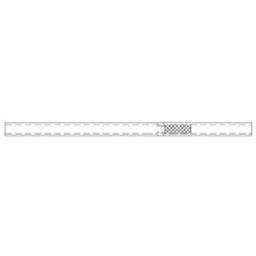
3.5 mm ID Straight Inlet Liner w/ Wool
For Shimadzu 17A, 2010, 2014, and 2030 GCs equipped with split/splitless inlets
Request Pricing
Receive your quote directly from the manufacturer.
Description

For Shimadzu 17A, 2010, 2014, and 2030 GCs equipped with split/splitless inlets

Receive your quote directly from the manufacturer.
General purpose columns for FAMEs, flavor compounds, essential oils, solvents, xylene isomers, and US EPA Method 603 (acrolein/acrylonitrile). Resistant to oxidative damage. Temperature range: 40°C to 260°C. Equivalent to USP G14, G15, G16, G20, and G39 phases. The polar-deactivated surface tightly binds the Carbowax® polymer and increases thermal stability, relative to competitive columns.
Restek's new line of fused silica capillary GC columns - Rxi® columns - is now available!
Rxi® fused silica capillary GC columns were designed specifically to be the best columns available, for exceptional inertness, ultra-low bleed, and reproducible retention and selectivity.
Restek's former Rtx®-17 columns are now manufactured using new Rxi® column technology--for unsurpassed inertness, ultra-low bleed, guaranteed reproducibility, and unmatched performance!
Q-sep™ QuEChERS Tubes for Pesticide Residue Analysis • Fast, simple sample extraction and cleanup using dSPE. • Fourfold increases in sample throughput. • Fourfold decreases in material cost. • Convenient, ready to use centrifuge tubes with ultra pure, preweighed adsorbent mixes. Quick, Easy, Cheap, Effective, Rugged, and Safe, the QuEChERS ("catchers") method, developed by the USDA Eastern Regional Research Center, has become very popular for extraction and clean-up of pesticide residue samples. Our products are available in three centrifuge tube sizes to meet the needs of both extraction and cleanup of a wide variety of sample matrices following various methods. The researchers developed a simple two-step procedure. First, the homogenized samples are extracted and partitioned, using an organic solvent and salt solution. Then, the supernatant is further extracted and cleaned, using a dispersive SPE technique. Multiple adsorbents are placed in a centrifuge tube, along with the 1mL of organic solvent and the extracted residues partitioned from step 1. The contents are thoroughly mixed, then centrifuged, producing a clean extract ready for a variety of GC or HPLC analytical techniques. Validation and proficiency data for the QuEChERS method are available for a wide variety of pesticides in several common food matrices on their website.
Rxi® fused silica capillary GC columns were designed specifically to be the best columns available, for exceptional inertness, ultra-low bleed, and reproducible retention and selectivity.
Reversible Flip Seal—Same Cost, Twice the Lifetime New reversible Flip Seal inlet seals from Restek last twice as long as other inlet seals. Simply use—flip—then use again. The reversible design doubles the number of analyses you get per seal. •Same easy sealing as Dual Vespel® Ring Inlet Seals—no extra washer needed. •Lower leak rate than OEM metal seals. •Maximum transfer of analytes to column, due to highly inert gold or Siltek® surface.
Rtx®-1 columns exhibit long lifetime and very low bleed at high operating temperatures. A proprietary synthesis process eliminates residual catalysts that could cause degradation and increase bleed.
• 47 mm glass fiber disks embedded with styrene/DVB resin. • For chlorinated, benzidine-containing, or nitrogen-containing pesticides. • Meet requirements of EPA Methods 515.2 and 553.
• Wide range of stationary phases offers orthogonal separations. • High thermal stability maximizes system ruggedness and sensitivity. • Unrivaled column inertness for accurate analysis of active compounds. • 0.15, 0.18, and 0.25 mm ID formats accommodate varying sample capacities, speeds, and detectors. • Secondary columns come in convenient 2 m lengths for economical method development. GCxGC is a powerful multidimensional GC technique that combines two independent separations to accurately analyze highly complex samples. GCxGC involves two columns with differing (orthogonal) stationary phases that are press-fitted together in series and separated by a modulator. The first (primary) column performs a separation, and its effluent is continually focused and “injected” by the modulator onto the second (secondary) column, where another separation occurs. By choosing a secondary column that is orthogonal to the primary column, it is possible to identify analytes that cannot be separated by the primary column. And by keeping the secondary column short, it is possible to maintain the separation produced by the primary column. Results generated through a series of high-speed chromatograms are plotted as a retention plane, or contour plot (column 1 time x column 2 time). Restek has been performing comprehensive two-dimensional gas chromatography since its commercial inception. Our innovations lab boasts multiple instruments dedicated to GCxGC applications, and we are continually exploring new application areas—including environmental, food safety, petroleum, forensics, fragrance, natural products, and dietary supplements. Restek GCxGC secondary columns can be matched with any Restek Rtx® or Rxi® primary column to create the perfect orthogonal separation for your application.
Optimized column selectivities guarantee resolution of ethanol, internal standards, and frequently encountered interferences. Robust and reproducible column chemistry ensures longer column lifetime and consistent results. 2 minute analysis time increases lab productivity. Stable to 260 °C Don’t forget: Blood alcohol analysis requires dual column confirmation when using GC/FID.
Optimized column selectivities guarantee resolution of ethanol, internal standards, and frequently encountered interferences. Robust and reproducible column chemistry ensures longer column lifetime and consistent results. 2 minute analysis time increases lab productivity. Stable to 260 °C Don’t forget: Blood alcohol analysis requires dual column confirmation when using GC/FID.
•Optimized deactivation produces maximum response when analyzing trace levels of acetylene, methyl acetylene, and propadiene. Stable response factors make this column ideal for process-type applications where recalibration must be minimized. High loadability reduces peak tailing and improves separations.
A revolutionary new version of Restek’s popular EZGC™ application is now live — it’s easier to use and it’s absolutely free. Just enter your compounds, and this cutting-edge system will recommend not only a GC column, but also the conditions to reliably separate your target analytes. It will even show you a modeled chromatogram!