ZEISS Video Interviews: Hear from the Material Science Experts

Watch these exclusive video interviews regarding the use of state-of-the-art microscopy for materials analysis

4 Nov 2016
Sonia Nicholas
Managing Editor and Clinical Lead

Editorial article

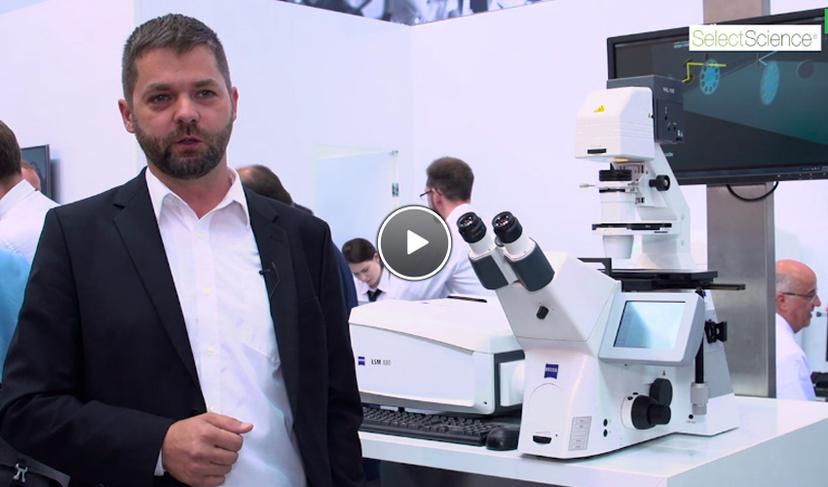
Dr Uros Krzic, application consultant at Carl ZEISS Microscopy discusses high resolution confocal microscopy 

In these video interviews, learn about the use of confocal microscopy in material sciences, discover more about how ZEISS microscopy is being used in nanomaterial research, and find out about the development of complex 3D nano-structures.

1. Optimizing Energy Conversion and Storage Materials Using Correlative Microscopy at HZB
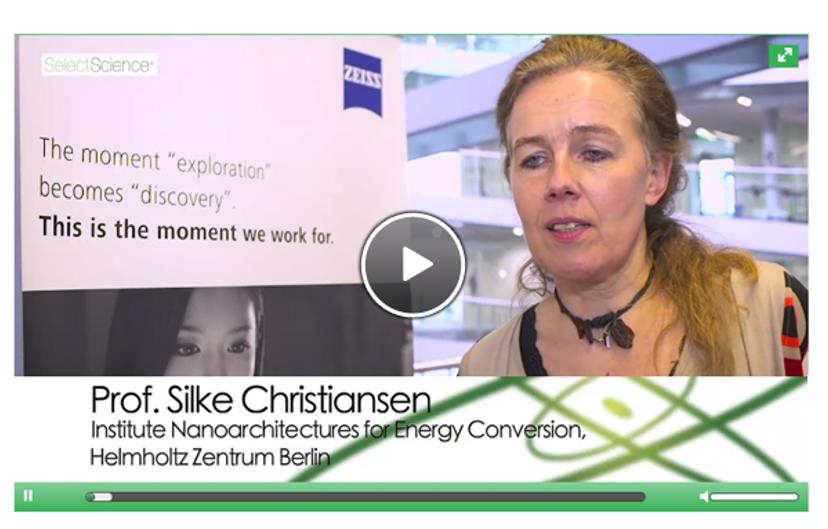
Professor Christiansen discusses nanomaterials for solar cells and energy storage

Professor Silke Christiansen, Professor at Frei University in Berlin, discusses her research at Helmholtz Center for Materials and Energy into nanomaterials for solar cells and energy storage. She is studying new ways of converting solar energy into other forms of energy as well as storing energy in an efficient way.

2. Confocal Microscopy in Materials Science
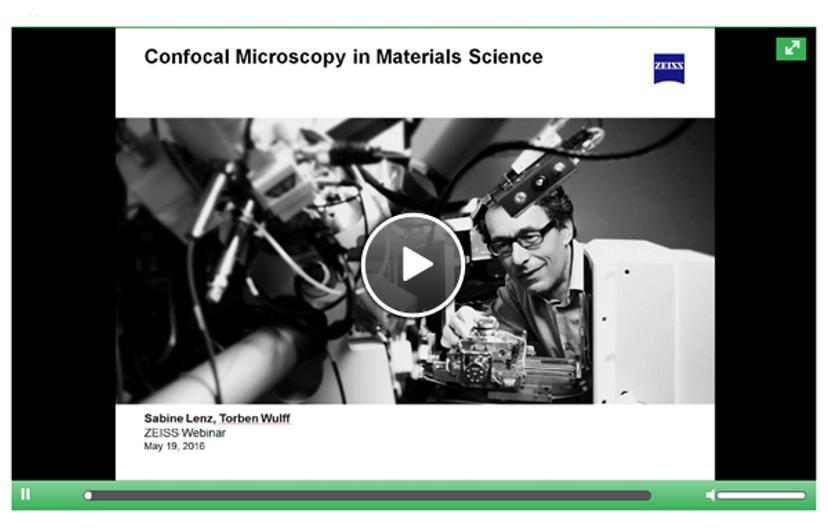
Learn about the use of confocal microscopy in this webinar

In this webinar, Sabine Lenz discusses using confocal microscopy in materials science with Torben Wulff from ZEISS Microscopy, giving examples of applications and the different microscopes used.

3. Presentation: Correlative Microscopy-Spectroscopy Studies of Complex 3D Nano-Structures
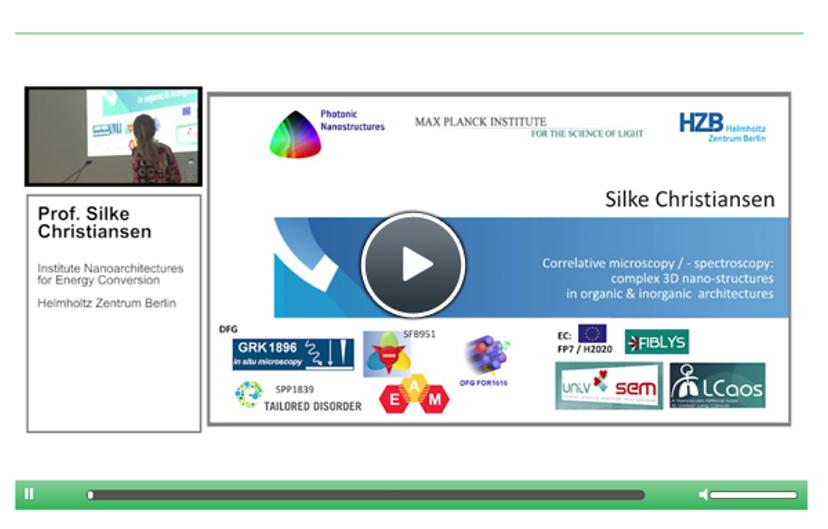
Find out more about 3D nano-structures in this presentation

In this presentation, Professor Silke Christiansen, Helmholtz-Zentrum Berlin für Materialien und Energie (HZB), discusses her research into the development of energy efficient materials with complex 3D nano-structures. Hear how her lab is collaborating with ZEISS microscopy to create innovative solutions combining correlative microscopy and spectroscopy for the detailed analysis organic and inorganic materials. Professor Christiansen demonstrates the benefits of this technique for the analysis of human bone and other medical samples.

4. Enhanced Speed for Sensitive, High Resolution Confocal Microscopy
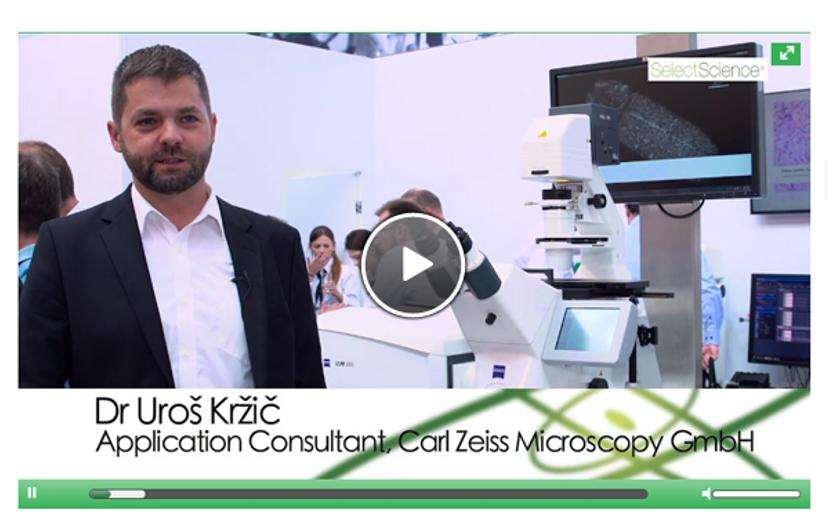
Dr Krzic discusses transient event imaging in this interview

Dr Uros Krzic, application consultant at Carl ZEISS Microscopy GmbH, describes how the ZEISS Airyscan with fast acquisition mode facilitates sensitive, high resolution confocal microscopy that is ideal for imaging transient events.

ZEISS Crossbeam Family

ZEISS Research Microscopy Solutions

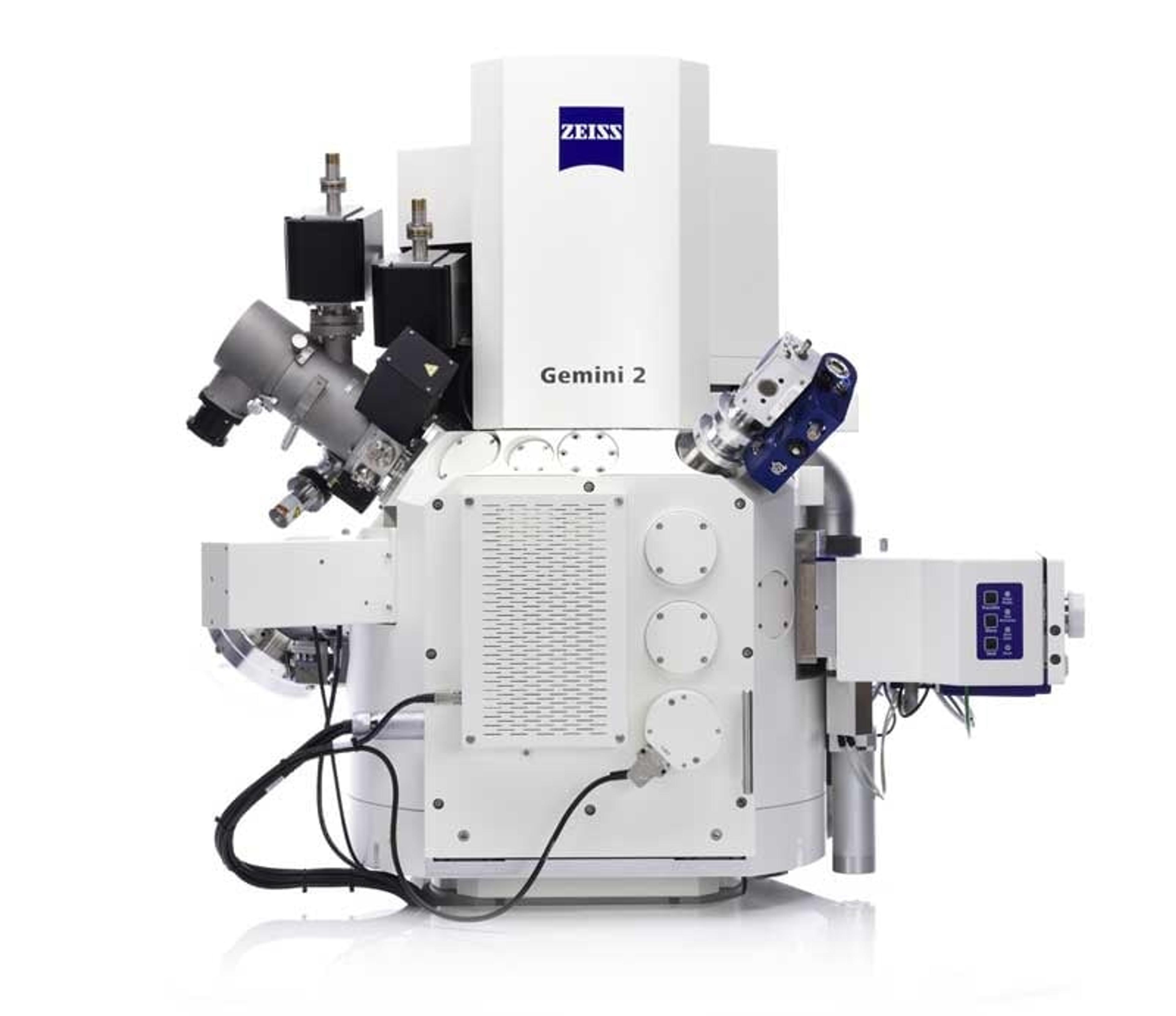
Within ZEISS Crossbeam Family you have the choice between Crossbeam 340 or Crossbeam 550. Exploit the variable pressure capabilities of Crossbeam 340. Or use Crossbeam 550 for your most demanding characterizations and choose the chamber size, standard or large, that best suits your samples.

(4)

Links

Tags

UV-Visible SpectroscopyUltraviolet-visible (UV-Vis) spectrophotometers are used to measure the interaction of UV and visible light with a sample, including transmission, reflectance & absorbance. The two major instrument classes are single-beam or double-beam spectrophotometers. More specialized equipment includes colorimeters, spectroradiometers and refractometers. Portable and microvolume spectrophotometers are also available. For the modular spectroscopy lab, explore a range of light sources for combination with a spectrograph/spectrometer and optics. Find the best UV-Vis spectroscopy products in our peer-reviewed product directory: compare products, check customer reviews and receive pricing direct from manufacturers.InterferometryInterferometry is an investigative technique used to analyze the pattern of interference created during the superposition of 2 or more waves. An interferometer is used to produce 2 or more overlapping waves. The interferometer is comprised of 2 or more telescopes, a detector and a correlator. The interferometer detector may utilize homodyne or heterodyne detection of the interference pattern.NanotechnologyNanotechnology, or nanotech, is an engineering technique using molecular scale functional systems. Applications of nanotechnology include medicine and medical devices, electronics, air and water purification, food science and energy production.Particle CharacterizationParticle characterization instruments are used to determine particle size distribution, shape, surface area, zeta potential, density and porosity of particles and materials. Multiple tecchniques are available for determining particle size, shape and count including dynamic light scattering (DLS), laser diffraction, electrozone (Coulter technique), imaging particle analysis and single particle optical sensing. Determine the density of your material with a gas pycnometer or examine its surface area and porosity with gas adsorption analyzers and mercury porosimeters. Find the best particle characterization instruments in our peer-reviewed product directory: compare products, check customer reviews and receive pricing direct from manufacturers.Light MicroscopyLight microscopes or optical microscopes are used to visualize microscale objects under magnification, including cells, clinical specimens and materials. Lab equipment for light microscopy includes confocal microscopes, fluorescence microscopes, zoom and stereo microscopes. Microscope slides and imaging reagents are available for visualizing samples, as well as various microscope stages and incubators for large or temperature-sensitive samples. Find the best light microscopes in our peer-reviewed product directory: compare products, check customer reviews and receive pricing direct from manufacturers.Electron MicroscopyElectron microscopes (EM) are used to create high-resolution images of samples at the nanoscale by means of an accelerated beam of electrons as a source of illumination. Types of electron microscope include scanning electron microscopes (SEM), transmission electron microscopes (TEM), scanning transmission electron microscopes (STEM) and cryo-electron microscopes. Focused ion beam (FIB) microscopes are useful for modifying or milling a sample surface with nanometer precision, as well as imaging. Find the best electron microscopes in our peer-reviewed product directory: compare products, check customer reviews and receive pricing direct from manufacturers.ConfocalMicroscopyMicroscopy is a technique used to observe small objects in detail, from cells to materials, using light or electron microscopes. It enables researchers to examine structures with high resolution, aiding in fields such as biology, medicine, and materials science. With advanced microscopy techniques, scientists can gain insights into cellular processes, tissue structures, and material properties. Explore the best microscopy solutions in our peer-reviewed product directory, compare products, read customer reviews, and get pricing directly from manufacturers.