
ZEISS Celebrates 50 Years of Scanning Electron Microscopy
ZEISS celebrates the birth of the first commercial scanning electron microscope in 1965
3 Aug 2015Industry news
ZEISS celebrates the 50th anniversary of commercial scanning electron microscopy (SEM). In 1965, the first commercial SEM called Stereoscan was built by Cambridge Instrument Company, a UK based predecessor company of Carl Zeiss Microscopy Ltd. ZEISS hosted a celebratory event to mark the anniversary of the very first SEM sale, fifty years previous, and the contributions made to scientific research across so many fields and industries made possible through this technology. During a morning of talks, lunch, and a museum tour, customers and specialists from many disciplines had the chance to meet scientists who worked on the development of the first commercial SEMs.
With 50 years of continuous growth and development, the SEM has become ever more versatile, and is now firmly established as an indispensable tool for advanced research across many scientific disciplines. With new industrial applications emerging every year, the SEM is also a vital part of research & development, and quality control & analysis across an extensive range of industries around the globe. From its early home in materials science, the SEM established itself in the disciplines of electronics, forensics and archaeology. Over the years it has evolved into a key tool for food technologists, biologists, geologists and petrologists in the natural resources industries, adapting subtly to fulfil the discrete requirements of these individual applications. Use of SEMs for process control and failure analysis is now widespread, with routine analysis on SEMs an integral part of the semiconductor and automotive industries, and manufacture more broadly.
Development still goes on: A direct descendant of the first microscopes produced in Cambridge in 1965 is the ZEISS EVO family. First launched in 2004, and widely accepted as the industry leading analytical platform, there are some developments soon to be unveiled for EVO offering more flexibility, ease of use, and further development of detectors. The new ZEISS GeminiSEM family comes with a novel optical design. Users achieve better resolution, especially at low voltage. With 20 times greater in-lens detection signal, they always acquire crisp images fast and with minimum sample damage.
Related products
Request Quote for All Products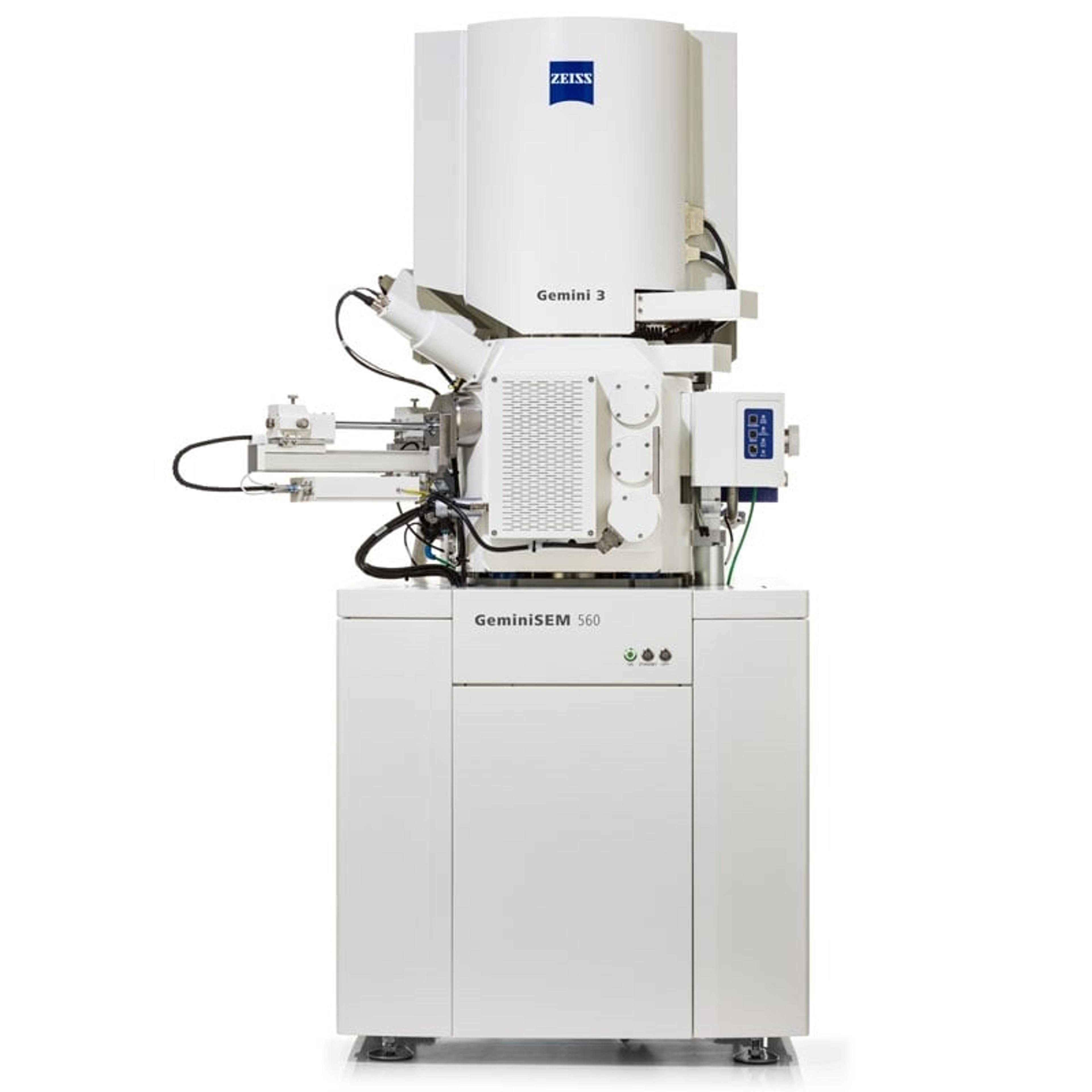
ZEISS GeminiSEM Family
ZEISS Research Microscopy SolutionsFor Your Highest Demands in Sub-nanometer Imaging, Analytics and Sample Flexibility