
ZEISS Announces Partnership with ECR Engines
Providing analytical microscopes for NASCAR Engine Producer
23 Mar 2015
Industry news
ZEISS announced an expansion of its multi-year partnership agreement with ECR Engines, a subsidiary of legendary NASCAR organization Richard Childress Racing (RCR). ECR will provide analytical microscopes for conducting analyses of various engine components. The company develops and builds Chevrolet engines for numerous NASCAR Sprint Cup, XFINITY Series and Camping World Truck Series teams, including RCR’s seven full-time teams. ECR is using the latest ZEISS EVO MA25 scanning electron microscope (SEM) for material analysis studies, the ZEISS SteREO Discovery.V20 stereo microscope and the ZEISS Smartzoom 5 digital microscope for imaging larger parts, and a confocal light microscope for measuring surface roughness and 3D-topographical characterization.
“We are proud of this new partnership with ZEISS, the leader of the microscopy industry,” said Jim Suth, Quality Manager and Engineer for ECR. “Having access to the latest advanced, analytical technology from ZEISS will be an asset and provide us a distinct advantage that will undoubtedly translate to success on the race track.”
ECR, which manufactures engines at its Welcome, NC campus, will use the microscopes for quality control, research and development, and failure analysis work. Data obtained by using these analytical tools will allow engineers to be completely confident in their decision making on both new part acceptance and failed part corrective actions. The work is being carried out as part of the company’s ongoing implementation of cleaner components, stronger raw materials and higher performing lubricants. Engineers have found that ever-increasing demands on engines for power and fuel economy places greater pressure on various critical engine components, which can cause premature wear and/or fatigue. Occurrences of premature wear and fatigue can lead to catastrophic failure, resulting in the race team having to exit the race.
ECR will use the newest version of ZEISS EVO MA25 to study these different types of component wear and material fatigue. The SEM is equipped with ZEISS SmartBrowse software for particle analysis and report generation. As an essential part of the EVO workflow, ZEISS SmartBrowse provides an interactive map of the entire sample. By providing in-context visualization of all optical and SEM images in data layers, ZEISS SmartBrowse greatly improves post image analysis and provides an innovative and striking data review method.
For macro scale imaging, failure analysis of larger parts, and sample preparation for electron microscopy, ECR will also utilize ZEISS SteREO Discovery.V20 light microscope. Using ZEISS’ correlative microscopy solution, images collected with the stereo microscope can be easily translated to ZEISS EVO MA25 for precise overlay with electron microscopy data. This imaging capability saves time usually spent locating points of interest under the electron microscope’s high magnification.
Also available is a ZEISS confocal light microscope, which provides quantitative measurements of surface finishes for studying associated friction and wear of internal engine components.
Related products
Request Quote for All Products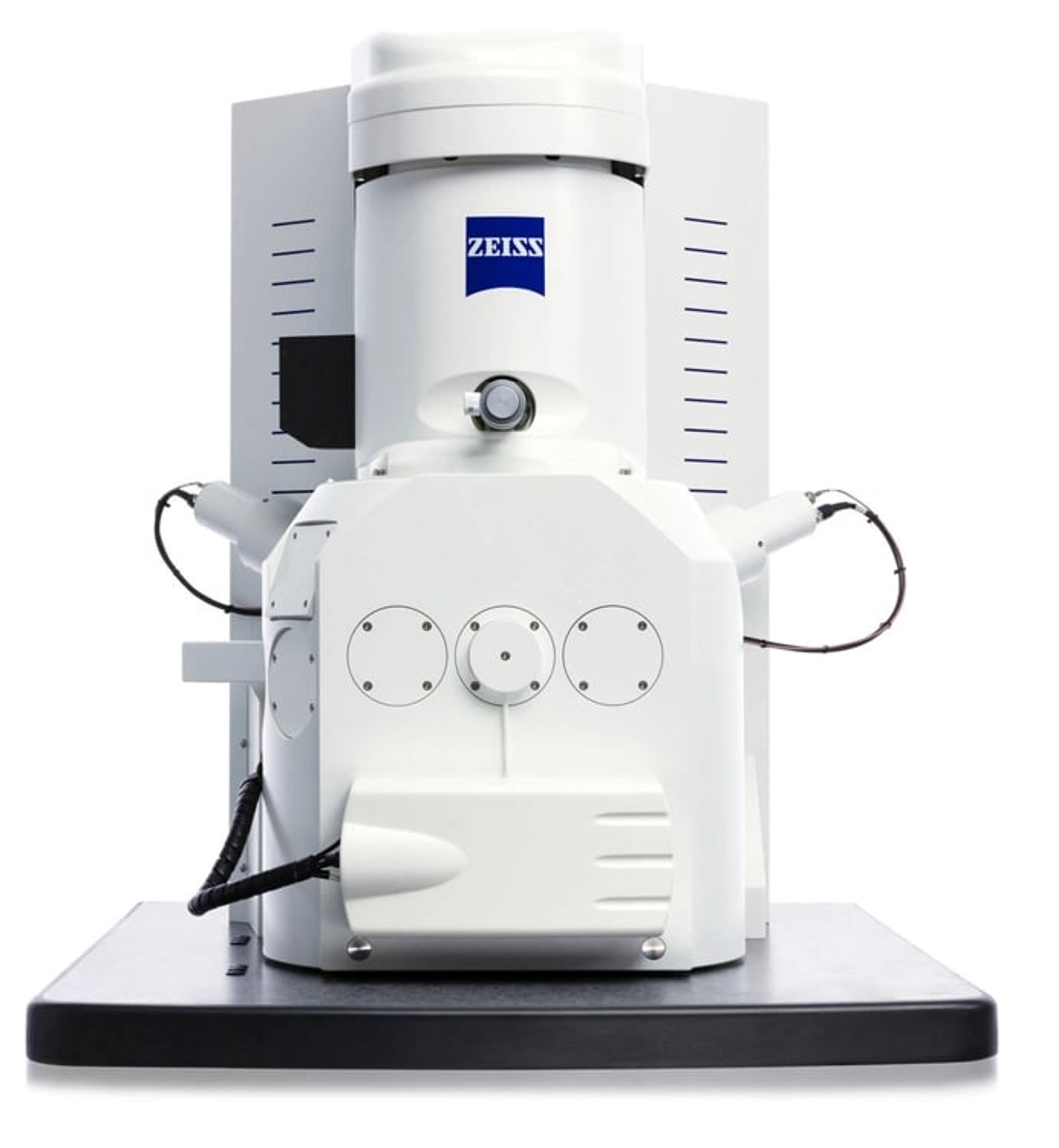
ZEISS SteREO Discovery.V20
ZEISS Research Microscopy SolutionsYour modular stereo microscope with motorized 20x zoom.