
Why serology tests are shaping the future of vaccine development
Learn more about the efficient and reproducible multiplex immunoassays set to change the way COVID-19 researchers profile antibody response
20 Jun 2021
Editorial article
Vanitha Margan, global immunoassay product manager at Bio-Rad Laboratories
As the COVID-19 pandemic is well into its third wave in many countries, time is of the essence. Researchers are facing mounting pressure, especially immunologists who need to quickly prove the therapeutic efficacy of new vaccines, while public health researchers have to accurately determine population exposure rates in order to isolate the virus and prevent further spread. In this SelectScience® interview, Vanitha Margan, global immunoassay product manager at Bio-Rad Laboratories, provides insight on how researchers can surpass challenges and successfully develop high-performing, sensitive, and adaptable immunoassays for timely and accurate detection of the COVID-19 virus.
SS: What are the big-picture goals of your work?
VM: As a part of the commercialization team, I am responsible for identifying customer needs that Bio-Rad products are well placed to solve. I try to ensure that our customers are aware of all of our solutions on offer and that they can access them easily whenever the need arises.
SS: What tools does Bio-Rad provide to help users qualitatively measure antibodies against SARS-CoV-2 viral proteins?
VM: Bio-Rad’s Bio-Plex Pro Human SARS-CoV-2 serology assays allow COVID-19 researchers to measure the IgA, IgG, and IgM antibodies produced by the human body against the virus over time.
The IgA, IgG, and IgM assays are offered in three separate panels that are available for research use. The panels are magnetic bead-based multiplex assays that allow the detection of anti–SARS-CoV-2 antibodies specific for nucleocapsid (N) protein and spike protein subunits; receptor-binding domain (RBD), spike 1 (S1), and spike 2 (S2). These four viral antigens are individually coated on magnetic beads to capture antibodies specific to these SARS-CoV-2 antigens. The antibody response against all four viral antigens is simultaneously measured through an isotype-specific biotinylated detection antibody followed by a streptavidin-phycoerythrin reporter molecule. To enable interpretation as a positive or a negative result, the assays use assigned cut-off values to qualitatively profile the IgA, IgG, and IgM antibody responses.
We have designed these serology assays such that research users can choose to run them in multiplex utilizing xMAP technology, helping them save time and effort.
SS: What challenges are your customers facing and how is Bio-Rad helping to overcome them?
VM: One of the biggest hurdles our customers are facing right now is being able to develop a high-throughput assay when designing an assay in-house. Another difficulty that we frequently help our customers get through is working with small sample volumes. This is common when working with animal models: researchers cannot afford to waste any precious samples because the samples are hard to come by. Many vaccine researchers also require high-performance assays to prove vaccine therapeutic efficacy from development through to all the clinical phases.
To start out with tackling the challenge of in-house assay development being time-consuming, we offer pre-made research use kits but allow flexibility in kit configuration. We also offer the individual components – such as the capture beads, detection antibodies, control sets, and reagent kits – separately, which provides customers with the flexibility to assay only the antibodies that they are interested in. By offering the beads and reagent kits standalone, we are extending assay development flexibility to preclinical researchers who work with animal models as well. The optimized Bio-Plex kit methodology is also high throughput and allows customers to assay up to 45 samples in duplicate against the four viral antigens per plate. Moreover, with the assay’s short turnaround from incubation to plate reading, it takes less than three hours for results to be produced.
In terms of the second challenge of working with low sample volumes, our serology research use assays require as little as 2µL. The multiplexing methodology further aids sample conservation by allowing multiple viral antigen targets to be analyzed within the same sample in one single well.
To help researchers address the third challenge, our research and development team has developed our assays after rigorous rounds of validation to address the demand for high-performance results. Our serology assays have demonstrated analytical specificity during internal testing of less than 5% for cross-reactivity, an intra-assay precision of less than 10%, and an inter-assay precision of 15%. Research studies also demonstrate over 95% clinical specificity and over 98% clinical sensitivity for each viral antigen.
SS: What feedback have you had from your customers regarding the Bio-Plex Pro Human SARS-CoV-2 Serology Assaysso far?
VM: We have received highly positive feedback from our customers conducting research studies. There have been rave reviews about the reproducibility of the results and how easy it is to follow the protocol. The fast turnaround time of the short protocol is a particular crowd favorite. As customers have not faced any cross-reactions during research studies comparing against samples from healthy individuals, we have had positive comments on the high specificity and reliability of the performance of the assays as well.
Vanitha Margan shares 4 key benefits of the Bio-Plex Pro Human SARS-CoV-2 Serology Assays
- A short and intuitive assay protocol: the three-hour turnaround makes the study very efficient.
- Highly specific and sensitive, ensuring confidence in research study results across a wide range of antibody responses over time.
- High precision, making the results highly reproducible, without significant cross-reactivity.
- The multiplex format: The high-throughput power of multiplex technology is handy in vaccine development and seroprevalence research studies. Our format enables researchers to quickly profile antibody responses to determine the natural exposure rate as well as vaccine immunogenicity in a population.
SS: What do you see as the future application of serology testing?
VM: Serology assays are and will continue to be instrumental in COVID-19 vaccine research, clinical trials, and post-market surveillance studies. Our serology assays are useful for detecting antibody response against SARS-CoV-2 infections and in COVID-19 vaccine immunogenicity studies.
We also foresee these assays being applied in preclinical and Phase 1 vaccine trials, for swift monitoring of dosing levels as well as efficacy. Moreover, these assays show great research potential for use in seroprevalence post-vaccination studies to determine the effectiveness of the vaccine over time in post-market surveillance.
With more people being exposed to the virus as well as getting vaccinated, we also believe public health research will start relying on serology testing to study the differences in antibody immune response. Scientists are looking to understand the interplay between exposure rates within different populations and the immunity over time acquired either naturally or through vaccination. As we learn more about the COVID-19 disease and its virus, the future of serology assays lies in aiding scientists to successfully conduct vaccine and seroprevalence research.
Related products
Request Quote for All Products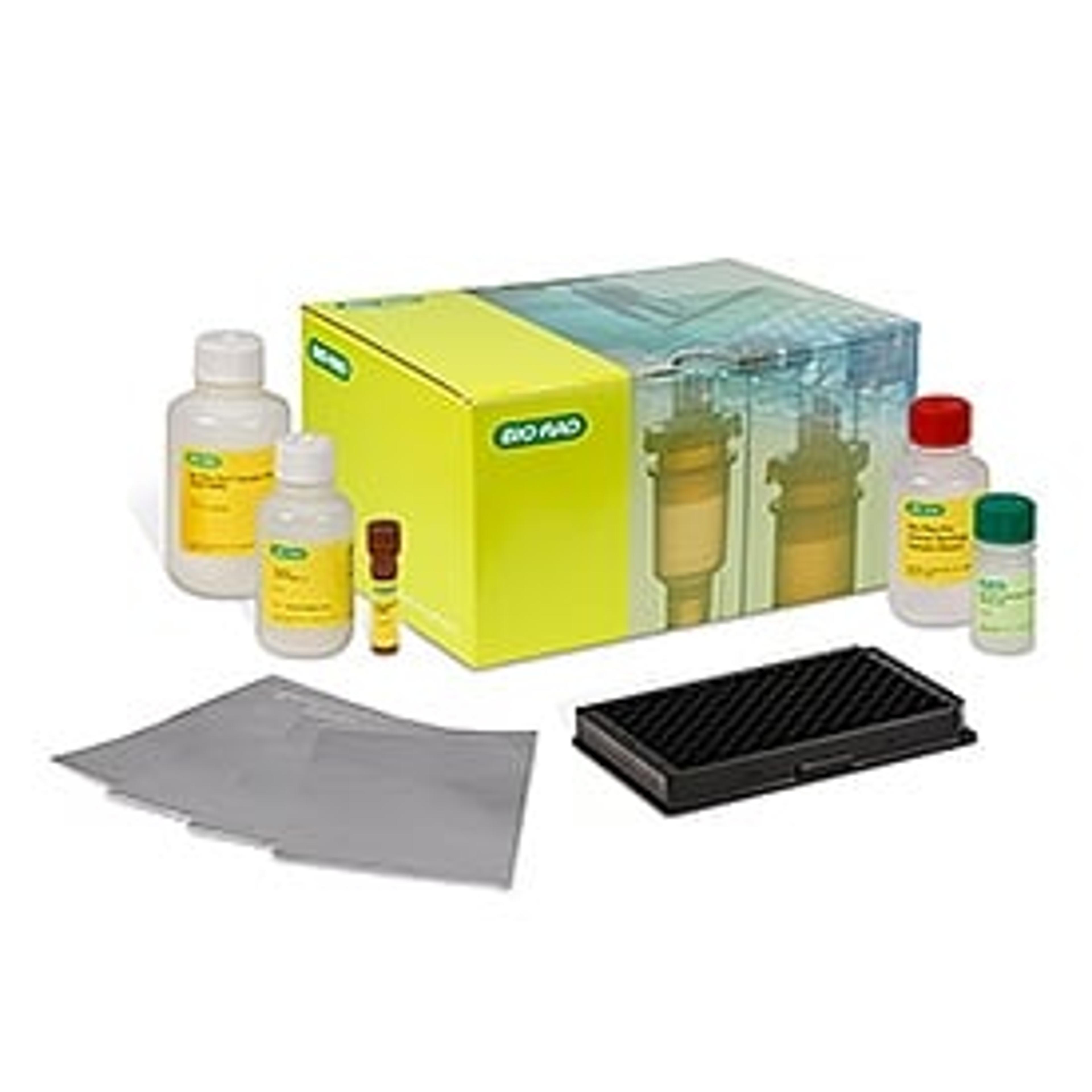
Bio-Plex Pro Human IgG SARS-CoV-2 N/RBD/S1/S2 4-Plex Panel
Bio-Rad1 x 96-well, includes magnetic capture beads coupled with SARS-CoV-2 nucleocapsid, receptor-binding domain, spike 1, and spike 2 viral proteins, anti-human IgG detection antibody, ready-to-use positive control, ready-to-use negative control, wash buffer, assay buffer, serology sample diluent, detection antibody diluent, streptavidin-PE, 96-well flat-bottom plate, and sealing tape.