
Why Good Service Engineers are Vital for a Smooth-Functioning Clinical Lab
Clinical scientist Tara Jackson tells SelectScience how her high-functioning clinical lab is supported by a reliable service and maintenance team
31 Aug 2017
Editorial article
SS: Please introduce yourself and tell us about your place of work.
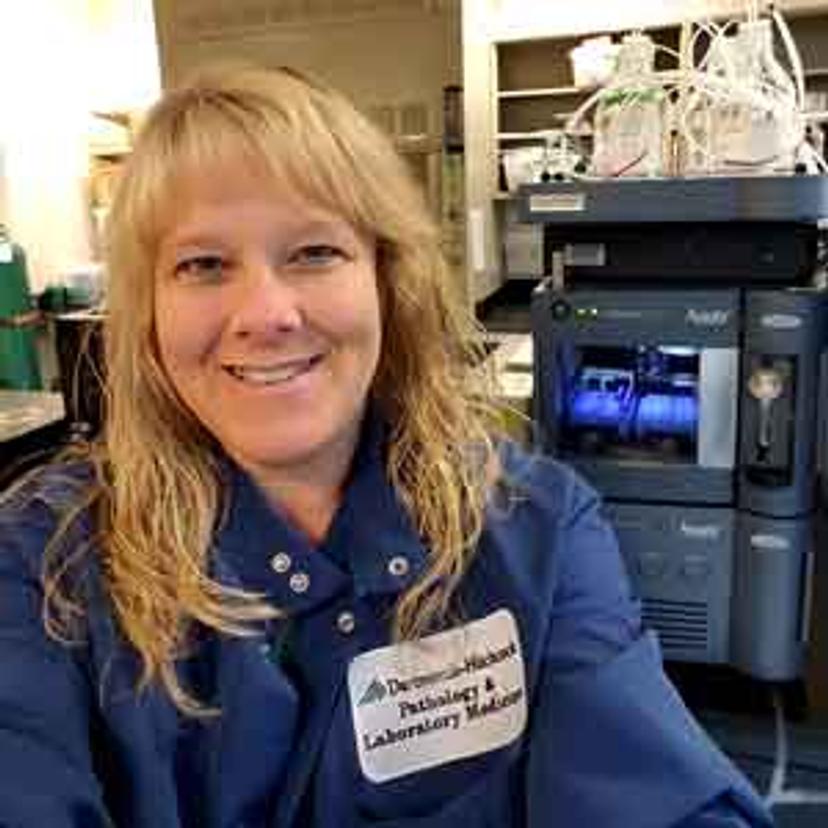
TJ: I’m Tara Jackson and I’m the Supervisor of Clinical Research Programs at Dartmouth-Hitchcock, a non-profit academic health center in New Hampshire. We have 24 outreach clinics in New Hampshire and Vermont. We intake 200-300 samples a day and process them in batches. Because we perform specialized esoteric testing, we batch test our samples to reduce costs. Using mass spectrometry (MS), we test immunosuppressants such as tacrolimus, cyclosporine and sirolimus, and also perform a variety of other immunology tests on additional instrumentation and manual testing platforms.
SS: What does your daily job involve?
TJ: On an everyday basis, I’m tasked with doing test validations, bringing in new platforms and setting up training for new platforms. I’m also involved in SOP writing for the assays used in patient work. I’ll also participate in setting up our new branch in translational research, so I foresee that my roles will be varied in the future.
SS: What LC/MS systems do you use in your laboratory?
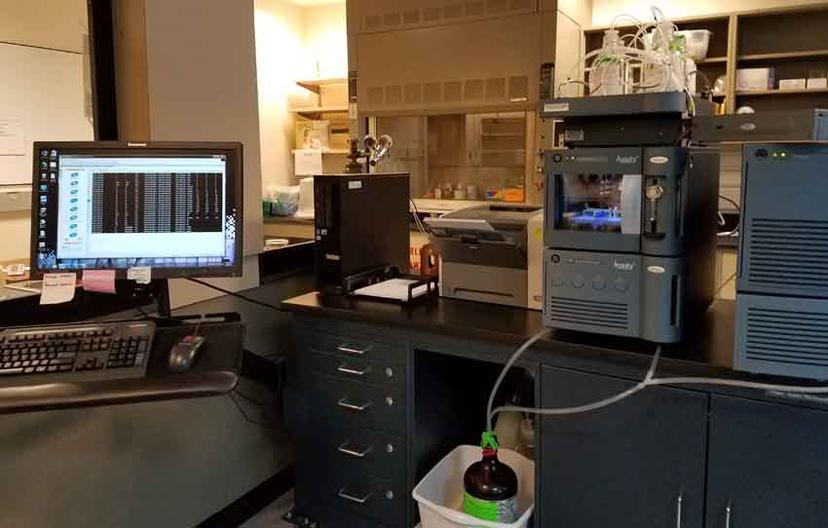
TJ: We use the ACQUITY® TQD IVD System from Waters. There are currently two of those – one will eventually be dedicated to testing of immunosuppressants and one for opiate confirmations.
SS: What type of service support do you have?
TJ: We have the Clinical Total Assurance Plan with Waters, which includes two preventative maintenance visits. This offers us top priority over anyone else who calls in for service. Waters’ service engineers are here the very next day, sometimes even on the same day. We also have a 24-hour troubleshooting and corrective maintenance included. As we’re a clinical laboratory, we can’t afford to have any downtime, so having this support available is key.
In our team, two of us are familiar with the systems – we can troubleshoot to a certain extent. Waters has a troubleshooting guide online which is very helpful, or we can just talk it through over the phone if needed. But there are times when although the machine isn’t down, the chromatograph doesn’t look right, and shows an increase or decrease in sensitivity. In such instance, we send Waters support an email, and they ring us straight back and talk us through it. If all else fails, their main office is in Massachusetts, so their engineers are just a few hours away from us, if needed.
Watch this video for more on Water's TQD technology in clinical laboratories >>
SS: What are the key benefits of this support service? Can you give us an example of when this support was really valuable to you and your team?
TJ: One time, we had an issue with one of our CAP survey samples – it wasn’t in acceptable limits and we needed to establish corrective actions. The support engineers from Waters came in and carried out some studies. Another time, we had a compressor die on us and they were able to call in the part and install it. They had it running again by the next day. We’re lucky in that we do have a second instrument for backup. But sometimes we have urgent patient samples for processing, for example, for patients awaiting a transplant. Waters is very sensitive to the fact that we are a clinical lab – they are very attentive in that respect.
SS: What is your advice for laboratories looking to implement a LC/MS workflow? Is service an important consideration right at the beginning of the process?
TJ: I do believe that service needs to be a top consideration. Things are never perfect in a lab – analyzers break down, LC columns need replacing. The UPLC-MS/MS instruments are the most intricate and complex systems in the lab, so preventative maintenance is crucial and we need to take care of them. Prior to these we had an older model, for 15 years. The service engineers always said this longevity was the hallmark of preventative maintenance and looking after it well. Good service helps protect your investment in the long run. In terms of turnaround times and send-away costs, Waters’ service outshines other services in all aspects. The quality of the instruments was better right from the beginning, and with the added service component, that experience has only magnified.
SS: What are some future projects for your team?
TJ: We will be implementing opiate confirmation tests in the future. The opioid epidemic in the US has become one of prime importance for clinicians. This screen is automated in the chemistry labs, but we will be performing the confirmatory tests on the MS system, and will continue working with Waters for it.
Find out more about Waters family of LC-MS/MS in vitro diagnostic medical devices
Related products
Request Quote for All Products
ACQUITY UPLC I-Class / Xevo TQD IVD System
WatersThe rugged, robust and reliable Xevo TQD – a solid performer for clinical analyses

ACQUITY UPLC I-Class/Xevo TQ-S micro IVD System
WatersHigh performance from a compact design with rapid, reliable, and reproducible quantitative data for the clinical laboratory.