What to Look Out for at ASMS 2015

Discover highlights from the exhibition and technical program to help you make the most of your time at the meeting

28 May 2015

Lois Manton-O'Byrne, PhD
Executive Editor

Editorial article

63rd ASMS Conference on Mass Spectrometry and Allied Topics, St Louis, USA

Discover highlights from the exhibition and technical program to help you make the most of your time at the meeting. PLUS, visit our dedicated ASMS page to keep up-to-date on all the latest news, video interviews and applications from the meeting.

Products to look out for:

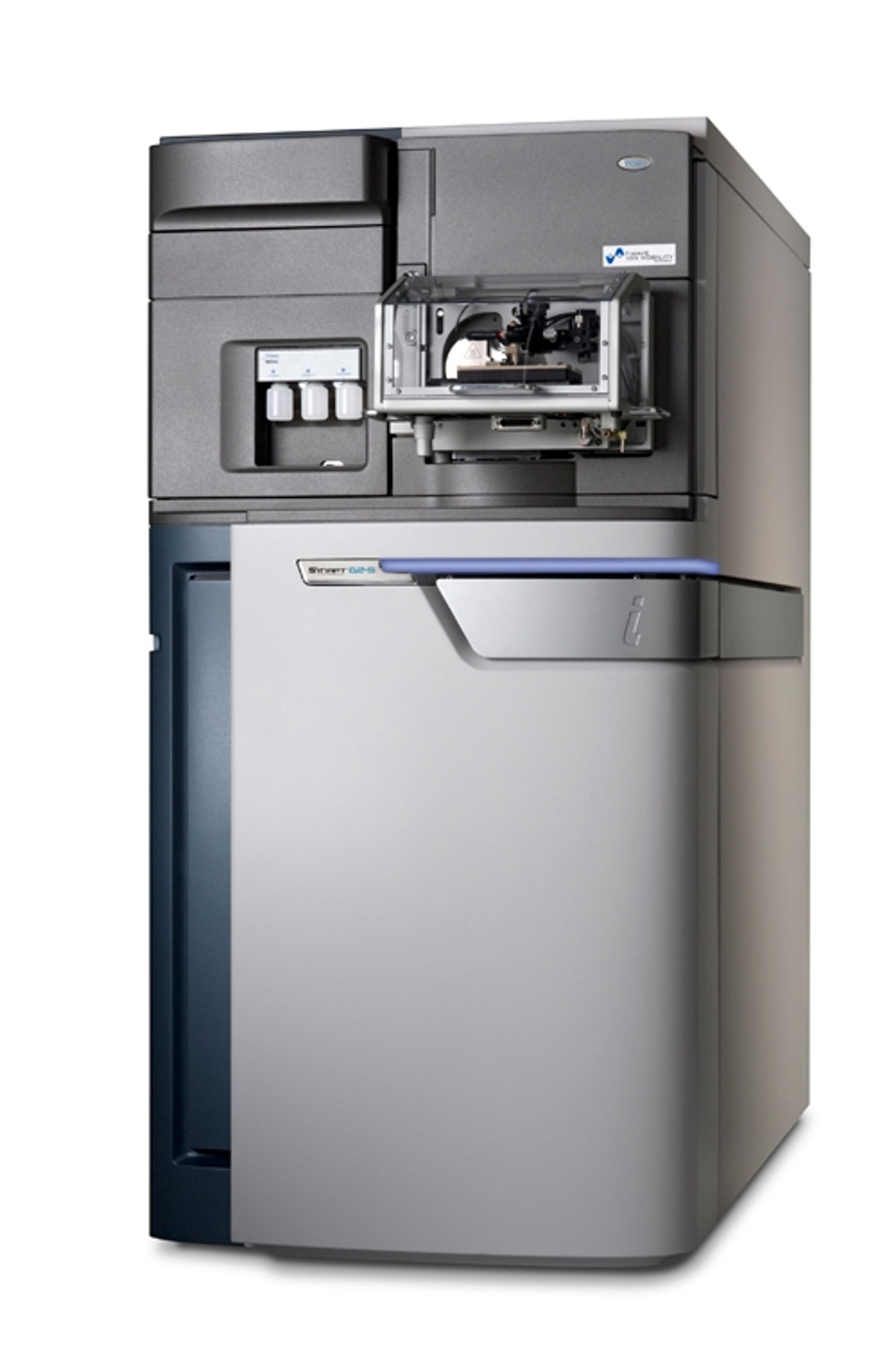
Waters to Highlight Full Spectrum Molecular Imaging System

Thermo Fisher Scientific to Launch SMART Digest Kit

Sage Science to Showcase SageELF Proteomic Tool

Bruker to Host a Series of 'Omics' Workshops

Discover Dried Blood Spot Analysis using Shimadzu's LC-MS/MS

SelectScience Media Coverage of ASMS

Don't Miss These Events

  • Distinguished Lecture: The Human Gut Microbiome and Healthy Growth, Jeffrey L. Gordon, Washington University, USA, Sunday, May 31, 6:45pm, Hall 5, Level 1
  • Tutorial: Metabolite Profiling at the ‘Omic’ Scale - Untargeted Does not Mean Unplanned, Gary Patti, Washington University, USA, Sunday, May 31, 5:00pm, Hall 5, Level 1
  • Award Lecture: Award for a Distinguished Contribution in Mass Spectrometry, Brian T. Chait, The Rockefeller University, USA, Monday, June 1, 4:45pm, Hall 5, Level 1
  • Workshop: Metabolomics - Emerging Technologies for Continued Innovation Metabolomics Interest Group, Sunia Trauger and Andrew Patterson, Monday, June 1, 5:45pm, Ballroom 222/224
  • Award Lecture: Biemann Medal, Michael J. MacCoss, University of Washington, USA Tuesday, July 2, 4:45pm, Hall 5, Level 1
  • Plenary Lecture: The Evolution of Modern Neurosurgery: A History of Trial and Error, Success and Failure, G. Michael Lemole, Jr., The University of Arizona College of Medicine, USA, Thursday, July 4, 4:45pm, Hall 5, Level 1

​Find out the lastest news from ASMS >>

Links

Tags

Gas ChromatographyGas chromatography (GC) is an analytical technique used to separate and quantitate mixtures of small and volatile compounds. Gas chromatographs or GC systems include components such as GC columns, detectors, pumps and autosamplers. Choose from packed or capillary GC columns, flame ionization (FID), photoionization (PID) electron capture detectors and selective or non-selective detectors. Find the best gas chromatographs in our peer-reviewed product directory: compare products, check customer reviews and receive pricing direct from manufacturers.LC-MSLC-MS (liquid chromatography-mass spectrometry) systems and equipment are used for separation and quantitative analysis of complex mixtures, combining liquid chromatography and mass spectrometry. Quantify proteins, contaminants, pesticides or screen for drug metabolites with a high level of sensitivity. LC-MS systems and equipment include reverse phase, normal phase and specialized columns integrated with various MS detectors such as time-of-flight (TOF), quadrupole, orbitrap or ion trap mass analyzers. LC-MS/MS instruments equipped with a qTOF or triple quadrupole analyzer give greater sensitivity and resolving power to your analysis. Find the best LC-MS equipment in our peer-reviewed product directory: compare products, check customer reviews and receive pricing direct from manufacturers.Mass SpectrometryMass spectrometry (MS) is a powerful analytical technique used to identify and quantify molecules based on the mass-to-charge ratio of gas-phase ions. It provides detailed information about the structure, composition, and properties of compounds and is widely used across fields such as environmental monitoring, materials science, drug discovery and development, food and beverage testing, and wider chemical research. Key MS techniques include tandem mass spectrometry (MS/MS), liquid chromatography–mass spectrometry (LS-MS) and inductively coupled plasma (ICP-MS). Choosing from these wide range of techniques and technologies can be a daunting task, so keep up to date with scientific applications, performance expectations, and customer reviews here all in one place. Visit our product directory to receive quotes direct from the manufacturer. ProteomicsProteomics is the systemic bioinformatics study of proteins and amino acids, including their structure, size, function and identification. Tools used in proteomics include chromatography, blotting and gels, protein arrays, mass spectrometry and ELISA and associated analysis software. Analyzers and proteomic systems should be sensitive, high resolution, fast and may be automated for high-throughput.MALDI-TOF MSMALDI-TOF mass spectrometers (matrix-assisted laser desorption/ionization time-of-flight) are used for the mass analysis of large molecules, including proteins, DNA, polymers and other macromolecules due to its relatively soft ionization, reducing fragmentation whilst allowing fast data acquisition. Tandem mass analyzers such as TOF/TOF systems can be used to increase resolution and sensitivity of your analysis. Find the best MALDI-TOF products in our peer-reviewed product directory: compare products, check customer reviews and receive pricing direct from manufacturers.GC-MS GC-MS (gas chromatography-mass spectrometry) instruments and equipment are used to separate, quantify and identify mixtures of small and volatile compounds, such as polycyclic aromatics, fatty acids and alcohols. Often used in drug detection, forensic investigation and environmental analysis for pesticides and contaminants, GC-MS is a powerful addition to your lab’s analytical capabilities. GC-MS/MS instruments equipped with a qTOF or triple quadrupole analyzers can give greater sensitivity and resolution to your analysis. Find the best GC-MS instruments and equipment in our peer-reviewed product directory: compare products, check customer reviews and receive pricing direct from manufacturers.MetabolomicsMetabolomics is the study of small metabolites (the intermediates and products of metabolism). It involves the identification and quantification of cellular metabolites using analytical technologies such as GC, HPLC, NMR, and LC/MS.BiopharmaceuticalsBiopharmaceuticals are proteins and other compounds (such as nucleic acids) produced by living organisms that have uses as therapeutics or for in vivo diagnostics. The most well known example of a biopharmaceutical product, and the first to be approved for therapeutic use, was recombinant human insulin.ASMSThe American Society for Mass Spectrometry (ASMS) is an organization dedicated to advancing the science and application of mass spectrometry. ASMS supports professionals through events, publications, and research initiatives, promoting innovation in areas like proteomics, metabolomics, and environmental analysis. Dried Blood Spots