Werfen receives CE mark for Aptiva Antiphospholipid Syndrome reagents

New Aptiva® APS IgG and APS IgM reagents enable early diagnosis of Antiphospholipid Syndrome in hard-to-diagnose autoimmune disease

12 Mar 2024

Jessica Calvey
Product and Reviews Admin Assistant

Product news

Aptiva utilizes particle-based multi-analyte technology (PMAT)

Werfen has received a CE mark for its Aptiva® Antiphospholipid Syndrome (APS) Immunoglobulin G (IgG) and Immunoglobulin M (IgM) reagents under the European Union's (EU) In Vitro Diagnostic Medical Devices Regulation (IVDR).

The Aptiva APS IgG and APS IgM reagents are immunoassays that utilize Aptiva particle-based multi-analyte technology (PMAT) for the semi-quantitative determination of anti-cardiolipin (aCL) and anti-beta 2 glycoprotein 1 (aβ2GP1) IgG and IgM autoantibodies in human serum and citrated plasma. They are used as an aid in the diagnosis of primary and secondary APS, when used in conjunction with other laboratory findings.

The new Aptiva APS reagents complement Werfen's previously registered Aptiva Celiac Disease and Connective Tissue Diseases (CTD) Essential reagents and expand the number of CE Marked analytes detected by Aptiva to 19.

In addition to the APS, CTD and Celiac Disease assays, Aptiva will target additional autoimmune disease states, and has over 60 analytes in various stages of advanced development. These analytes have the potential to improve the accuracy of autoimmune disease diagnosis and support better patient management.

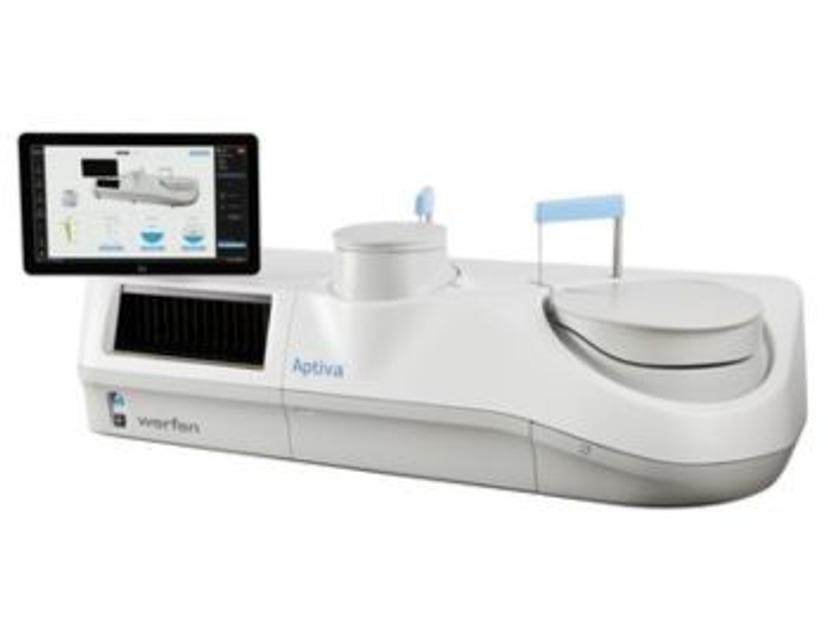
The Aptiva system is a fully automated multi-analyte system that represents the next generation of high-throughput analyzers for the autoimmunity and immunology laboratory.

Aptiva uses particle-based multi-analyte technology to deliver up to 120 APS results per hour. With PMAT, Aptiva enables the laboratory to complete its workload faster and with minimal hands-on time.

Want the latest clinical science news straight to your inbox? Become a SelectScience member for free today>>

Links

Tags

HematologyIn Haematology / Hematology, complete blood cell counts (or full blood counts) are obtained using automated blood count analyzers to enumerate blood cell types.  Hematology also encompasses haemostasis and coagulation, thrombophilia and hemophilia, plasma viscosity and ESR analysis, hemoglobinopathies, cell morphology and haematinic measurement.ImmunologyImmunological techniques measure and characterize immune responses. Immunology kits and analysis systems often use techniques such as ELISA, radioimmunoassay (RIA) and immunodiffusion assays, Immunohistochemistry, and flow cytometry. Immunologists use equipment such as flow Cytometers, plate readers, plate washers and fluorescent microscopes.ImmunoassayImmunoassays are laboratory tests that utilize antibody-antigen interactions to detect specific substances. They are widely used in diagnostics for detecting diseases, drug testing, and environmental monitoring. These assays offer rapid, sensitive, and precise detection of biomarkers, making them invaluable in clinical and research labs. Browse our peer-reviewed product directory to compare immunoassay systems, read user reviews, and get pricing directly from manufacturers.Hematology SolutionsHematology solutions involve diagnostic tests and equipment used to analyze blood samples and diagnose blood disorders such as anemia, leukemia, and hemophilia. These tools include automated full blood count analyzers, reagents, and digital morphology systems. Explore hematology solutions in our peer-reviewed product directory; compare products, check reviews, and get pricing directly from manufacturers.