
Webinar Highlights: Tips and Tricks for LC-MS
Find out more about coupling liquid chromatography with mass spectrometry and optimizing your results
18 Oct 2015
Expert insights

Improve your instrument's sensitivity and life-span and reduce downtime
In this webinar, Hans Griesinger, Analytical R&D Engineer, Merck KGaA, discussed tips and tricks for optimizing the coupling of liquid chromatography with mass spectrometry. Covering sensitivity, column robustness and lifetime, Hans also revealed methods to correctly analyze complex samples and minimize instrument downtime. Read on for the highlights of the Q&A session, and watch the webinar on-demand here.
1. Do the LC-MS grade solvents from Merck Millipore have to be filtered before usage?
We have already filtered our LC-MS grade solvents using 0.2µm filters and analyzed the remaining particles, so it's not necessary to pre-filter them. In fact, if you were to pre-filter them, particularly using a filter with a plastic housing, additives and contaminants may leach into the solvent, so they are best used as you get them out of the bottle.
2. As I perform LC-MS/MS analyses, is the organic solvent purity as critical as it is with LC-MS?
With LC-MS you usually look at the signal of the analytes, but as mentioned in the presentation, some ion suppression may occur. Therefore, when you use an internal standard, which generally you do when you perform LC-MS, then there will also be some ion suppression of the internal standard so the effect is minimized. However, it can affect your limit of detection (LOD) so it is important to use the highest LC-MS grade solvents you can, whether you are carrying out LC-MS or LC-MS/MS.
3. Are LC-MS grade solvents also suitable for TLC-MS measurements from thin layer chromatography plates?
They are suitable and are recommended because you extract from the plates directly into the mass spectrometer. You should always be using the highest grade solvents available, especially when performing mass spectrometry analyses, which are LC-MS grade solvents.
4. Is there a conditioning step necessary for MS-grade TLC plates?
No conditioning step is necessary for MS-grade TLC plates – these plates are specially packed to avoid any contamination so they can be used straight out of the box to perform chromatographic separations.
5. If you have an analytical method that uses a non-volatile buffer, but you want to investigate an unknown peak with LC-MS, is there a way to convert the method to a suitable phase/buffer?
There are various different method calculators available online that will help you when moving from a non-volatile buffer to a volatile buffer which is more suitable for LC-MS. Some method development is still required, but a lot of HPLC methods can be translated fairly easily to LC-MS.
6. What is your opinion on the use of solvent filters?
As mentioned earlier, all our solvents are pre-filtered so filtration is not necessary. However, if you are decanting your solvents, contamination like dust can be introduced, in which case filtration can be useful. Stainless steel filters are recommended as they can be cleaned more easily than glass filters and do not leach compounds into the solvent as plastic filters can.
7. Why is methanol not recommended as a solvent for negative mode in ESI?
Sometimes you can get problems concerning the adduct formation. You can use it if necessary, but there may be some strange effects regarding protonation, so acetonitrile is recommended.
8. Do you have any suggestions for sample preparation when analyzing synthetic polymers using LC-MS?
Sample preparation is usually the most critical step, and it is easy to make mistakes, but it's important to take good care of your sample. The difficult thing about synthetic polymers is they need to be completely dissolved and in order to do this, you may need to use solvents which are not necessarily compatible with the mass spectrometer − for example, they may be hard to aerosolize. An extraction of the polymer followed by a liquid-liquid extraction using an un-polar solvent, then a more polar solvent may be more suitable, so the solution can successfully pass through the ion source and you can analyze your samples.
If you missed this informative webinar, you can still watch it on-demand here.
Related products
Request Quote for All Products
LiChrosolv® Hypergrade Solvents for LC-MS
Merck KGaA, Darmstadt, GermanyHigh purity solvents for LC-MS and trace analysis with UV and fluorescence detection: 0.2 µm stainless steel filtered – perfect for use in UPLC and UHPLC. Very high UV-transmittance. Excellent baseline stability in gradient elution. Very low total ionic current (TIC) in LC-MS. Low level of ionic background and ion suppression. High ionization efficiency in all ionization methods (electrospray ionization/atmospheric pressure chemical ionization (ESI/APCI) positive and negative mode). Applications: Protein profiling. Pesticide Analysis. Polycyclic aromatic hydrocarbons (PAHs). Proteomics LC-MS. LC-MS routine analysis. Lichrosolv® hypergrade solvents enable analysis in the low ppb trace range and can be used for both the isocratic separation of 6 PAHs according to the German DIN method and the gradient separation of 16 PAHs according to the methods EPA 610 (analysis of drinking water) and EPA 550 + benzo(e) pyrene + perylene (analysis of waste water).
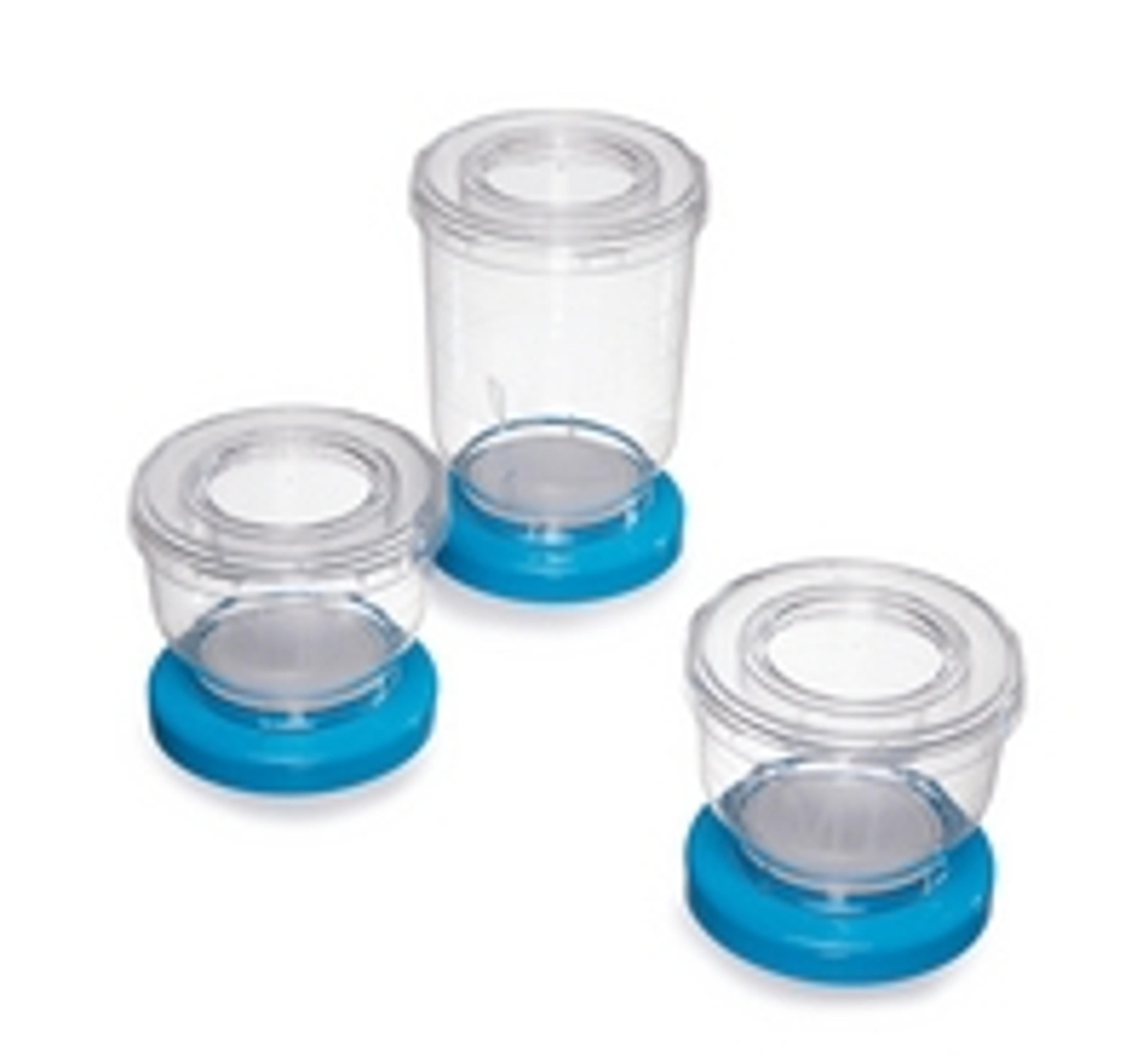
EZ-Fit® Filtration Units
Merck KGaA, Darmstadt, GermanyThe EZ-Fit ® Filtration Unit is a disposable filtration device for bioburden testing of liquid samples including water, in-process samples, and final products.