Webinar Highlights: Protect Your Cells with Proper Pipetting - How Liquid Handling Influences Your Cell Culture Work

Improve your experimental results with better technique

14 Jan 2016

Lois Manton-O'Byrne, PhD
Executive Editor

Expert insights

Improve your experimental results with better technique

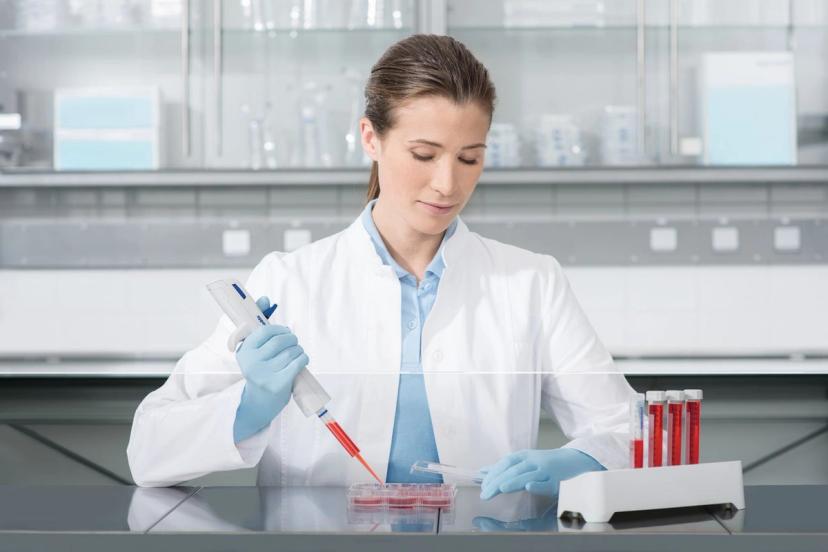
Pipetting is an every-day task in a cell culture lab, and one that you probably don’t think about. However, there is a huge potential lying in pipetting techniques to increase the quality of your results. In this webinar, Dr. Jessica Wagener and Dr. Hanaë A. Henke, both Field Application Specialists at Eppendorf, discussed how you can improve the reproducibility of your experiments through proper pipetting and decrease the risk of contamination when working with eukaryotic cells. Learn how to differentiate pipetting tools according to applications in cell culture and maintain a sterile working space.

Read on for the highlights of the webinar Q&A session, or watch the presentation on-demand today.

Q: During the presentation, it was mentioned that ‘upright aspiration’ should be used for precision. However, a slide on protection recommends ’45° for aspiration and release’ – isn’t this contradictory?

A: For every experiment, you need to decide what is more important – the safety and protection of your cells against contamination, or accuracy and precision when it comes to sensitive assays, very small volumes, or very expensive reagents. When you need to be very precise, you should perform upright aspiration. When you wish to prioritize the safety of your cells, you can aspirate at 45°. For both cases, a dispenser is recommended, as it will allow precise dispensing for accurate results even when aspirating at 45°.

Q: Which pipette system is more suitable for viscous liquids like glycerol?

A: For viscous liquids, dispensers are more suitable because with these devices, you can pipette any kind of liquid.

Q: What is the best test method for detecting mycoplasma?

A: There are advantages and disadvantages to all detection methods, which include PCR based techniques, fluorescent DNA staining, biochemical or ELISA based kits and microbiological cultures. When choosing your method, you should consider the number of samples you are testing and the desired turnaround time. For example, although microbiological culture is very sensitive, it takes longer, so is more prone to contamination. The equipment you have access to is also important – some methods may require a microplate or a thermal cycler, as with PCR.

Q: Can I autoclave dispenser tips for re-use?

A: No, as dispenser tips are made from two different materials which behave different during autoclaving, the precision and accuracy of the system cannot be guaranteed after autoclaving.

Q: What is the maximum volume that can be pipetted using a dispenser?

A: The volume depends on the dispenser tips used. Eppendorf offers dispenser tips with a maximum volume of 50ml and five dispensing steps, so that would make 10 mL per step with a mechanical hand dispenser or 50 mL with an electronic hand dispenser, as it is able to empty the tip in one step only (pipetting mode).

Q: How can I see the difference between bacterial and yeast contamination?

A: Through a microscope, there are some obvious differences. For example, most bacteria have directed movement, while yeast does not. Bacteria can also be different shapes, such as round, rod and spiral, and are much smaller than yeast or the cells themselves. Yeast appears as separate round or spherical pods, which are often in chains of two or four and can also be multi-branched.

With bacterial contamination, the pH of the culture medium frequently drops suddenly, whereas with yeast, there is very little change until the contamination is heavy, when the pH usually increases.

Q: What is reverse pipetting?

A: In forward pipetting, you push down the operation button to the first stop to aspirate the liquid, then you push it down to the second stop to dispense it. In reverse pipetting, the button is pressed to the second stop to aspirate the liquid and only to the first stop to dispense the aliquot. There is always a little bit of liquid left in the tip then. This technique is useful when pipetting dense liquids.

Q: Heating media or thawing cells in a water bath is a big source of contamination – are there any alternatives?

A: Due to the humidity and temperature of a water bath, it is a major source of contamination. Thermal blocks can be used for heating reagents and they are basically contamination free. Thawing cells is more delicate because it needs to happen very quickly to limit cell exposure to DMSO, which is toxic to them. A water bath is the quickest method to raise the temperature to 37°C, so depending on the cells you are working with, it is recommended to do a test comparing cell viability after 24-48 hours of cells thawed using a water bath and a thermal block.

Q: Do you have to use a pipette and tip from the same manufacturer?

A: It isn’t mandatory, but it is recommended as the pipette and tips are optimized for each other. When using a pipette with a tip from a different manufacturer, you should calibrate the pipette with this tip to ensure that it is working accurately.

Did you miss this webinar? Watch on-demand today, or browse our latest and upcoming webinars here.

Image courtesy of Eppendorf
Links

Tags

Cell / Tissue CultureCell culture or tissue culture is used to study the biology of cells or tissues and to isolate cellular products in an environment which can be manipulated and well defined. Accurately control your culture environment with bioreactors or culture incubators, bind your cells to a surface or together with an extracellular matrix. Distinguish cell types with differential media or proliferate cells with certain characteristics using selective media. Enrich your media with supplements such as growth factors, sera and vitamins. Find the best cell and tissue culture products, kits and equipment in our peer-reviewed product directory: compare products, check customer reviews and receive pricing direct from manufacturers.Cell Lines Stem Cells and Primary CellsPrimary cell cultures, established cell lines and stem cells are vital for <i>in vitro</i> and <i>ex vivo</i> experimentation. High-quality cells, optimized for your applications, alongside optimized cell substrates, growth medium and supplements, are critical for experimental success. Explore a range of cells suitable for your applications, including isogenic cell lines, competent cells, induced pluripotent stem cell (iPSC)-derived cell lines, fungal/bacterial/mammalian cell lines, stem cells and cancer cell lines. Find the best cells for your research in our peer-reviewed product directory: compare products, check customer reviews and receive pricing direct from manufacturers.Pipettes and DispensersPipettes and dispensers are essential lab equipment used to dispense measured volumes of liquid accurately. Explore a range of manual and electronic pipettes, including single and multichannel, serological and volumetric pipettes, as well as a range of pipette tips. Bottle-top dispensers are also available for simple and fast solvent dispensing. Find the best pipettes & dispensers in our peer-reviewed product directory: compare products, check customer reviews and receive pricing direct from manufacturers.Cell-Based AssaysCell-based assays are used to monitor the presence, quantity and activities of a desired cellular analyte including drug molecules or biomarkers. This can reveal information on cell health (apoptosis, cytotoxicity, viability and proliferation assays), cell metabolism, cell migration and cell signaling mechanisms. Find the best cell-based assay products, kits and equipment with our peer reviewed product directory: compare products, check customer reviews and receiving pricing direct from manufacturers.MicrobiologyMicrobiology is the study of microorganisms including protists, prokaryotes, fungi, and, often, viruses. Microorganisms are a useful research tool as genetic vectors and, in immunology, for antibiotic susceptibility testing, cellular biology and genetics. Microorganisms commonly grow readily in incubators with microbial culture media; this can contain chromogenic supplements to differentiate between cell lines. Estimate your culture’s density of microorganisms with colony counters, or screen and select colonies for desirable clones with automated colony pickers. Additionally, equipment is available to monitor environments for the presence of microbes and identify with microbial identification instruments. Find the best microbiology products in our peer-reviewed product directory: compare products, check customer reviews and receive pricing direct from manufacturers.YeastPipette CalibrationPipette calibration ensures that pipettes are delivering accurate and precise volumes of liquids, which is essential for high-quality scientific research and diagnostics. Calibration is crucial for ensuring reproducibility and reliability in experiments. Explore pipette calibration tools in our peer-reviewed product directory; compare products, check reviews, and get pricing directly from manufacturers.Cell ManipulationContamination PreventionContamination prevention aims to control and minimize the risk of contamination during experiments. Biological safety cabinets and sterilization equipment are examples of technologies used to prevent contamination.Liquid Handling WorkstationLiquid handling workstations automate the process of sample preparation, improving accuracy and efficiency. These systems are essential for high-throughput applications in biological, chemical, and pharmaceutical research, reducing human error and increasing reproducibility. Workstations come equipped with robotic arms, pipetting tools, and other accessories to streamline lab workflows. Explore liquid handling workstations in our peer-reviewed product directory; compare products, check reviews, and get pricing directly from manufacturers.MycoplasmaElectronic PipetteElectronic pipettes are precision instruments used to transfer measured volumes of liquid in laboratory settings. They offer high accuracy, ease of use, and ergonomic benefits compared to traditional pipettes, reducing the risk of repetitive strain injuries. Electronic pipettes are widely used in molecular biology, chemistry, and diagnostics. Browse our peer-reviewed product directory to find the best electronic pipettes; compare products, check reviews, and get pricing directly from manufacturers.Cell Based AssaysCell-based assays use living cells to measure biological responses to various treatments or stimuli. They are essential for drug discovery, toxicology testing, and understanding cellular mechanisms. These assays are used to assess cell viability, proliferation, gene expression, and other cellular activities. Browse our peer-reviewed product directory to find the best cell-based assay tools and reagents, compare products, read customer reviews, and get pricing directly from manufacturers.Bacterial DetectionBacterial detection uses methods such as cell culture, microscopy, and biochemical assays to identify harmful or beneficial bacteria based on their morphological and metabolic charactersistics. These techniques support disease diagnostics, food safety, and microbial research. Explore bacterial detection systems, kits, and consumables in our directory to compare products and read reviews.Cell CultureCell culture involves growing cells under controlled conditions, typically outside of their natural environment, to study cellular behavior, drug response, and disease models. Cell culture is crucial in biotechnology and biomedical research. Explore cell culture products in our peer-reviewed product directory; compare products, check reviews, and get pricing directly from manufacturers.