
Webinar Highlights, Part Four: Technology Accelerating Biopharma: Complete Workflow Solutions in Biopharmaceutical Discovery and Development
Read highlights from the fourth session in this exciting webinar series
12 Jan 2016
Expert insights

Read highlights from the fourth session in this exciting webinar series
Protein biopharmaceuticals are being developed at an explosive rate and have attracted great interest from both smaller biotech firms and big pharma. But discovery and development of biopharmaceuticals is difficult. There are many challenges, and scientists must not only stay abreast of advances in knowledge and improvements in technology, but also navigate the maze of shifting government regulations. Making good decisions fast is critical.
In this two-day webinar events series, industry experts from Agilent Technologies discussed native protein characterization, LC/MS workflows and much more. In the fourth session, Dr Oscar Potter presented “Identifying Released Glycans in a HILIC-FLR-MS Workflow Using Free Software Tools” and Dr Greg Staples discussed “Enabling Mass Measurement from Bioseparations: A HIC/RP Multiple Heart-cutting 2D- LC/MS Platform”. Read on for the highlights of the Q&A session, and if you missed them, watch parts one, two, three and four on-demand.
Q: Can organic solvents be used in the HIC separation and how do they affect the 2D heart-cutting approach?
A: Although the actual chromatographic conditions used weren’t mentioned, isopropanol was used in the separation of the ADCs as shown in the presentation. Organic solvents will increase the resolution while decreasing the retention time of very hydrophobic components, but there are some caveats – they may also affect the biological activity of the proteins. This isn’t the case so much for isopropanol but for other solvents, such as acetonitrile, it can be a problem.
As for the effect on the 2D heart-cutting solution, usually the proportion of the organic solvent in the sample loop is quite low so there often isn’t an issue going onto a reverse phase column.
Q: Do you have any examples of where you have used cation exchange rather than HIC for the type of analyses shown in the presentation?
A: There are some great examples where very similar experiments were performed where the only difference was the swapping of a HIC column to an ion exchange column. A paper demonstrating this was recently published in Analytical Chemistry, focusing on the analysis of rituximab.
Q: Can you comment on the sensitivity of mass spec for identifying 2AB-labelled glycans?
A: The sensitivity to 2AB-labelled glycans is not very high, compared to peptides, for example, and it also depends on the type of glycan and mass spectrometer you have. Where you want to get an accurate mass for a 2AB-labelled glycan, you need to think about the amount of IgG equivalent of glycan which you’re injecting on column. Assuming you were using a very sensitive QToF mass spectrometer like an Agilent 5550, you’d need to be injecting glycans at around 10 μg of IgG to ensure you had a strong signal for even the minor glycans in the sample. If you were using a less sensitive mass spectrometer, you might need hundreds of μg. High mannose glycans tend to have a lower ionization efficiency, so they also may require a slightly higher volume injected onto the column to ensure a strong signal.
Q: Could you also use HIC for aggregate analysis?
A: HIC is a good alternate to size exclusion for aggregate analysis, with the added benefit that you can analyze the aggregate and other sub-populations of molecules simultaneously.
If you missed any session during our two-day webinar event, you can watch all presentations on-demand. You can also read the Q&A highlights from the first, second and third presentations in the webinar series. Visit our dedicated Biopharmaceuticals Special Feature for the latest news, products and reviews for biopharma research.
Related products
Request Quote for All Products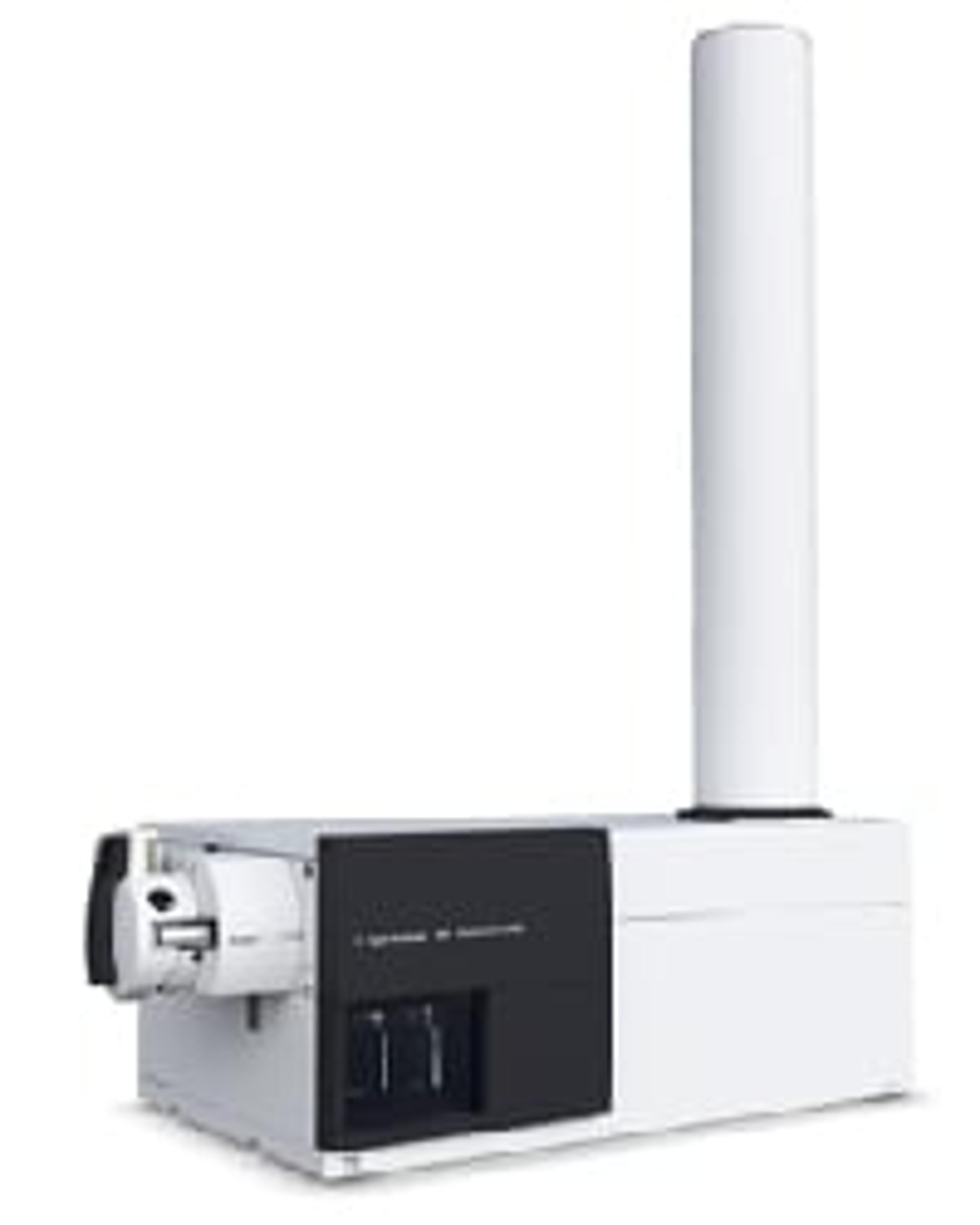
6500 Series Accurate-Mass Quadrupole Time-of-Flight (Q-TOF) LC/MS
Agilent TechnologiesWhether you need to identify, screen, profile, or perform quantitation on complex samples, Agilent Q-TOF is ready. When simultaneous speed, sensitivity, accuracy, and dynamic range come together, you get the most information from your samples. The immense detail revealed is harnessed by MassHunter software to provide answers you can trust.