Webinar Highlights: Online 2D-LC Analysis of Complex N-Glycans in Biopharmaceuticals

Read the highlights from this SelectScience® webinar

12 Jun 2016

Lois Manton-O'Byrne, PhD
Executive Editor

Expert insights

Read the highlights from this SelectScience® webinar

Complex glycosylation patterns with differently branched and charged glycans can be resolved with a combination of hydrophilic interaction chromatography (HILIC) and weak anion exchange chromatography (WAX), enabling highly orthogonal separation. Comprehensive 2D-LC analysis with HILIC in the first and WAX in the second dimension facilitates high-resolution 2D chromatography, together with simultaneous charge profiling.

In this webinar, Sonja Schneider, Application Scientist at Agilent Technologies, discussed different online 2D-LC concepts for the high-resolution analysis of complex N-linked glycans in biopharmaceuticals using 2D-LC with fluorescence and MS detection. Read on for the highlights of the Q&A session, or watch the webinar here.

Q: Was the amount of ammonium formate in the salt gradient in the second dimension problematic for the MS sensitivity?

A: No, because ammonium formate is an MS-tolerable salt. I obtained good MS and MS/MS spectra after the second dimension.

Q: What polarity did you use for the MS measurements?

A: For 2-AB labelled samples, I was using negative polarity, but for the new instant PC-labelled samples positive polarity is recommended as the high sensitivity found in this label is mostly found in positive polarity.

Q: Have you tried glycan analysis without labelling? Why not?

A: No - I haven’t tried unlabeled glycans, because I was mostly looking for a FLD solution.

Watch the presentation here or learn more about biopharmaceuticals with our special feature.

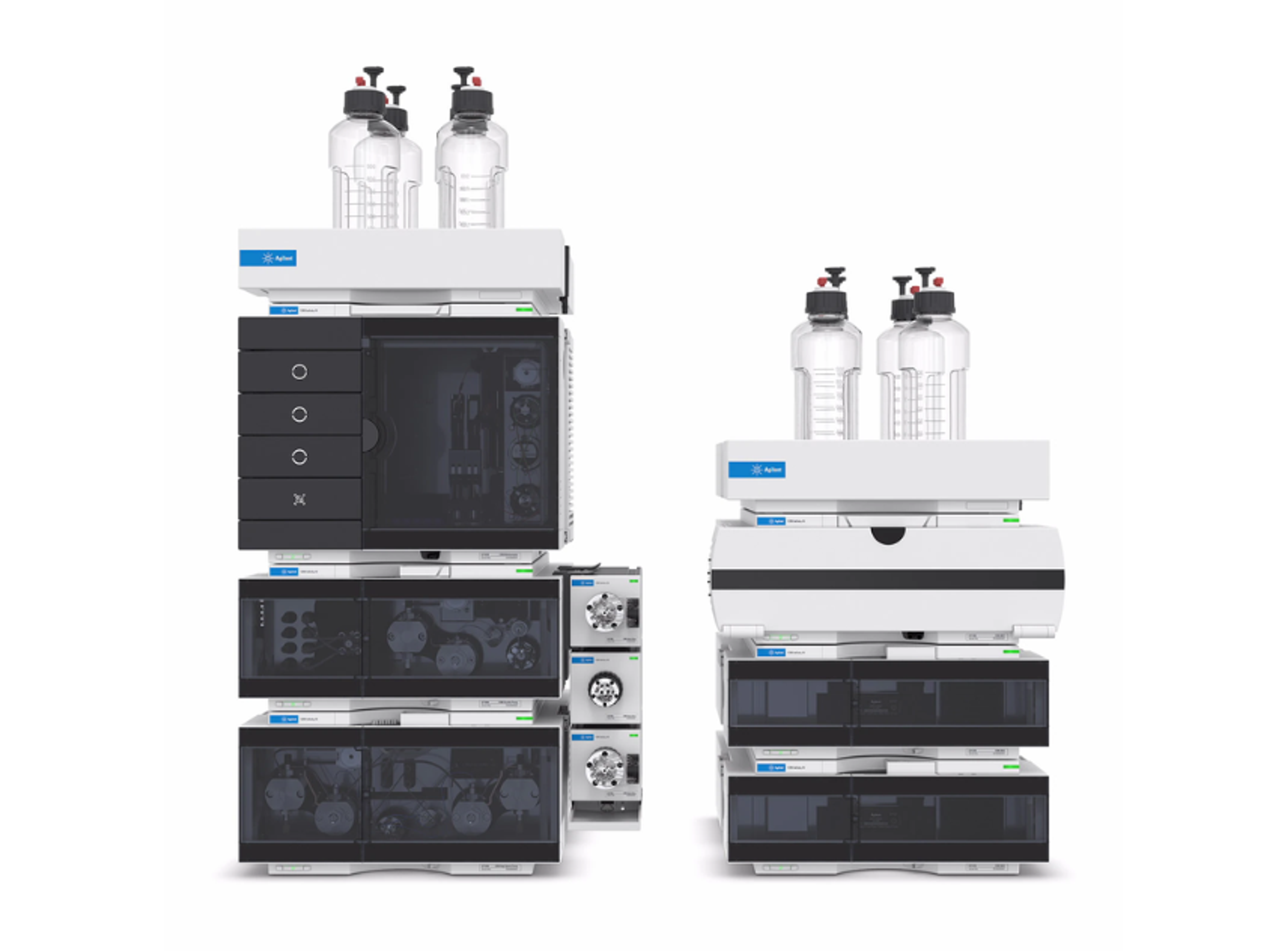
Agilent 1290 Infinity III 2D-LC System

Agilent Technologies

Increase resolution where you need it with the 1290 Infinity III 2D-LC System, which offers comprehensive two-dimensional liquid chromatography (2D-LC), (multiple) heart-cutting 2D-LC analysis, and high-resolution sampling. This system allows you to use 2D-HPLC for making buffer separations compatible to MS detection, while easy-to-use software enables fast method setup and refined data analysis.

(2)

Links

Tags

LC-MSLC-MS (liquid chromatography-mass spectrometry) systems and equipment are used for separation and quantitative analysis of complex mixtures, combining liquid chromatography and mass spectrometry. Quantify proteins, contaminants, pesticides or screen for drug metabolites with a high level of sensitivity. LC-MS systems and equipment include reverse phase, normal phase and specialized columns integrated with various MS detectors such as time-of-flight (TOF), quadrupole, orbitrap or ion trap mass analyzers. LC-MS/MS instruments equipped with a qTOF or triple quadrupole analyzer give greater sensitivity and resolving power to your analysis. Find the best LC-MS equipment in our peer-reviewed product directory: compare products, check customer reviews and receive pricing direct from manufacturers.Mass SpectrometryMass spectrometry (MS) is a powerful analytical technique used to identify and quantify molecules based on the mass-to-charge ratio of gas-phase ions. It provides detailed information about the structure, composition, and properties of compounds and is widely used across fields such as environmental monitoring, materials science, drug discovery and development, food and beverage testing, and wider chemical research. Key MS techniques include tandem mass spectrometry (MS/MS), liquid chromatography–mass spectrometry (LS-MS) and inductively coupled plasma (ICP-MS). Choosing from these wide range of techniques and technologies can be a daunting task, so keep up to date with scientific applications, performance expectations, and customer reviews here all in one place. Visit our product directory to receive quotes direct from the manufacturer. GlycobiologyGlycobiology encompasses research into the biological functions, synthesis and structures of glycans, including glycoproteins, glycolipids, proteoglycans and free oligosaccharides. Mass spectrometers and their software are commonly used in the study of glycobiology, along with structure predicting tools, chromatography and NMR.Biopharmaceutical AdvancesBiopharmaceutical advances follow the development of pharmaceuticals derived from biotechnology, also known as biotechnology medicines. Biopharmaceuticals may be produced from cell lines, plants, or microbial cells. Important considerations of biopharmaceutical use include application, cost, production process and purification.GlycansFluorescenceThe emission of fluorescence occurs when a photon of energy is supplied to a fluorescent chemical compound by an external source, causing it to become excited. Fluorescence can be detected and measured for different purposes using microplate readers, fluorescence microscopes, fluorescence scanners, and flow cytometers.BiopharmaceuticalsBiopharmaceuticals are proteins and other compounds (such as nucleic acids) produced by living organisms that have uses as therapeutics or for in vivo diagnostics. The most well known example of a biopharmaceutical product, and the first to be approved for therapeutic use, was recombinant human insulin.2D Chromatography