
Webinar Highlights: Enhancing the Mass Spectrometry Characterization of Antibody Drug Conjugates (ADCs)
Mike Peddicord, Senior Scientist II at Bristol-Myers Squibb, describes how intact-mass LC-MS data is used to determine drug-to-antibody ratios
23 Oct 2017
Expert insights
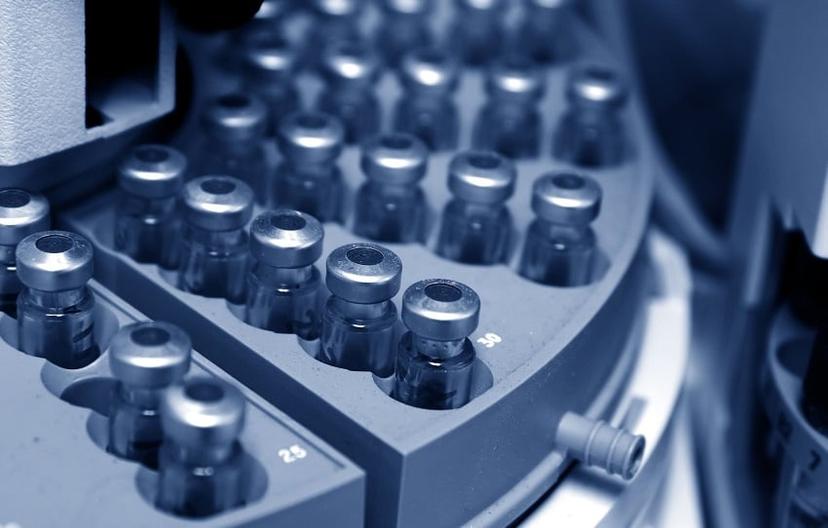
Intact-mass LC-MS data is helping to develop new pharmaceuticals
Bristol-Myers Squibb is a global pharmaceutical company. Their mission – to discover, develop and deliver innovative medicines to help patients prevail over serious disease.

Mike Peddicord Mike Peddicord, Senior Research Scientist II, Bristol-Myers Squibb
In this webinar, Mike Peddicord, Senior Scientist II at Bristol-Myers Squibb, describes how intact-mass LC-MS data is used to determine drug-to-antibody (DAR) ratios and how this affects the development of Antibody Drug Conjugates (ADCs). He also looks at the Agilent (drug-to-antibody ratio) DAR calculator and how it can enhance the speed of data processing and data reporting for LC-MS intact mass measurements of ADCs.
Read on for highlights from Q&A session, or watch the webinar on demand here.
Can you explain the complexity of the individual drug species presented, given that the sample has been deglycosylated (slide 8)? Are these extra peaks in each cluster due to incomplete removal of the glycans?
Mike: During the chemistry slide, I talked about the two step process that we use for preparing the ADCs and one of the strategies that we use at Bristol-Myers Squibb was presented. We do get some drug linker spacer that is unconjugated with drug and can form a cyclized by-product. What we see in the deconvoluted spectrum, and in the raw data, is more complicated data because of the presence of multiple by-product species. So that’s what’s giving us the complexity that we see there, it’s not actually incomplete deglycosylation.
How fast is the deconvolution processing performed by the software?
Mike: It’s extremely fast, depending on how you have the parameters set up. I’ve seen it take from 10 to maybe 20 seconds to produce a deconvoluted spectrum.
On slide 31 there appears to be some drug = 6 species that is not included in the DAR calculation. Can you comment on why this was not used?
Mike: Considering the quality of the data for the drug = 6 Species, the signal-to-noise ratio was determined to be too low for inclusion.
The risk of including that data is that as you look at the spectrum, you’ll see that the baseline starts to rise as you move from left to right. This is just noise from the deconvolution algorithm and from the data. If you use that, then you’re going to be including some of that noise in your drug = 6 species, and biasing the DAR measurement.
Have you tried LC-MS DAR analyses on less complex ADCs based on Fab antibodies?
Mike: I know there’s work going on at Bristol-Myers Squibb with other groups. Myself personally no, I have not. The molecules we’ve been working with are quite complex and have been challenging. The compounds we’ve been asked to look at are all of this class, especially those we’ve used on the Agilent platform and pushed through the DAR calculator.
How do you validate the DAR value obtained by LC-MS and Mass Hunter?
Mike: We don’t use this technique as the release method, but it is used for in development.
When we first started using the platform we were running these compounds on multiple different instruments, so we validated ourselves by generating the same sorts of values using different platforms and then comparing the numbers. We found that our comparability was very good.
We’ve also done work to validate our reproducibility on the Agilent platform and the DAR calculator by doing long multiple preparations of the same sample and doing multiple injections, and we’ve found that to be quite good.
What I think really answers your question is that we use orthogonal techniques to make sure that the numbers that we’re getting are consistent with what we expect based on the chemistry. There are other methods that we use, such as removing the drug from the antibody and then doing quantitation on the free drug that’s been cleaved off the antibody - we do that using UV. You can also do a UV DAR measurement, which is usually done by synthetic chemists to get an idea of what their DAR is when they finish their chemistry. We found some bias in that measurement, so we usually stick with the LC-MS DAR, as well as our drug cleavage UV drug determination.
Miss the live webinar? Watch the full webinar on demand here.
Do you use any of the technology discussed in this webinar? Write a review today for a chance to win an Amazon voucher worth $400 (or equivalent currency) or an iPad Air®.
For Research Use Only. Not for use in diagnostic procedures.