
Webinar Highlights: Automate Colony Picking and Forget About Toothpicks
Jana Langhoff, Application Specialist, Tecan, answers your questions on the SciRobotics’ Pickolo™ Colony-Picker
16 Aug 2017
Expert insights
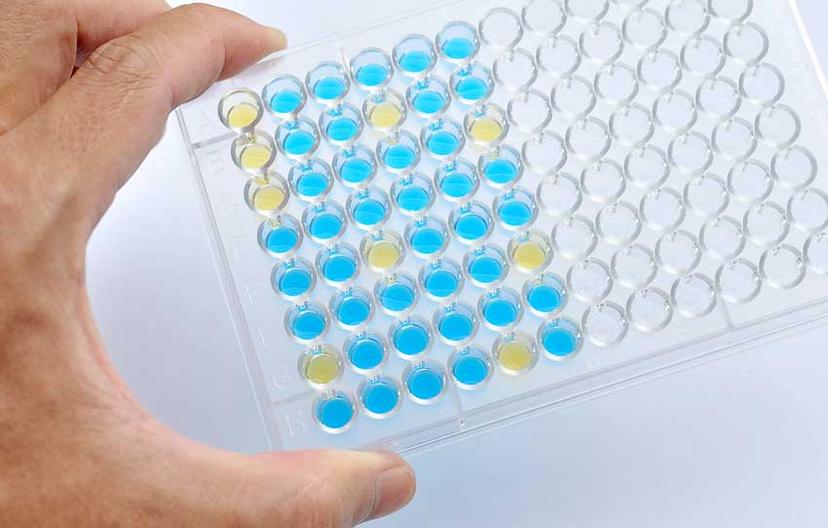
Colony picking lies at the heart of many applications, such as molecular cloning, monoclonal antibody production, biofuel development and screening workflows. Although picking colonies by hand is not technically difficult, it is time-consuming and, with typical throughput demands of more than 1,000 colonies per day, can easily become an error-prone process that creates a bottleneck. Automated colony picking not only eliminates picking errors and personal picking preferences, it also makes the process reproducible and traceable.
This webinar introduces the SciRobotics’ Pickolo™ Colony-Picker add-on for Tecan liquid handling platforms. During the webinar Jana Langhoff, Application Specialist from Tecan, describes Pickolo’s unique features, and explains how it can pick not only bacterial colonies, but also hybridomas from semi-solid media, stem cell colonies, fungi, and almost everything you can see by eye which fits through a regular pipette tip, even zebrafish eggs.
Read on for highlights from the Q&A session or watch the webinar on demand here.
Q: Can a user design a custom movement for the pipette?
A: Yes, the picking movement itself can be easily customized in order to imitate hand picking movements, but also the movement to any xyz location on the deck as well as the destination vessel can be customized.
Q: How fast is the Pickolo™?
A: This is dependent on the picking movement, and the liquid handling platform. For example, if there is a scratch movement or an aspiration step, this will slow down the picking. It can go as fast as 1000 colonies per hour.
Q: What data is provided by the colony tracking record?
A: This is customizable, and depends what data the user is interested in. As a standard, you will find the co-ordinates, size, shape, the number which matches with picture and destination well in the plate. This is in a text file.
Q: Can the Pickolo™ be used with other liquid handling systems besides the Tecan instruments?
A: Unfortunately, this is designed for Tecan robots only.
Q: What type of sample can the Pickolo™ pick?
A: It was originally designed for picking bacteria, but our customers started picking other things as well, such as fungi, algae and hybridoma. It is basically just a camera and the software, so it can detect everything that can be seen with the eye. Then it is just a matter of getting it transferred to another location, so the sample needs to fit through a pipette tip, we even have customers picking Zebrafish eggs.
Watch the full webinar on-demand, or find out more about the SciRobotics’ Pickolo™ Colony-Picker.
Do you use any of the technologies mentioned in this webinar? Write a review today for your chance to win an Amazon voucher worth $400 or an iPad Air®.
Related products
Request Quote for All Products
Pickolo™ Colony-Picker
TecanPickolo™ is a colony-picker add-on for Tecan robots. The product enable advanced and fully automated micro-organism colony picking from agar plates, both Petri-dish and various multi-well plate formats, based on diverse criteria such as size, shape and color of the colonies. The product seamlessly installed on to the robot in just a few minutes. The software is easily integrated into regular Tecan scripts such as Freedom EVOware® software enabling colony picking downstream and upstream to other robotic tasks. The software generates automatic documentation of the picked colonies.