
Waters and Genovis collaborate to develop efficient workflows for biopharmaceutical characterization
21 Apr 2021
Industry news
Waters Corporation and Genovis are formally collaborating to develop and market complete routine biopharmaceutical characterization workflows based on the Waters™ BioAccord™ LC-MS System, Andrew+ pipetting robot and Genovis SmartEnzymes™. The goal of the collaboration is to develop automated workflows for the rapid and consistent characterization of critical quality attributes (CQAs) of monoclonal antibodies (mAbs) and other protein-based drugs in bioprocess development, formulation, stability testing and quality control (QC).
“Biologics analysis is an area that is ripe for improvement. What takes analytical scientists several days to do, should take hours or minutes instead,” said Jeff Mazzeo, Vice President, Global Marketing and Scientific Operations, Waters Corporation. “Today, up-front sample preparation is a major bottleneck to productivity, largely due to the number of manual steps involved and the outmoded technology by which samples are readied for analysis. By combining Genovis’ SmartEnzymes with automation, liquid chromatography/time-of-flight mass spectrometry and application-specific software workflows from Waters, we intend to move biotherapeutic analysis forward in ways never thought possible.”
“The BioAccord LC-MS system and the Andrew+ pipetting robot align perfectly with our strategies and vision at Genovis to bring simplified, robust and automated enzyme-driven workflows to the biopharma industry,” said Fredrik Olsson, CEO, Genovis AB. “The enzymatic workflows that we will develop in collaboration with Waters will help our customers in their efforts to bring safe and novel therapeutics to patients, faster.”
Want the latest science news straight to your inbox? Become a SelectScience member for free today>>
Related products
Request Quote for All Products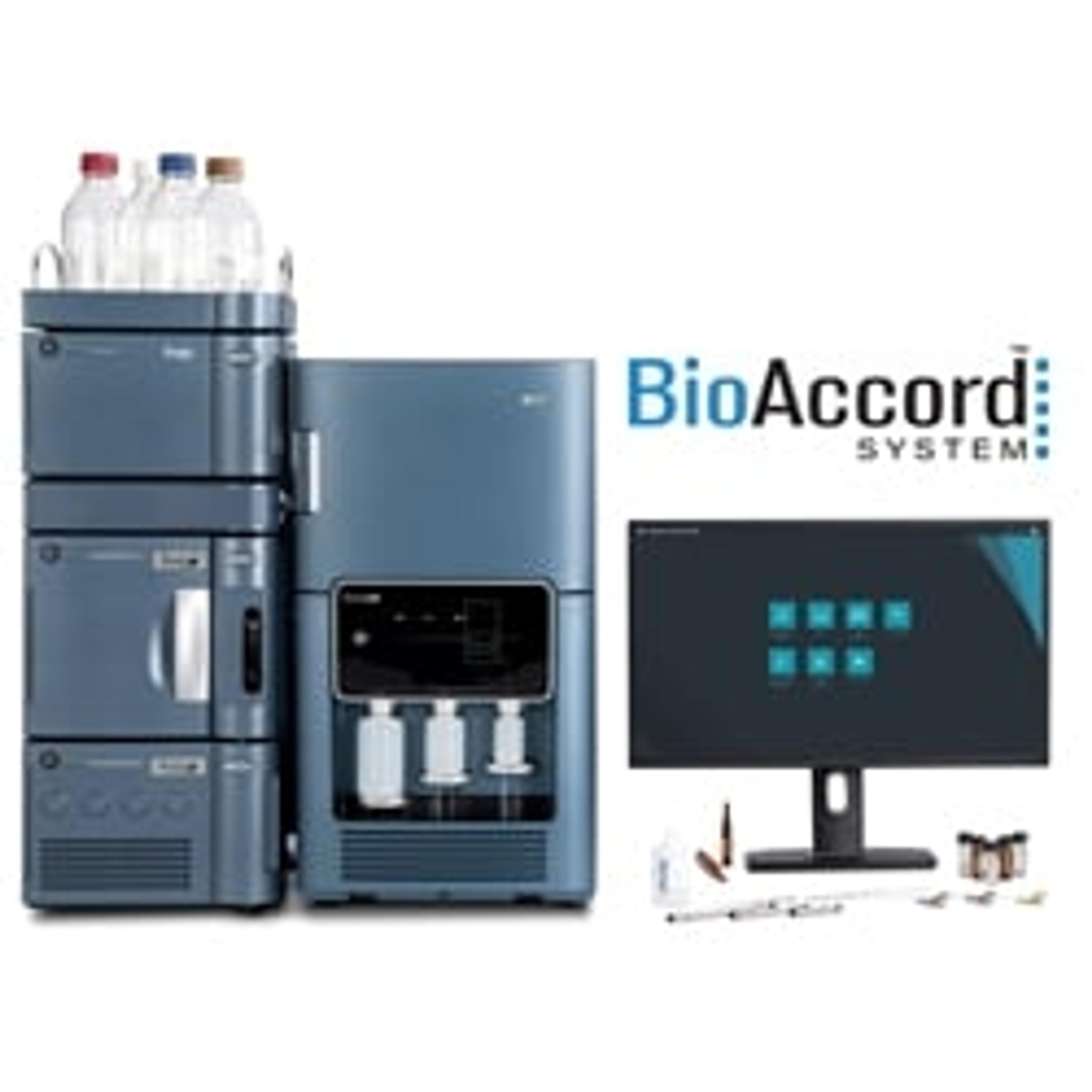
BioAccord LC-MS System
WatersThe First SmartMS-Enabled Biopharma Solution The Waters BioAccord System is an integrated system that simplifies high performance LC-MS biopharmaceutical analysis for every user. An easy-to-use system solution that puts the power to make decisions directly in your hands; a self-calibrating, self-optimizing, self-sufficient tool that equips you with high quality data you can use to tackle the challenges you face every day during biopharmaceutical development.