Waters and BioCity Debut New Open Access Analytical Laboratory in the BioHub at Alderley Park, UK

Laboratory provides access to cutting-edge analytical technologies which strengthen modern life and health sciences research

8 Mar 2016
Alex Waite
Editorial Assistant

Industry news

Waters Corporation and BioCity, the UK's largest bioscience incubator company, celebrated the opening of a new open access analytical laboratory.

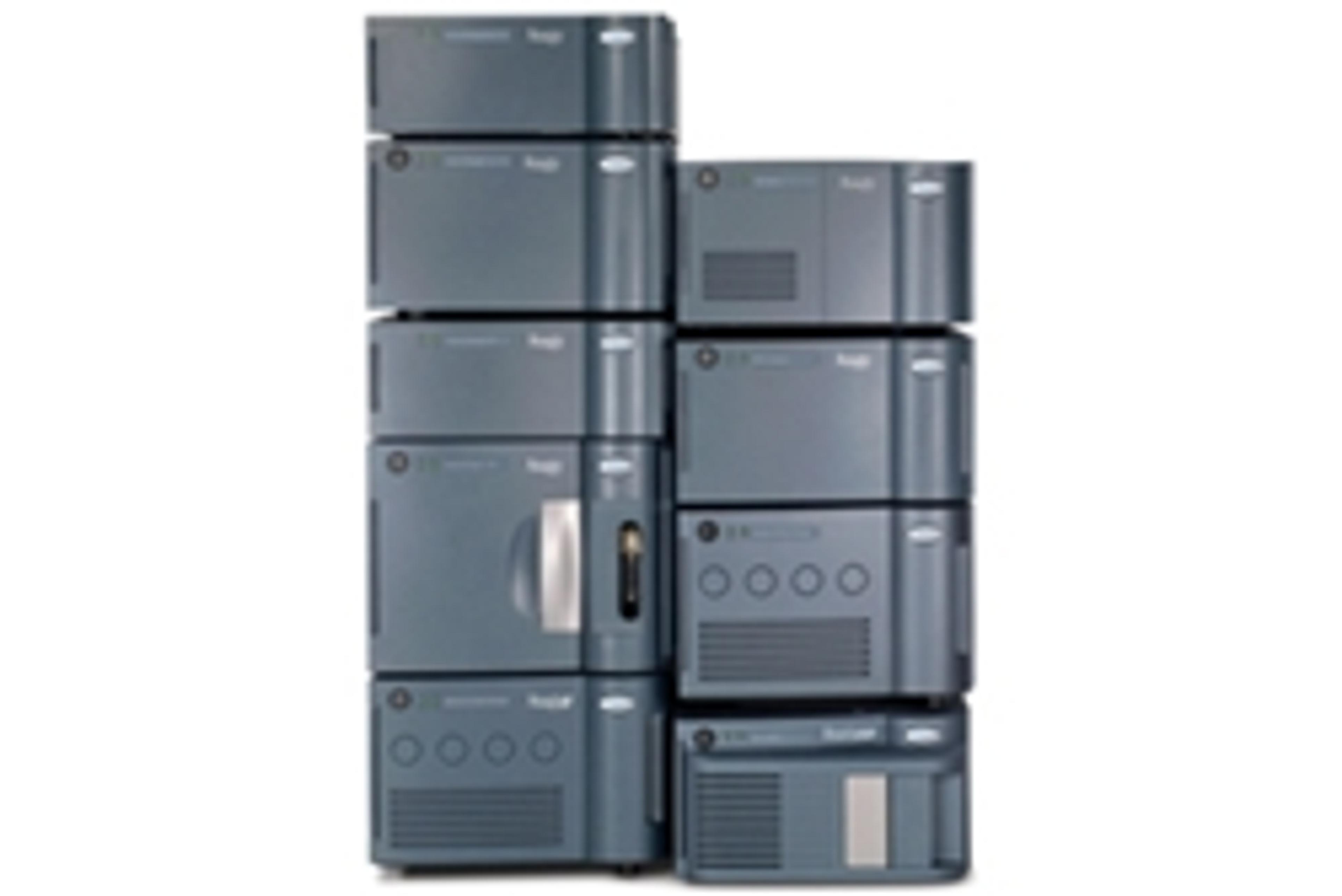
Located in the BioHub at Alderley Park, the laboratory offers Waters’ state-of-the-art liquid chromatography (LC), mass spectrometry (MS) and informatics technologies, within a suite of analytical modules for scientists working in the pharmaceutical and life science industries.

Chancellor of the Exchequer, George Osborne stated, “This is more great news for Alderley Park and for Life Sciences in Cheshire. We are home to so many innovative and growing businesses in the sector and I was delighted to hear that BioCity Group and larger employers like Waters are helping to nurture new talent.”

“Scientists on-site now have access to state-of-the-art Waters’ capabilities through the open access facility,” said Rohit Khanna, Senior Vice President, Applied Technology. “The companies located at BioHub are engaged in breakthrough research and development. Close engagement with these companies provides Waters with a deeper insight into their needs and challenges.”

The laboratory will be resourced with many of Waters’ latest technology offerings, including ACQUITY® QDa®, ACQUITY H-Class™, ACQUITY UPC and ACQUITY PDA Detector™, along with the expertise required to leverage the power of these instrumentation platforms. The laboratory also includes a nuclear magnetic resonance (NMR) system provided by Manchester Science Partnerships, the owners of Alderley Park.

“At Alderley Park, and indeed across the BioCity group, we are working with a growth formula that provides emerging and growing companies with access to everything they need to succeed - be it people, facilities, finance or technology,” said Dr. Glenn Crocker (MBE) CEO, BioCity Group. “The fact that our model and the work we are doing in partnership with Waters and MSP is recognized by the Chancellor is encouraging to hear. We are proud to be playing a leading role at the forefront of both the local and national economy.”

Links

Tags

AutosamplersAutosamplers are automated sample loaders used with a number of separation and analytical techniques. HPLC autosamplers use automated partial or full-loop injection systems and place samples in vials or microplates for analysis. Autosamplers can also be used for elemental analysis. Features to consider include repeatability, syringe capacity, footprint and temperature controls.  Sample PreparationSample preparation can improve the quality and speed of separation techniques. Products to assist sample preparation include filtration equipment, evaporators, membranes and sieves.LC-MSLC-MS (liquid chromatography-mass spectrometry) systems and equipment are used for separation and quantitative analysis of complex mixtures, combining liquid chromatography and mass spectrometry. Quantify proteins, contaminants, pesticides or screen for drug metabolites with a high level of sensitivity. LC-MS systems and equipment include reverse phase, normal phase and specialized columns integrated with various MS detectors such as time-of-flight (TOF), quadrupole, orbitrap or ion trap mass analyzers. LC-MS/MS instruments equipped with a qTOF or triple quadrupole analyzer give greater sensitivity and resolving power to your analysis. Find the best LC-MS equipment in our peer-reviewed product directory: compare products, check customer reviews and receive pricing direct from manufacturers.Mass SpectrometryMass spectrometry (MS) is a powerful analytical technique used to identify and quantify molecules based on the mass-to-charge ratio of gas-phase ions. It provides detailed information about the structure, composition, and properties of compounds and is widely used across fields such as environmental monitoring, materials science, drug discovery and development, food and beverage testing, and wider chemical research. Key MS techniques include tandem mass spectrometry (MS/MS), liquid chromatography–mass spectrometry (LS-MS) and inductively coupled plasma (ICP-MS). Choosing from these wide range of techniques and technologies can be a daunting task, so keep up to date with scientific applications, performance expectations, and customer reviews here all in one place. Visit our product directory to receive quotes direct from the manufacturer. IncubatorsLaboratory incubators are used to provide a stable environment to cultivate and store samples in, giving you optimal control of temperature, humidity, oxygen and CO<sub>2</sub> levels. Incubators are necessary equipment for cell culture and microbial research. Control temperature with heated or refrigerated incubators, or the levels of CO<sub>2</sub> and oxygen with CO<sub>2</sub> incubators. Using environmental chambers, create a humid climate for testing samples. Find the best incubators in our peer-reviewed product directory: compare products, check customer reviews and receive pricing direct from manufacturers.Chem / BioinformaticsCheminformatics and bioinformatics are computational techniques used in chemistry and biology, respectively, for data acquisition, processing and storage. Cheminformatics focuses on compound information, whereas bioinformatics is mainly applied to analysis and modeling of genomics, genetic and sequencing information. Hardware and software is available for data acquisition, analysis, management and storage.NanoLCNano LC is a nano scale liquid chromatography technique typically used for proteomic applications. The nano refers to the very low flow rate of the mobile phase in the system. The advantage of nanoLC is its high sensitivity. Often the system is integrated with a mass spectrometer in nano LC-MS or nano LC-MS/MS. When using nanoLC equipment consider column choice, software and accurate and precise flow rate control.Laboratory ManagementLaboratory management involves overseeing the operations of a lab, ensuring compliance with safety regulations, optimizing workflows, and maintaining equipment. Efficient lab management is key to ensuring accurate results and minimizing downtime. Technologies like laboratory information management systems (LIMS) and automated lab equipment are helping labs streamline operations. Browse our peer-reviewed product directory to find the best laboratory management tools, compare products, read reviews, and get pricing directly from manufacturers.Cell IncubationCell incubation involves maintaining controlled environmental conditions for growing and nurturing cells. It is essential for cell culture studies, drug testing, and regenerative medicine. Explore cell incubation solutions in our peer-reviewed product directory; compare products, check reviews, and get pricing directly from manufacturers.CollaborationLab EssentialsLab essentials include laboratory consumables that are vital to the operation of all laboratories.PharmaceuticalsPharmaceuticals are medicinal drugs used in healthcare to diagnose, prevent, cure and treat illnesses. Pharmaceuticals that are excreted after use appear in wastewater and can have detrimental effects on the environment.