Visit Corning Life Sciences at SLAS2016

Optimize Assay Performance and Streamline High Throughput Screening

18 Jan 2016

Sarah Thomas
Associate Editor

Industry news

The road to developing a new medicine can have many unexpected twists and turns along the way. Corning solutions can help you optimize your assays and streamline high throughput screening, so you can focus on the discovery and development of new ways to prevent and treat disease.

Visit Corning at SLAS2016, exhibit 1231 to learn more about its solutions for drug screening, lab automation, 3D cell culture and cancer research.

Plus, look out for the following Podium Talks and Poster Presentations:

Podium Talks

Automating Phenotypic and Target-based Discovery Using Parallel Automated Approaches

Addressing the Challenges of 1536 Cell-based Screening

January 25 | 12 to 12:30 p.m.

Presented by: Helen Plant, Scientist, AstraZeneca Pharmaceuticals, Macclesfield, Alabama, United Kingdom

Phenotypic, Model Organism and High Content Screening Assays

Enabling 3D Cell-based Spheroid HTS Assays in 384- and 1536-well Plate Formats

January 26 | 11:30 a.m. to 12:00 p.m.

Presented by: Franck G. Madoux, Ph.D., Senior Scientist, The Scripps Research Institute, Jupiter, Florida

Poster Presentations

Monday, January 25 | 1:00 to 3:00 p.m.

  • Poster #2039 | In Vitro Hepatotoxicity Profiling Using Corning® Epic® Label-free Technology with Primary Hepatocytes, HepG2 Cells, and Corning HepatoCells

Presented by: David Randle, PhD – Applications Development Manager, Corning Incorporated, Life Sciences

  • Poster #2041 | High Content Screening of Corning® HepatoCells for Hepatotoxicity

Presented by: Hannah Gitschier – Senior Applications Scientist, Corning Incorporated, Life Sciences

  • Poster #4005 | Validation of Th17 Cell Differentiation from Peripheral Blood CD4+ T Cells Through Assessment of mRNA Expression and Cytokine Secretion using Microplate Reading and Cellular Imaging

Presented by: Brad Larson, Principal Scientist, BioTek Instruments, Inc.

Tuesday, January 26 | 1:00 to 3:00 p.m.

  • Poster #2000 | Cancer Therapeutic Screening in Tumor Spheroids Co-cultured with Fibroblast and Immune Cells using Corning® Spheroid Microplates

Presented by: David Randle, PhD – Applications Development Manager, Corning Incorporated, Life Sciences

  • Poster #2002 | Three Dimensional Hepatotoxicity Screening using Corning® HepatoCells, the Corning® Spheroid Microplate, and the SCREEN-WELL® Hepatotoxicity library

Presented by: Hannah Gitschier – Senior Applications Scientist, Corning Incorporated, Life Sciences

  • Poster #2008 | A Novel Hepatocyte-like Cell as an In Vitro Screening Tool for Drug ADME/Tox Studies

Presented by: Rongjun Zuo – Senior Development Scientist, Corning Incorporated, Life Sciences

  • Poster #4002 | Image-Based Analysis of a Human Neurosphere Stem Cell Model for the Evaluation of Potential Neurotoxicants

Presented by: Brad Larson, Principal Scientist, BioTek Instruments, Inc.

Find out more about Corning at SLAS2016 here.

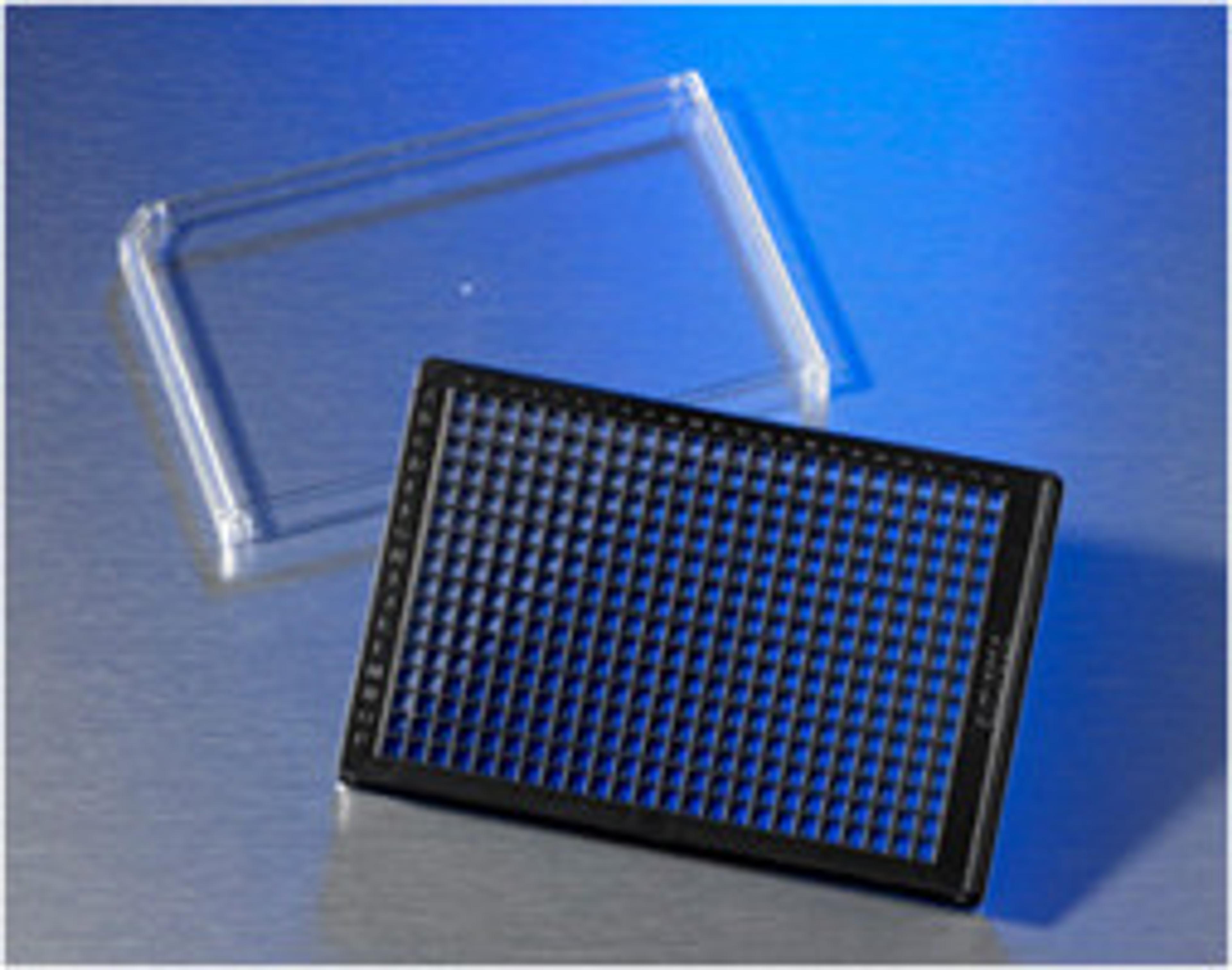
Corning® 384-well Black/Clear Round Bottom Ultra-Low Attachment Spheroid Microplate, Bulk Packed 10 per Bag, with Lid, Sterile

Corning Life Sciences

Ultra-Low Attachment microplates feature a covalently bound hydrogel layer that effectively inhibits cellular attachment Surface minimizes protein absorption, enzyme activation and cellular activation Surface is noncytotoxic, biologically inert and nondegradable Sterilized by gamma irradiation Black wall microplates have low background fluorescence, minimal light scatter and reduced crosstalk Opaque walls to prevent well-to-well crosstalk Can be used for both top and bottom reading instruments Bulk packed 10 per bag Novel well geometry aids formation of spheroids in center of well Optically clear round bottom with black opaque microplate body
(1)

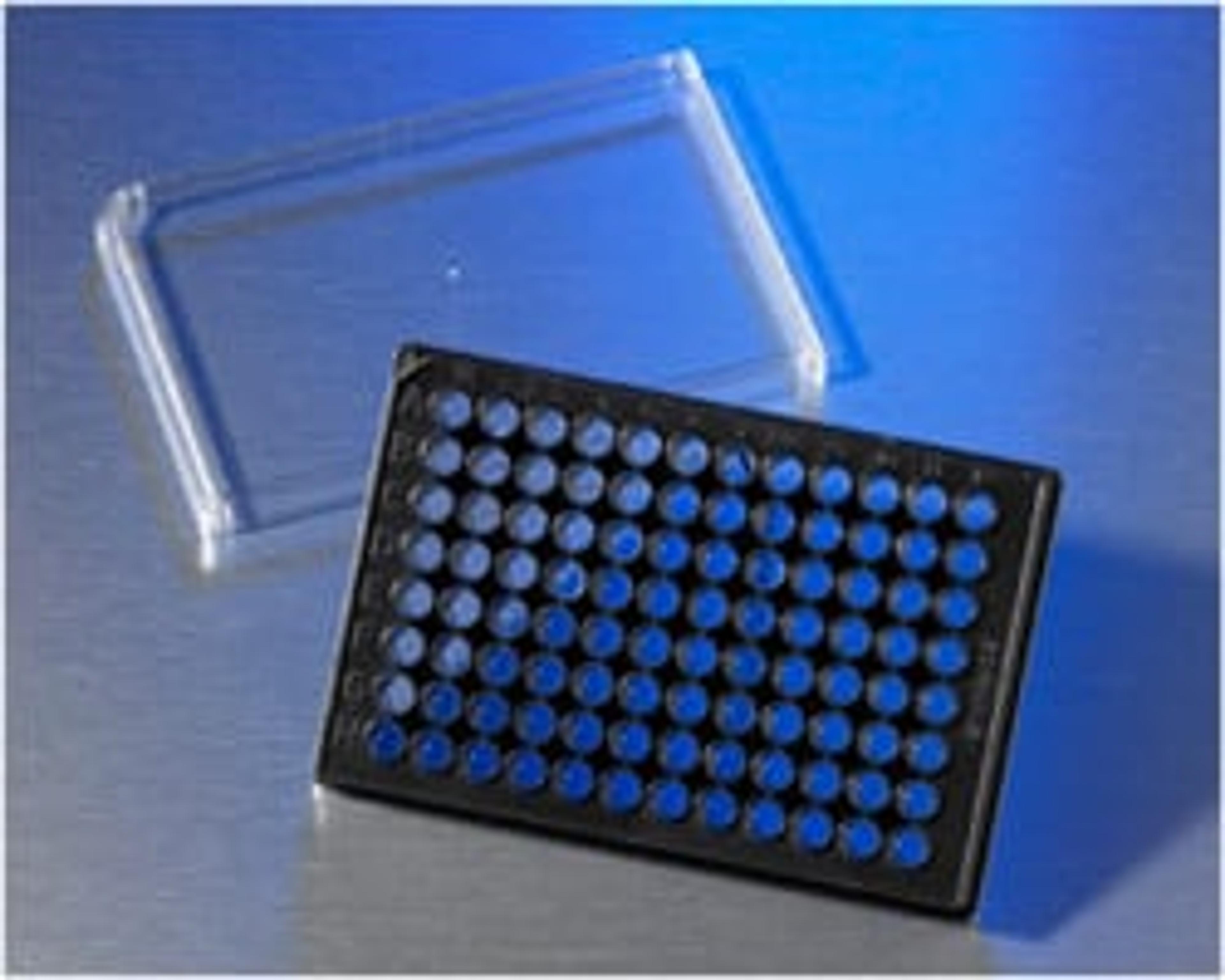
Corning® 96-well Black/Clear Round Bottom Ultra-Low Attachment Surface Spheroid Microplate, Bulk Packed, with Lid, Sterile, 10/Bag

Corning Life Sciences

Ultra-low attachment surface with covalently bonded hydrogel that minimizes cell attachment, protein absorption, enzyme activation and cellular activation The surface is noncytotoxic, biologically inert and nondegradable Round bottoms with 300 µL total volume Recommended working volumes of 0.075 to 0.30 mL Sterilized by gamma radiation Novel well geometry aids formation of spheroids in center of well Optically clear round bottom with black opaque microplate body
(1)

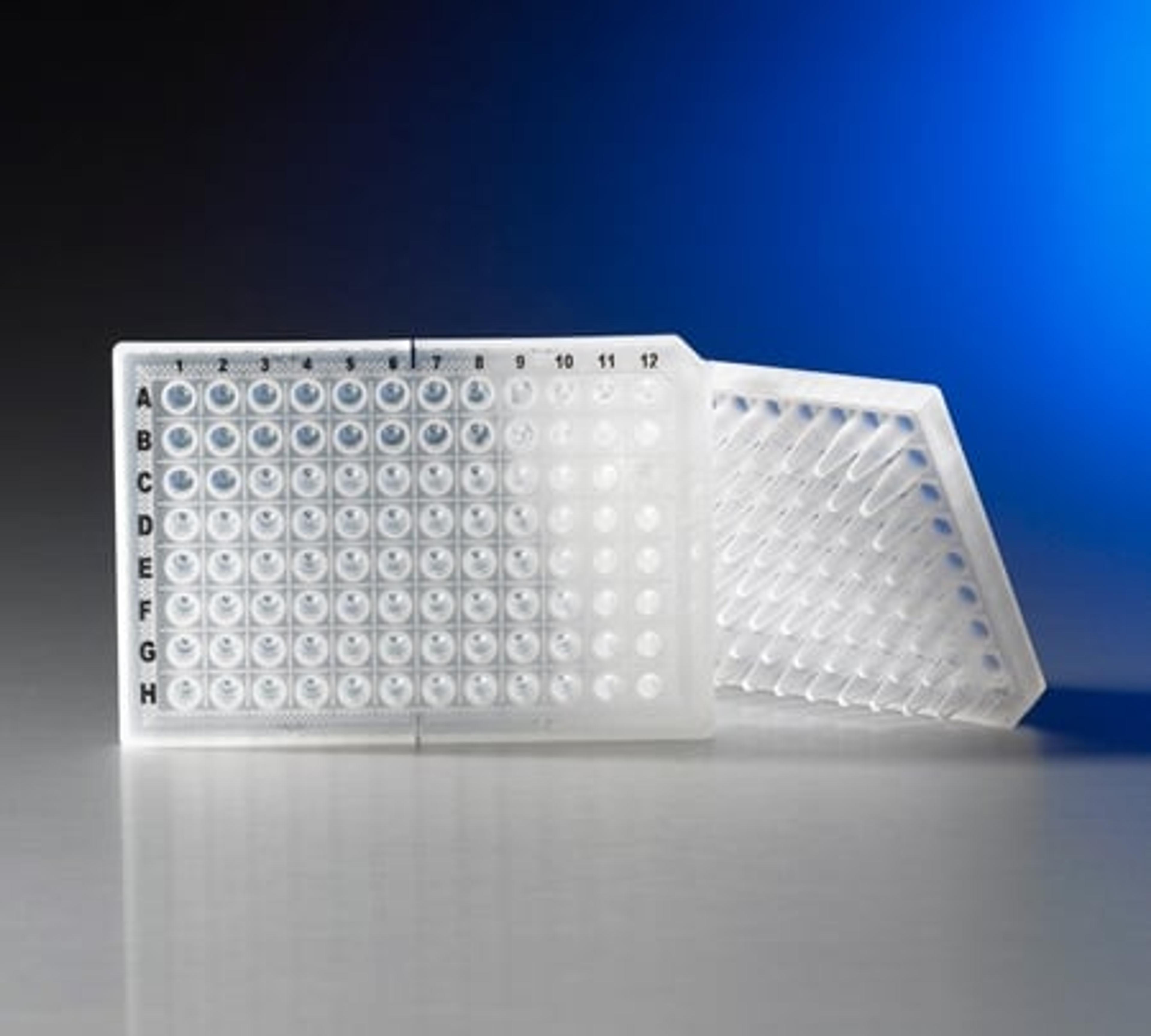
Axygen® 96-well Automation Compatible Polypropylene PCR Microplate, Half Skirt, Clear, Nonsterile

Corning Life Sciences

Axygen® automation-compatible PCR microplate features a rigid frame with a small split that sustains heat transferring during and post thermal cycling without distorting its shape. The polypropylene plate also features raised rims around the wells to provide tight sealing to minimize heat evaporation. Compatible with most major thermal cyclers, sequencers, and automation platforms, the plate provides optimal performance for downstream applications, including high throughput screening.Remains flat during and post thermal cyclingRaised well rims help reduce heat evaporationClear wells, visible grid for easy sample loading and trackingUltra-thin and consistent wall thickness for easy and consistent heat transferSuitable for standard and real-time PCRSingle notch cornerSBS footprintManufactured from polypropyleneRNase-/DNase-freeNonpyrogenicNonsterileCompatible with major automation platforms, thermal cyclers, and sequencers

(0)

Links

Tags

Cell Adhesion AssaysCell adhesion assays are used to quantitate attachment and analyze the molecular mechanisms for extracellular matrix adhesion, cell migration and sensitivity to inhibitors. Find the best cell adhesion assay equipment in our peer-reviewed product directory: compare products, check customer reviews and receive pricing direct from manufacturers.Cell / Tissue CultureCell culture or tissue culture is used to study the biology of cells or tissues and to isolate cellular products in an environment which can be manipulated and well defined. Accurately control your culture environment with bioreactors or culture incubators, bind your cells to a surface or together with an extracellular matrix. Distinguish cell types with differential media or proliferate cells with certain characteristics using selective media. Enrich your media with supplements such as growth factors, sera and vitamins. Find the best cell and tissue culture products, kits and equipment in our peer-reviewed product directory: compare products, check customer reviews and receive pricing direct from manufacturers.MicroplatesMicroplates are multi-well plates used to increase the throughput of biological investigations. The number of wells microplates contain can range from 6 to 3243 wells, with the 96-well format being the most commonly used. Microplates can come tailored for a range of applications including cell culture, PCR, filtration, storage, non-binding surface, protein crystallization, as well as pre-coated, deep well and normal Standard microplates. Additionally, options for microplate colors include clear , black, white or black with clear bottom and white with clear bottom for absorbance microplate reader applications. Find the best microplates for your lab in our peer-reviewed product directory: compare products, check customer reviews and receive pricing direct from manufacturers.High-Throughput ScreeningHigh-throughput screening (HTS) is an automated drug discovery technique for identification of active compounds against a compound library. Use HTS readers and integrated assay preparation / analysis workstations to screen your compounds. Identify active compounds against various HTS libraries, including membranes, proteins and peptides and HTS cell lines. Find the best high-throughput screening products in our peer-reviewed product directory: compare products, check customer reviews and receive pricing direct from manufacturers.Cell Lines Stem Cells and Primary CellsPrimary cell cultures, established cell lines and stem cells are vital for <i>in vitro</i> and <i>ex vivo</i> experimentation. High-quality cells, optimized for your applications, alongside optimized cell substrates, growth medium and supplements, are critical for experimental success. Explore a range of cells suitable for your applications, including isogenic cell lines, competent cells, induced pluripotent stem cell (iPSC)-derived cell lines, fungal/bacterial/mammalian cell lines, stem cells and cancer cell lines. Find the best cells for your research in our peer-reviewed product directory: compare products, check customer reviews and receive pricing direct from manufacturers.Labware and Lab SuppliesLabware and lab supplies include various forms of glassware, plasticware, reagents and personal protective equipment (PPE) and are used across all scientific laboratories, enabling daily tasks to be performed. Explore a range of flasks and beakers, petri dishes, carboys and storage bottles. Labware such as condensers, desiccators and burettes are also available for more specific tasks. Find the best labware and lab supplies in our peer-reviewed product directory: compare products, check customer reviews and receive pricing direct from manufacturers.Microplate Readers / DetectorsMicroplate readers are used to automate the detection and analysis of labeled or label-free components in microplates during assays or live-cell monitoring. Microplate readers are generally distinguished by their mode of detection. Types include absorbance, luminescence, fluorescence intensity, fluorescence polarization, TRF / FRET and multimode microplate readers. Microplate readers deliver a high throughput of samples by reading multiple wells simultaneously, with the 96-well format the most commonly used. As a result, microplate readers are often used in the drug discovery, bioassays, research and pharmaceutical industries for screening applications. Microplate loading can also be automated, with robotic microplate stackers to increase throughput. Find the best microplate readers in our peer-reviewed product directory: compare products, check customer reviews and receive pricing direct from manufacturers.Cell-Based AssaysCell-based assays are used to monitor the presence, quantity and activities of a desired cellular analyte including drug molecules or biomarkers. This can reveal information on cell health (apoptosis, cytotoxicity, viability and proliferation assays), cell metabolism, cell migration and cell signaling mechanisms. Find the best cell-based assay products, kits and equipment with our peer reviewed product directory: compare products, check customer reviews and receiving pricing direct from manufacturers.High-Content ScreeningHigh-content screening (HCS), also known as high-content analysis (HCA), is a high-throughput technique used in drug discovery to identify substances that alter the phenotype of cells. HCS uses fluorescent microscopic imaging and automated image analysis to investigate cellular events such as apoptosis, cell viability, GPCR activation, oxide production, neurite outgrowth, and cell signaling. Find the best fluorescent labeling reagents, cellular assays, and high-content imaging systems in our peer-reviewed product directory: compare products, check customer reviews and receive pricing direct from manufacturers.Plate ProcessingAutomated plate processing is used in microplate technologies for high-throughput, speed and efficiency. Plate processing systems include microplate handlers for moving plates, heat sealers, stackers and carousels for storage, retrieval and delivery, microplate washers and piercers. Useful features of plate processors include walk-away automation, compatibility and easy integration with microplate systems.Automated Liquid HandlingAutomated liquid handling equipment is used to mix, dilute and dispense allotted volumes of liquid into microplates and other vessels automatically. The robotic, liquid handling arms can dispense from single channel to 3456 multichannel as well as operate nanoliter dispensing, enabling high throughput of samples. Find the best automated liquid handlers in our peer-reviewed product directory: compare products, check customer reviews and receive pricing direct from manufacturers.Drug DiscoveryDrug discovery is the process of identifying potential new medications, involving stages such as target identification, compound screening, and preclinical development. It relies on cutting-edge technologies like high-throughput screening, artificial intelligence, and molecular modeling to accelerate the identification of drug candidates. Drug discovery plays a pivotal role in developing new therapies for diseases ranging from cancer to rare genetic disorders. Browse our peer-reviewed product directory to find the latest drug discovery technologies, compare options, check customer feedback, and get pricing directly from manufacturers.ScreeningUsing robotics, data processing and control software, liquid handling devices and sensitive detectors, screening allows a researcher to quickly conduct millions of chemical, genetic or pharmacological tests.Compound ScreeningCompound screening is a method used to discover specific compounds that could be promising candidates for pharmaceutical use. This potential is identified when compounds interact with the target protein during screening and could therefore be carried forward in the drug development process.SLASThe Society for Laboratory Automation and Screening (SLAS) is an organization focused on laboratory automation, high-throughput screening, and biotechnology innovation. SLAS promotes scientific advancements through conferences, publications, and industry collaborations.