
Versatile Centrifugal Evaporator for Contract Research Organizations
17 Apr 2016Product news
The EZ-2 Elite centrifugal evaporator from Genevac, an evaporator of choice for large Pharma R&D, uniquely combines high performance, versatility, ease-of-use and affordability making it the perfect workhorse system for Contract Research Organizations (CRO's).
The EZ-2 Elite is designed to efficiently concentrate or completely dry samples. It is compatible with a wide selection of sample holders, enabling evaporation from common sample container formats including round-bottom flasks, tubes vials and microplates. SampleGenie™ technology combined with a FastLyo programme on the EZ-2 Elite allows HPLC fractions to be concentrated and freeze dried directly into a submission vial. This innovation produces a weighable solid, eliminating manual handling, increasing recoveries and removing the chance of cross-contamination.
Operating the EZ-2 Elite is highly intuitive: just load your samples, select maximum safe temperature for samples, select solvent type and hit start. Offering unattended operation through a suite of pre-programmed methods, the compact evaporator requires no user training, even a beginner can competently use the system within 5 minutes.
Drawing upon Genevac's technological leadership in high performance evaporation, the EZ-2 Elite is able to routinely dry stubborn samples. Benefiting from a high-performance scroll pump that delivers deep vacuum, the product is able to remove even high-boiling solvents such as DMSO and NMP and acidic solvents such as HCl.
Internal heating of vapor duct and system components ensures that such challenging solvents only collect in the SpeedTrap™ condenser and not anywhere else. The condenser comes with automatic defrost and drain technology. The evaporator controls the condenser and the solvent collection vessel, offering mid-method defrosting and draining.
Related products
Request Quote for All Products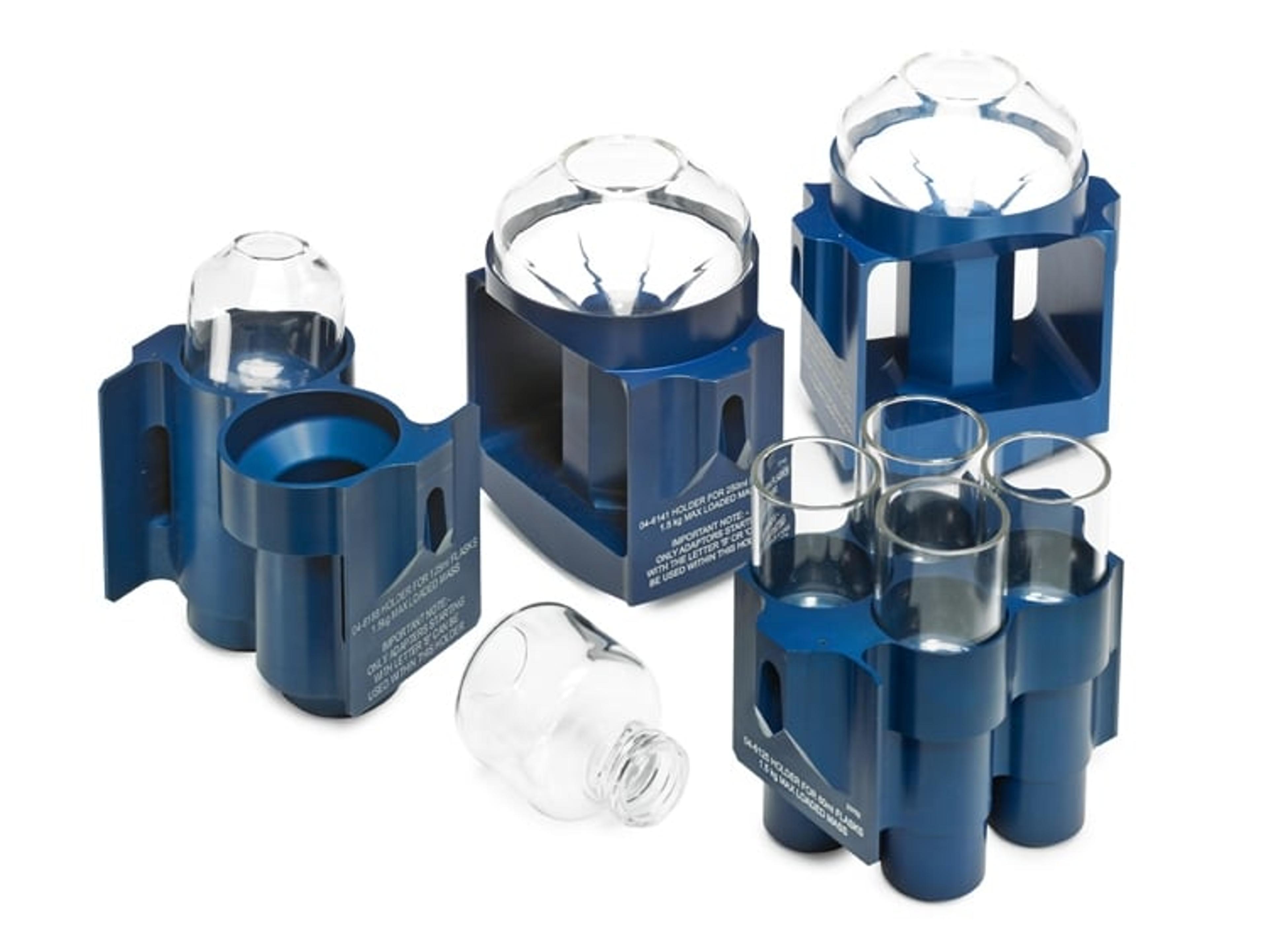
Sample Genie
GenevacSampleGenie technology, in conjunction with Genevac Rocket Synergy, HT and EZ-2 series evaporators, enables large sample volumes to be dried directly into vials, eliminating a number of time-consuming sample handling steps and the attendant risk of errors. Traditionally protocols for concentration of chromatographic fractions has involved drying multiple fractions in an evaporator, re-suspending and pooling fractions into a single vial and then re-drying before storage and analysis. Even with modern centrifugal evaporators such processes typically take 2-3 days to complete. Using SampleGenie pooled fractions can be dried directly into the final submission vial, reducing the process time by up to 66%. Available for starting volumes of up to 60ml, 125ml and 250ml, SampleGenie is compatible with a wide range of HPLC, GC and storage vial sizes.

EZ-2 Series
GenevacUsing the most advanced proven technology in evaporation science, the third generation of the EZ-2 Series has been designed specifically for solvent removal in life science research; be that concentration of samples or complete drying. The innovative design of the EZ-2 Series presents many advantages for working in parallel within synthesis chemistry, analytical sample preparation and for general-purpose solvent removal needs in life science laboratories. At the heart of the evaporator is a solvent resistant, oil-free vacuum pump, and the high efficiency, defrost-free, SpeedTrap™, which traps all solvents as liquids, even water. Solvents collect in the insulated, plastic coated glass vessel, enabling the user to see the progress of evaporation and determine when the trap should be emptied. The EZ-2 Elite has a special auto-draining collection vessel fitted to the SpeedTrap, which uses the very powerful Scroll pump. The Elite can therefore evaporate the highest boiling solvents such as DMSO and perform the Genevac LyoSpeed fast lyophilisation method for HPLC fractions. There is a low-cost option available on the Standard, Plus and Elite that allows the routine use of hydrochloric acid and aggressive solvents. By building key elements in Hastelloy®, glass or PTFE, full protection against acid chlorides is achieved. New to the HCl Resistance option is the ability to evaporate concentrated nitric acid. This option must be specified when ordering, as it cannot be retrofitted. All EZ-2 models are resistant to routine use of high concentrations of TFA as standard. An additional option is available to allow safe operation for those wishing to use highly explosive solvents, such as pentane or diethyl ether - the inert gas purge system. This system can also be used to preserve oxygen or moisture sensitive samples under an inert gas blanket until the user returns to the evaporator. The EZ-2 Series can also accommodate a wide selection of sample holders, including round-bottom flasks up to 500ml, tubes up to 160mm long (including Dionex ASE® and Radleys Carousel tubes), custom reaction blocks, and shallow or deep-well microtitre plates. EZ-2 Series Models: The Standard (EZ-2) is suitable for water and volatile solvents The Envi (EZ-2 Envi) is recommended for concentration of volatile solvents The Plus (EZ-2 Plus) is recommended for solvents with boiling points upto 165°C The Elite (EZ-2 Elite) is recommended for solvents with boiling points upto 220°C