Variable speed and large sample volumes: RETSCH’s new rotor mills

9 Jun 2015

Lois Manton-O'Byrne, PhD
Executive Editor

Product news

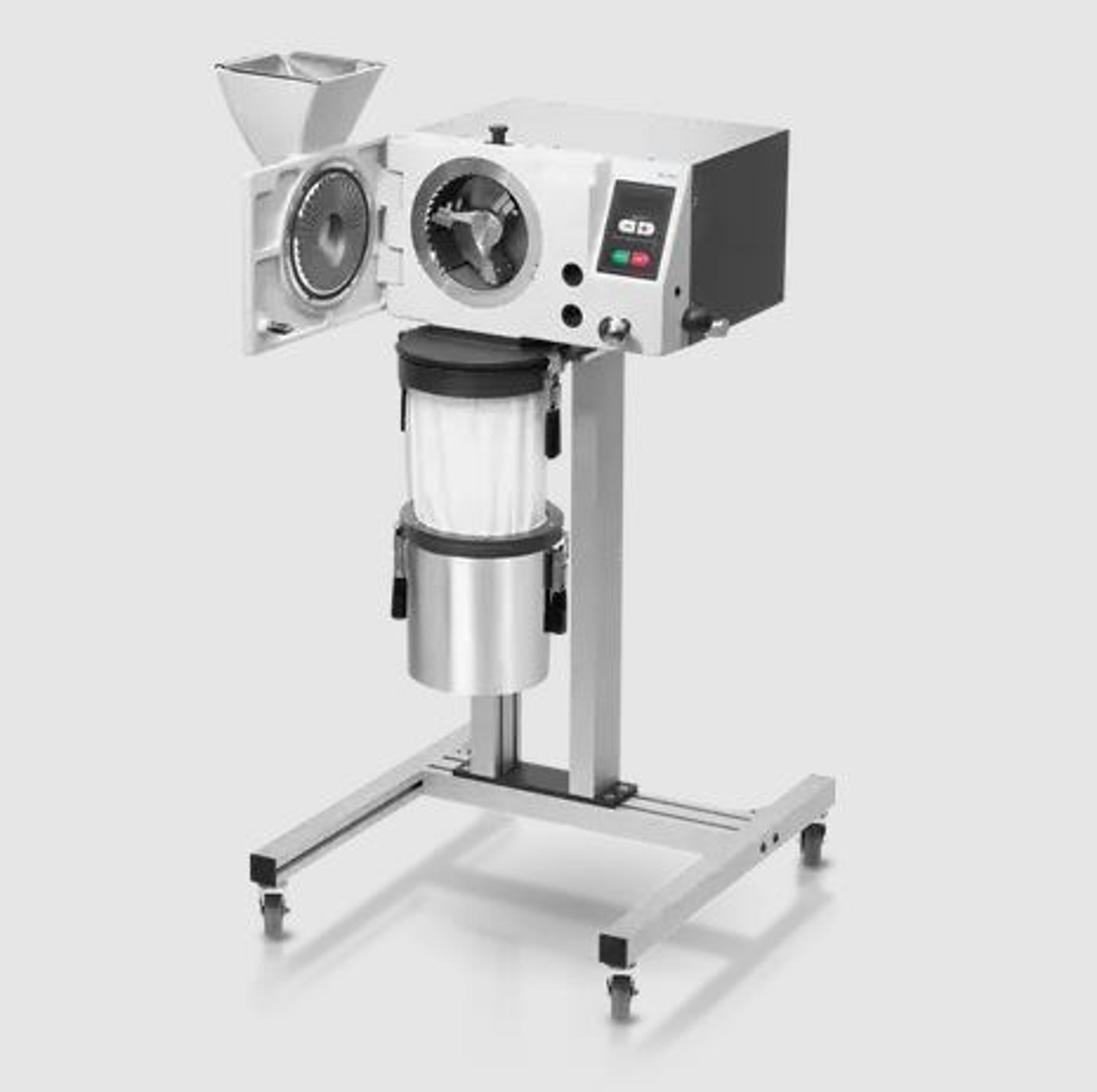
The new generation of RETSCH rotor mills SR 300 and SK 300 has been greatly improved with regard to performance, handling and flexibility.

The speed of the rotor beater mill SR 300 has been substantially increased and can be set between 3,000 and 10,000 rpm, thus allowing for optimum adaptation to application requirements. Further new features are the removable cassette and push-fit rotor which can be easily taken out for cleaning without using tools, just like the removable hopper. The cassette allows for almost 100% sample recovery. Grinding chamber, feed hopper and material inlet and outlet of the SR 300 are made from high-quality stainless steel. It is therefore ideally suited for use in pharmaceutical and food laboratories.

The new cross beater mill SK 300 now also operates with higher speed which can be set from 2,000 to 4,000 rpm. Grinding insert and rotor are as easily removable as in the SR 300. Both mills can be equipped with an optional cyclone which improves material discharge, particularly for very fine particle sizes, and provides additional cooling of the sample.

Thanks to their robust design RETSCH rotor mills are suitable for applications in the laboratory as well as for small scale production.

Benefits at a glance:

  • Variable rotor speed for optimum adaptation to sample requirements
  • Material feed size up to 25 mm
  • Optional cyclone improves material discharge and cooling
  • Quick and easy cleaning thanks to removable grinding inserts and rotors
Links

Tags

Sample PreparationSample preparation can improve the quality and speed of separation techniques. Products to assist sample preparation include filtration equipment, evaporators, membranes and sieves.Mechanical TestingMechanical testing explores the elastic and inelastic nature of a material when force is applied. A mechanical test shows whether a material is suitable for its intended application by measuring hardness, tensile strength, elongation, elasticity, and fatigue limit.Homogenizers and BlendersHomogenizers and blenders are used to homogenize various types of material, including tissue, cells, plants, food, soil, biological and chemical samples for subsequent analysis. Lab equipment for sample homogenization includes handheld and benchtop homogenizers, bead mill, ultrasonic and multiple sample homogenizers, high shear homogenizers and blenders. Homogenizer bead and probe multipacks are available to avoid cross contamination of samples, as well as cooling systems for homogenizing temperature-sensitive samples. Homogenizers are often used in the first step of extraction of DNA, RNA and proteins from tissue and cell samples. Find the best homogenizers and blenders in our peer-reviewed product directory: compare products, check customer reviews and receive pricing direct from manufacturers.MillingMilling is the process of grinding, crushing, or cutting materials into smaller parts. In scientific research, it plays a crucial role in sample preparation for analysis in areas such as food, pharmaceuticals, and materials science. Explore milling equipment in our peer-reviewed product directory; compare products, check reviews, and get pricing directly from manufacturers.Powder Analysis
Variable speed and large sample volumes: RETSCH’s new rotor mills