Utilizing Atomic Absorption Spectrometry to Comply with Waste Water Regulation

Find out how the latest atomic absorption technology can be used to meet the demands of the EU Water Framework Directive and other environmental legislation

11 Oct 2016
Weylan Kiam-Laine
Microbiologist

Editorial article

Simon Nelms, Regional Marketing Manager, Trace Elemental Analysis, Thermo Fisher ScientificEuropean Water Framework Directive The EU Water Framework Directive commits all member states to achieve good qualitative and quantitative statuses for all water bodies, laying down strategies against water pollution through identification of priority substances and monitoring of different classes of contaminants.

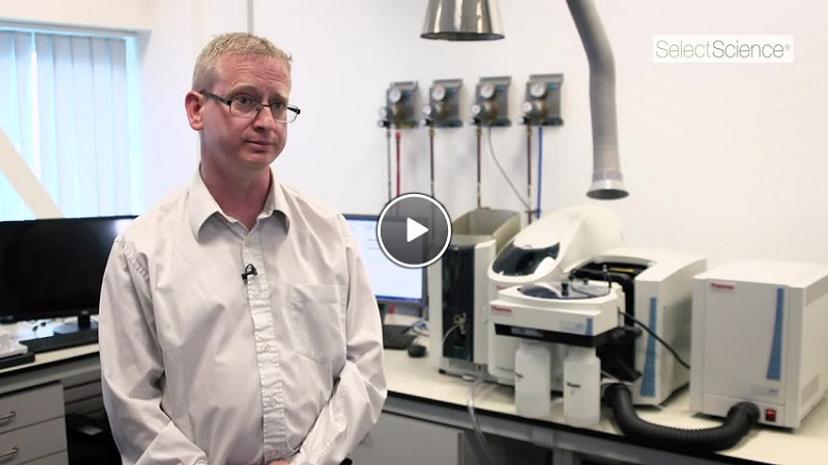
Simon Nelms, Regional Marketing Manager, Trace Elemental Analysis, Thermo Fisher Scientific, describes how the Thermo Scientific™ iCE™ 3500 Atomic Absorption Spectrometer can be employed for effluent, soil digest or surface water analyses detecting trace contaminants.

Atomic absorption spectrometry is used for environmental analyses such as “effluent analysis, for things like lead and cadmium”, Simon describes. He explains that the Thermo Scientific™ iCE™ 3500 is typically employed by laboratories for legislation purposes, helping laboratories in “meeting the requirements of the European Water Framework Directive for example”.

Simon believes that “in the future this kind of technology is likely to be taken up more by countries where there is emerging legislation for lower levels of contamination in environmental samples”. He concludes that “as it’s a cost effective approach, it’s a good entry level instrument for those laboratories that are just embarking on new environmental analysis requirements”.


The key benefits of this instrument are its high sensitivity in furnace mode and low cost of ownership

Simon Nelms  Thermo Fisher Scientific


Watch the full interview here and visit our Special Feature for more interviews from the Water Contaminants Analysis for the EU Water Framework Directive Symposium.

Leave a product review today to be entered into a prize draw for the chance to win an iPad or $400 Amazon voucher (or equivalent currency).

Links

Tags

Atomic Absorption / Emission SpectroscopyAtomic absorption spectroscopy (AAS) and atomic emission spectroscopy (AES) — also called optical emission spectroscopy (OES) — are used to detect the elemental constituents in samples. Both techniques involve the atomization of a sample. Atomic absorption spectrometers may use a flame or furnace to create an atomic vapor of the sample before irradiation with spectral light. Optical emission spectrometers may use a flame, inductively coupled plasma (ICP), microwave plasma (MP) or spark arcs to atomize and excite the sample. At higher excitation energies, electrons can be emitted instead of photons, which can be useful for samples that can’t be atomized and for surface analysis. Explore electron spectroscopy equipment such as Auger spectrometers and photoelectron spectrometers for surface elemental analysis of samples. Find the best atomic absorption, photoelectron and optical emission spectrometers in our peer-reviewed product directory: compare products, check customer reviews and receive pricing direct from manufacturers.Environmental Monitoring and TestingEnvironmental monitoring and testing uses handheld portable analyzers, kits, spectrometers or chromatography systems for air, water, soil, food and other sample testing. Useful features of analyzers such as BOD and COD include portability, easy calibration, automation and sensitivity.  Environmental test kits for pH, water, moisture, etc, should be accurate, sensitive, reliable, fast and easy to use.Water PurificationThere are a number of water purification methods available to remove contamination from laboratory water. These systems include demineralization, reverse osmosis, filtration and ultrafiltration. A combination of methods is sometimes necessary to achieve purified water suitable for use in experiments.RegulatoryPharmaceutical regulations impact on all areas of drug development, manufacture and control and supply. Services are provided from the early stages of drug development and clinical trials through to dossier submission, approval and marketing. Regulatory also includes submission of analytical studies from the pharmaceutical product and safety. Waste WaterSoil TestingSoil testing helps determine the nutrient content, pH level, and other factors affecting soil health. This information is critical for agriculture, environmental science, and land management. Explore soil testing solutions in our peer-reviewed product directory; compare products, check reviews, and get pricing directly from manufacturers.Water AnalysisAnalytical methods used to test the purity of drinking water include determining the level of contaminants abides to the level set by the Environmental Protection Agency (EPA).Environmental ContaminationContaminants in the environment are harmful chemicals that are present in the air, land and water. These include pesticides, pharmaceuticals, persistent organic pollutants (POPs) and many more.SpectrometrySpectrometry is a technique used to measure the mass-to-charge ratio of ions. It provides valuable information about the composition, structure, and molecular weight of compounds. Used across a variety of fields, including chemistry, biology, and environmental science, spectrometry is essential for identifying substances, analyzing mixtures, and developing new products. Explore the best spectrometry tools in our peer-reviewed product directory; compare products, check reviews, and get pricing directly from manufacturers.