Use Light-Scattering to Measure Compound Solubility or Microbial Growth in a Nephelometric Microplate Reader

24 Jun 2012

Product news

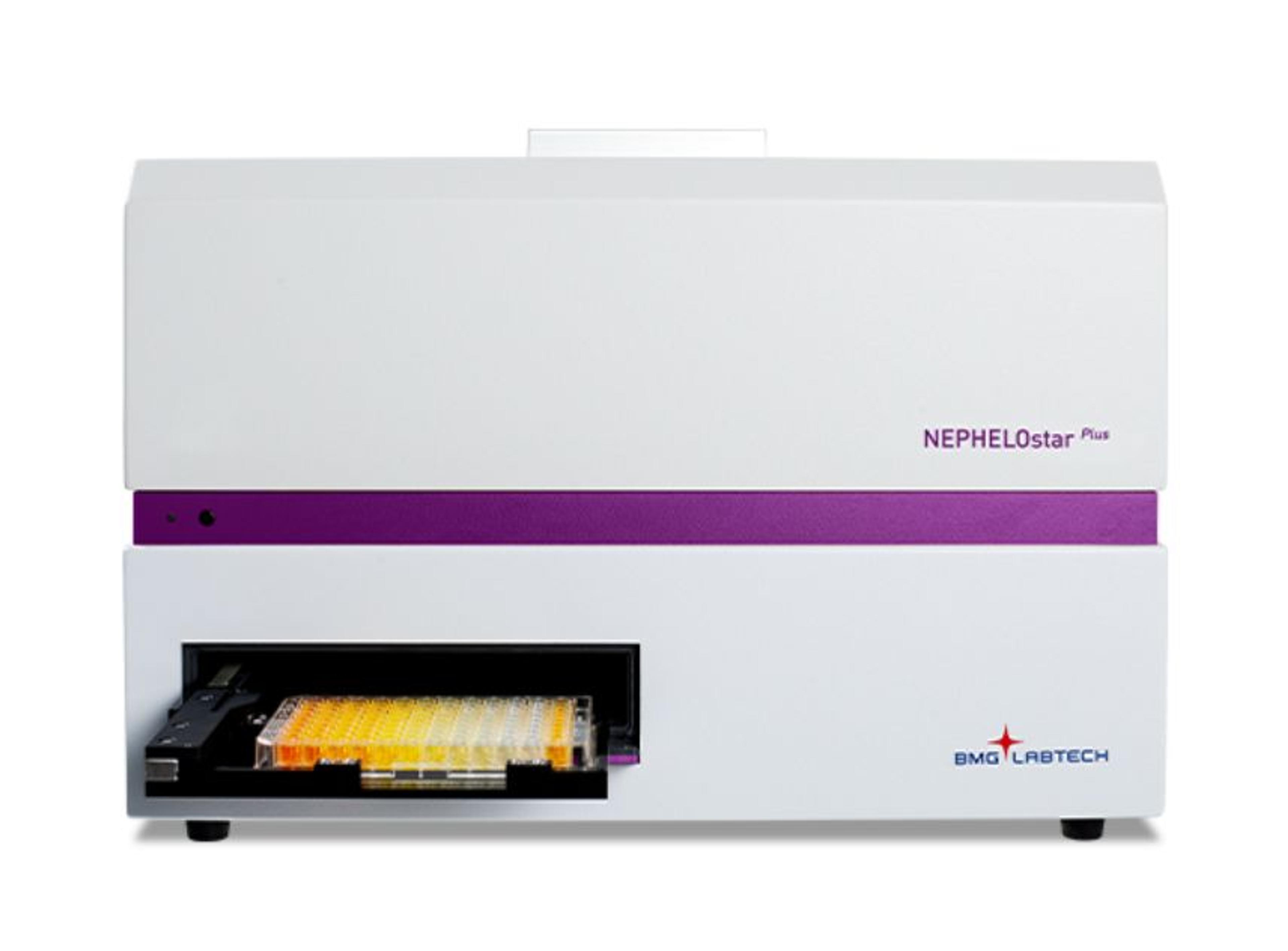
BMG LABTECH is proud to announce its newest addition to its family of microplate readers, the NEPHELOstar Plus. This is a laser-based nephelometer that measures light-scattering in a microplate based environment. Light-scattering is an alternative to absorbance measurements and it is a technique that measures the turbidity or solubility of a sample in a solution. This nephelometric microplate reader offers the HTS or Drug Screening laboratory an easy to use, low cost, and rapid method for checking the solubility of compounds. In addition, it offers microbiology laboratories a more precise method with a larger dynamic range to measure cellular growth.

The NEPHELOstar Plus detects insoluble particles in liquid samples by measuring forward scattered light. The flexibility and performance of the NEPHELOstar Plus allows more applications to be adapted to light-scattering than ever before. These applications include: compound solubility screening, microbial cell growth kinetics, antibody-antigen interaction, Immunoprecipitation, and polymerization monitoring.

The NEPHELOstar Plus can be up to thirty times more sensitive than traditional transmission readers that measure the absorbance via optical density. Options to adjust the intensity and beam diameter of the laser light allow for more precise measurements in colored or turbid solutions. In addition, the flexible beam diameter allows for measurements in 24, 48, 96 and 384-well microplate formats. These features, along with BMG LABTECH´s Digital Photon Integration (DPI) technology and a detection angle of 80°, ensure that the NEPHELOstar Plus nephelometer is approximately thirty times more sensitive than conventional transmission readers.

Developed to meet high-throughput demands, this microplate-based nephelometer is faster than conventional solubility detection methods with the highest possible sensitivity and flexibility. Thus the NEPHELOstar Plus is an ideal solution for those looking for a compound solubility, microbial growth, or some other light-scattering measurement application.

Links

Tags

MicroplatesMicroplates are multi-well plates used to increase the throughput of biological investigations. The number of wells microplates contain can range from 6 to 3243 wells, with the 96-well format being the most commonly used. Microplates can come tailored for a range of applications including cell culture, PCR, filtration, storage, non-binding surface, protein crystallization, as well as pre-coated, deep well and normal Standard microplates. Additionally, options for microplate colors include clear , black, white or black with clear bottom and white with clear bottom for absorbance microplate reader applications. Find the best microplates for your lab in our peer-reviewed product directory: compare products, check customer reviews and receive pricing direct from manufacturers.High-Throughput ScreeningHigh-throughput screening (HTS) is an automated drug discovery technique for identification of active compounds against a compound library. Use HTS readers and integrated assay preparation / analysis workstations to screen your compounds. Identify active compounds against various HTS libraries, including membranes, proteins and peptides and HTS cell lines. Find the best high-throughput screening products in our peer-reviewed product directory: compare products, check customer reviews and receive pricing direct from manufacturers.Microplate Readers / DetectorsMicroplate readers are used to automate the detection and analysis of labeled or label-free components in microplates during assays or live-cell monitoring. Microplate readers are generally distinguished by their mode of detection. Types include absorbance, luminescence, fluorescence intensity, fluorescence polarization, TRF / FRET and multimode microplate readers. Microplate readers deliver a high throughput of samples by reading multiple wells simultaneously, with the 96-well format the most commonly used. As a result, microplate readers are often used in the drug discovery, bioassays, research and pharmaceutical industries for screening applications. Microplate loading can also be automated, with robotic microplate stackers to increase throughput. Find the best microplate readers in our peer-reviewed product directory: compare products, check customer reviews and receive pricing direct from manufacturers.Clinical MicrobiologyMicrobiology is the study of microorganisms including protists, prokaryotes, fungi, and, often, viruses. Microorganisms are a useful research tool as genetic vectors and, in immunology, for antibiotic susceptibility testing, cellular biology and genetics. Microorganisms commonly grow readily in incubators with microbial culture media; this can contain chromogenic supplements to differentiate between cell lines. Estimate your culture’s density of microorganisms with colony counters, or screen and select colonies for desirable clones with automated colony pickers. Additionally, equipment is available to monitor environments for the presence of microbes and identify with microbial identification instruments. Find the best microbiology products in our peer-reviewed product directory: compare products, check customer reviews and receive pricing direct from manufacturers.High-ThroughputLight Scattering
Use Light-Scattering to Measure Compound Solubility or Microbial Growth in a Nephelometric Microplate Reader