Upcoming life science webinars to ease life in the lab

Discover the latest tools and techniques to expand your life sciences research capacity with expert-led presentations on oligonucleotide analysis, AI utilization in cancer research, effective air monitoring for disease surveillance, and more

4 Nov 2022
Georgina Wynne Hughes
Editorial Assistant

Expert insights

Upcoming SelectScience Webinars

SelectScience® hosts dozens of informative free webinars for scientists every month, featuring world-class speakers at the very forefront of their respective fields. In this week’s feature, we are focusing on webinars that may especially interest those working in the field of life sciences. If you wish to empower your life sciences research, you won't want to miss these webinars over the next few weeks. In addition, we also highlight some of our top on-demand life science webinars, ensuring that you don’t miss out on these free learning opportunities.

Explore innovative solutions designed for oligonucleotide analysis, understand revised ISO 8655 guidelines, discover the advantages of new AI-based stain-free cell analysis for cancer research and learn how live cell metabolic analysis can pave the way for cell and gene therapy.

Comprehensive and easy-to-use workflows for oligonucleotide sequence confirmation
Comprehensive and easy-to-use workflows for oligonucleotide sequence confirmation

In this webinar, we will explore the data quality produced by the high-resolution LC-MS analysis of a range of oligonucleotide sequences, as well as the setup and processing of the subsequent results.

Monday, November 7, at 15:00 GMT / 16:00 CET / 10:00 EST / 07:00 PST

Register here

Ensure your pipetting is QC compliant: Understanding revised ISO 8655 guidelines

Ensure your pipetting is QC compliant: Understanding revised ISO 8655 guideline

In April 2022, the ISO 8665 guidelines were updated with several changes made to the calibration and testing of pipettes and dispensers. In this webinar, Joni Åke, Product Manager at Sartorius, and Axel Taube, Service Product Manager at Sartorius, will provide a detailed breakdown of these updates and explain how they will affect pipette calibration, pipette checking, and testing of equipment and related services.

Thursday, November 10, at 16:00 GMT / 17:00 CET / 11:00 EST / 08:00 PST

Register here

Live cell metabolic analysis: Paving the way for metabolic research and cell and gene therapy

Live cell metabolic analysis: Paving the way for metabolic research and cell and gene therapy

In this webinar, Dr. Ryosuke Takahashi, VP, Cell and Gene Therapy Business, and Kenan Moss, Application Specialist, PHC Corporation of North America, will discuss how, alongside industry-leading incubation technology, continuous metabolic analysis will drive the opportunity to make new discoveries in these critical life science fields.

Tuesday, November 15, at 17:00 GMT / 18:00 CET / 12:00 EST / 09:00 PST

Register here

Advantages of new AI-based stain-free cell analysis for cancer research

Advantages of new AI-based stain-free cell analysis for cancer research

In this webinar, Dr. Roland Zauner, postdoctoral researcher at EB House Austria, will discuss how new label-free cell segmentation tools can be applied in anti-cancer drug screenings, and how research into the genetic skin disease, epidermolysis bullosa, will benefit from this development.

Tuesday, November 22, at 16:00 GMT / 17:00 CET / 11:00 EST / 08:00 PST

Register here

Watch our webinars at a time that suits you

Missed one of our webinars? Fortunately, all SelectScience webinars are made available on demand after the live event. Catch up on some of our latest webinars below:

Microbial air monitoring facilitates disease surveillance and outbreak response

Watch here»

Screening for new therapeutically effective T-cell receptors using cell sorting, nanovial technology, and single-cell RNA sequencing

Watch here»

Master the balancing act of biologic formulation development with Uncle

Watch here»

Future-proof your lab environment with versatile pipette calibration solutions

Watch here»

Real-time visualization and quantification of Akt activity using live-cell imaging

Watch here»

CRISPR without the cut: a novel CRISPR interference system enabling rapid functional gene characterization

Watch here»

SelectScience runs 10+ webinars a month across various scientific topics, discover more of our upcoming webinars>>

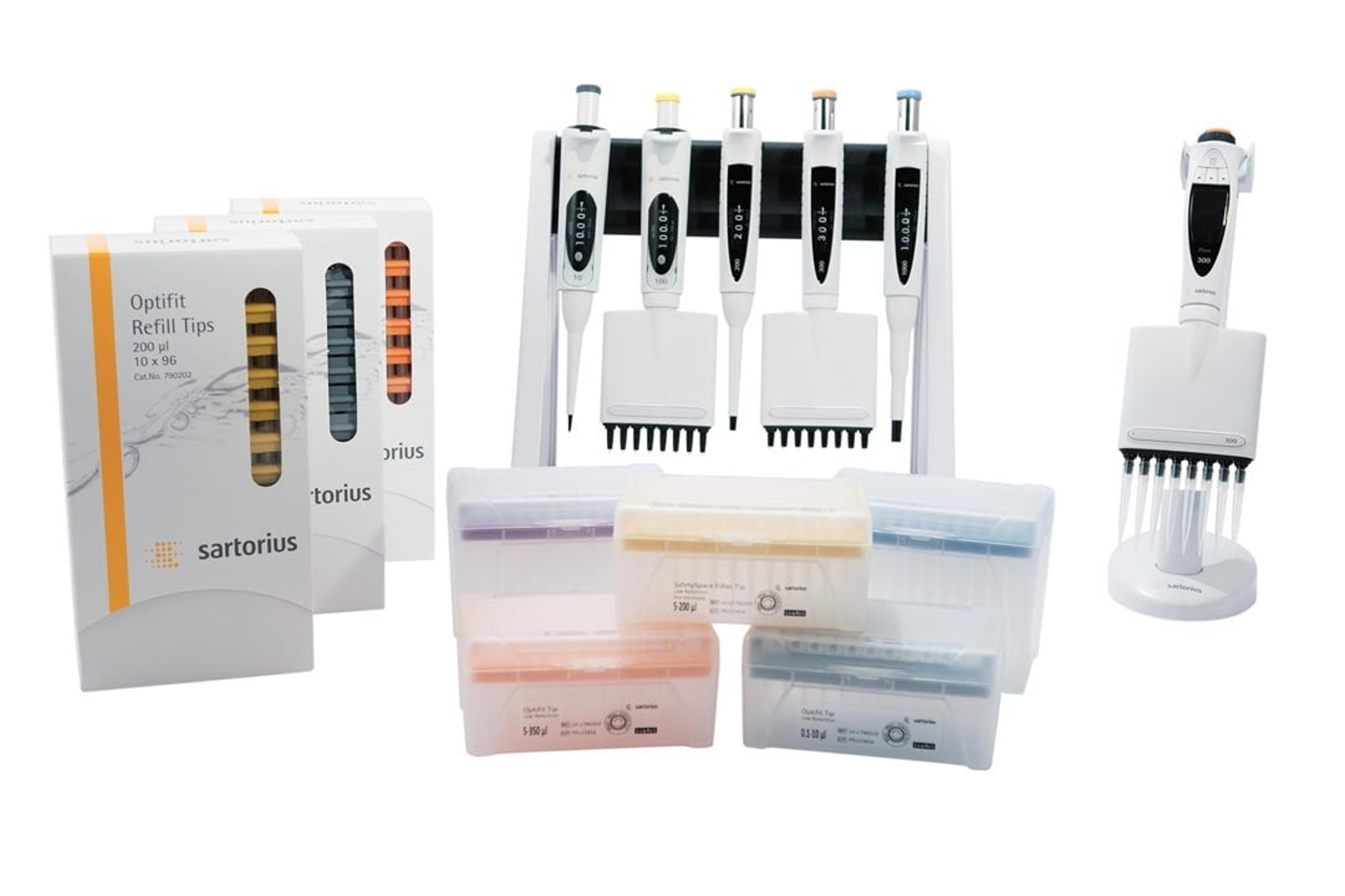
Sartorius Pipettes and Tips

Sartorius Group

Sartorius pipettes, both mechanical and electronic, are appreciated the world over for their user friendliness and accuracy, as well as their attractive, yet practical, design. They are used across the globe in research institutes, universities, healthcare and industrial laboratories. Why Choose a Sartorius Pipette? Ergonomic pipettes reduce the risk of repetitive strain injury (RSI) High accuracy and precision ensure reliable pipetting results Their award-winning design combines top-class functionality and ergonomics along with a sleek, appealing look

(1)

Links

Tags

Mass SpectrometryMass spectrometry (MS) is a powerful analytical technique used to identify and quantify molecules based on the mass-to-charge ratio of gas-phase ions. It provides detailed information about the structure, composition, and properties of compounds and is widely used across fields such as environmental monitoring, materials science, drug discovery and development, food and beverage testing, and wider chemical research. Key MS techniques include tandem mass spectrometry (MS/MS), liquid chromatography–mass spectrometry (LS-MS) and inductively coupled plasma (ICP-MS). Choosing from these wide range of techniques and technologies can be a daunting task, so keep up to date with scientific applications, performance expectations, and customer reviews here all in one place. Visit our product directory to receive quotes direct from the manufacturer. Cell / Tissue CultureCell culture or tissue culture is used to study the biology of cells or tissues and to isolate cellular products in an environment which can be manipulated and well defined. Accurately control your culture environment with bioreactors or culture incubators, bind your cells to a surface or together with an extracellular matrix. Distinguish cell types with differential media or proliferate cells with certain characteristics using selective media. Enrich your media with supplements such as growth factors, sera and vitamins. Find the best cell and tissue culture products, kits and equipment in our peer-reviewed product directory: compare products, check customer reviews and receive pricing direct from manufacturers.OligonucleotidesOligonucleotides are small nucleic acid polymers, usually less than 20 bases in length. Oligonucleotides can be made via enzymatic cleavage or more commonly by chemical synthesis with polymerases. Their use includes FISH, southern blots, microarrays and as primers in PCR. High fidelity synthesis kits and detection systems are available for easy production and detection, respectively.ProteomicsProteomics is the systemic bioinformatics study of proteins and amino acids, including their structure, size, function and identification. Tools used in proteomics include chromatography, blotting and gels, protein arrays, mass spectrometry and ELISA and associated analysis software. Analyzers and proteomic systems should be sensitive, high resolution, fast and may be automated for high-throughput.Cell Lines Stem Cells and Primary CellsPrimary cell cultures, established cell lines and stem cells are vital for <i>in vitro</i> and <i>ex vivo</i> experimentation. High-quality cells, optimized for your applications, alongside optimized cell substrates, growth medium and supplements, are critical for experimental success. Explore a range of cells suitable for your applications, including isogenic cell lines, competent cells, induced pluripotent stem cell (iPSC)-derived cell lines, fungal/bacterial/mammalian cell lines, stem cells and cancer cell lines. Find the best cells for your research in our peer-reviewed product directory: compare products, check customer reviews and receive pricing direct from manufacturers.MicrobiologyMicrobiology is the study of microorganisms including protists, prokaryotes, fungi, and, often, viruses. Microorganisms are a useful research tool as genetic vectors and, in immunology, for antibiotic susceptibility testing, cellular biology and genetics. Microorganisms commonly grow readily in incubators with microbial culture media; this can contain chromogenic supplements to differentiate between cell lines. Estimate your culture’s density of microorganisms with colony counters, or screen and select colonies for desirable clones with automated colony pickers. Additionally, equipment is available to monitor environments for the presence of microbes and identify with microbial identification instruments. Find the best microbiology products in our peer-reviewed product directory: compare products, check customer reviews and receive pricing direct from manufacturers.Artificial Intelligence / Machine LearningArtificial intelligence (AI) and machine learning (ML) are transformative technologies used to analyze complex data, identify patterns, and make data-driven predictions across diverse scientific fields. Automate the analysis of large or complex data sets using AI algorithms and leverage machine learning models to improve diagnostics, accelerate drug discovery, and refine experimental design. Discover the best AI/ML software, platforms, and analytical tools in our peer-reviewed product directory: compare features, read customer reviews, and request pricing directly from manufacturers.LC-MSLC-MS (liquid chromatography-mass spectrometry) systems and equipment are used for separation and quantitative analysis of complex mixtures, combining liquid chromatography and mass spectrometry. Quantify proteins, contaminants, pesticides or screen for drug metabolites with a high level of sensitivity. LC-MS systems and equipment include reverse phase, normal phase and specialized columns integrated with various MS detectors such as time-of-flight (TOF), quadrupole, orbitrap or ion trap mass analyzers. LC-MS/MS instruments equipped with a qTOF or triple quadrupole analyzer give greater sensitivity and resolving power to your analysis. Find the best LC-MS equipment in our peer-reviewed product directory: compare products, check customer reviews and receive pricing direct from manufacturers.MetabolitesMetabolites are the intermediate and end products of metabolism. Analyzing metabolites offers insight into cellular processes and disease mechanisms and is critical in fields like pharmacology, toxicology, and diagnostics. Explore our peer-reviewed product directory to find the best tools for metabolite analysis, compare products, check reviews, and get pricing directly from manufacturers.Air SamplingAir sampling is described as the technique used to capture air for the subsequent purpose of analyzing, typically by thermal desorption, the presence of trace particulates, such as volatile organic compounds (VOCs).Pipette CalibrationPipette calibration ensures that pipettes are delivering accurate and precise volumes of liquids, which is essential for high-quality scientific research and diagnostics. Calibration is crucial for ensuring reproducibility and reliability in experiments. Explore pipette calibration tools in our peer-reviewed product directory; compare products, check reviews, and get pricing directly from manufacturers.Quality ControlQuality control is needed in all production processes. Quality control is a monitoring procedure or set of procedures that are put in place to ensure that a manufactured product adheres to a defined set of quality criteria. MetabolomicsMetabolomics is the study of small metabolites (the intermediates and products of metabolism). It involves the identification and quantification of cellular metabolites using analytical technologies such as GC, HPLC, NMR, and LC/MS.Cell AnalysisThe analysis of cells allows researchers to understand the factors which contribute to cell health and function. These influencing processes can then be predicted and altered, leading to the development of medication and disease treatments.Cell TherapyCell therapy involves using living cells to treat diseases, often by replacing damaged cells or stimulating regeneration. Stem cell therapy and CAR-T cell therapy are examples of cutting-edge treatments in regenerative medicine and cancer immunotherapy. Browse our peer-reviewed product directory to find the best cell therapy tools, compare products, check reviews, and get pricing directly from manufacturers.