Triplet-Exciton Energy Transfer from Semiconductor Nanocrystals Demonstrated using Edinburgh Instruments Systems

27 Apr 2016
Alex Waite
Editorial Assistant

Industry news

Researchers at North Carolina State University, led by Prof. Felix Castellano, have shown for the first time that the photogenerated triplet exciton in semiconductor nanocrystals can be harvested by surface bound molecular acceptors, exhibited by a six-order magnitude increase in the lifetime of the originally prepared excited state.

The research publication, featured in the prominent Science Magazine and titled “Direct observation of triplet energy transfer from semiconductor nanocrystals,” highlights the use of carefully constructed materials and multiple spectroscopic techniques to measure and characterize the triplet exciton energy transfer from cadmium selenide (CdSe) semiconductor nanocrystals, prepared by Prof. Mikhail Zamkov and his group at Bowling Green State University, and surface bound 9-anthacenecarboxylic acid (ACA).

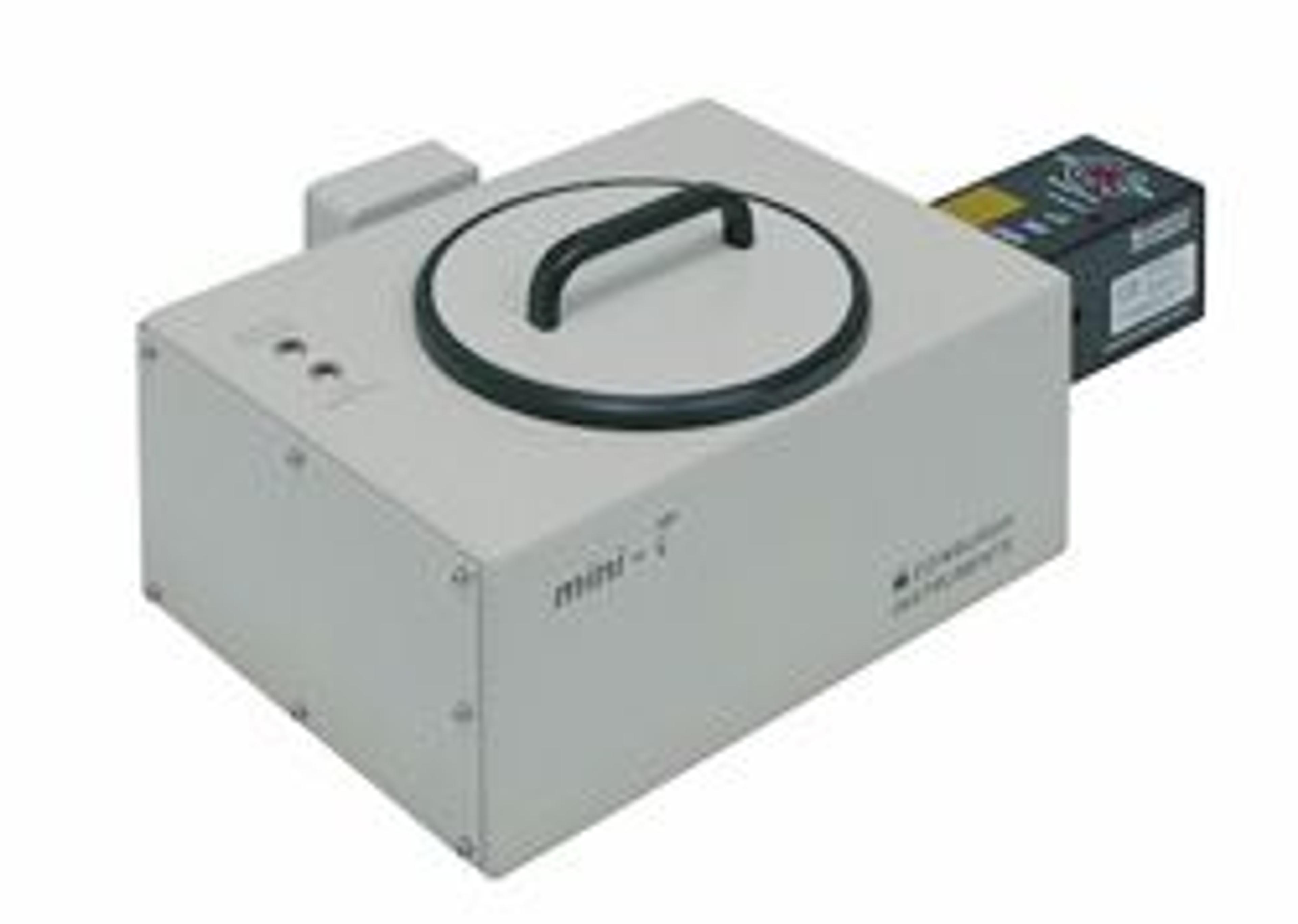
To observe the lifetime differences of CdSe nanocrystals and the CdSe-ACA energy transfer construct, the researchers utilized an Edinburgh Instruments Transient Absorption Spectrometer and MiniTau Fluorescence Lifetime Spectrometer; these instruments complimented the ultra-fast transient absorption experiments and allowed for the detailed measurements of the lifetime increases associated with the triplet exciton energy transfer. Prof. Castellano, a long-time user of Edinburgh Instruments spectrometers, complimented the instrumentation stating the Transient Absorption Spectrometer and MiniTau spectrometers have operated flawlessly since their installation and the results generated on behalf of this project (and all other photophysical projects) on nanosecond and longer time scales are always high quality, reproducible, and reliable.

Edinburgh Instruments is pleased to work with such premier research groups, and looks forward to working with all of its current and future customers to facilitate and excel their photophysical and photochemical measurements.

Mini Tau: Miniature Lifetime Fluorimeter

Edinburgh Instruments Ltd.

We make and supply spectrometers designed to familiarise students with the principles of fluorescence lifetime spectroscopy and in particular time correlated single photon counting (TCSPC). By monitoring the fluorescence lifetimes of emitting dyes, important information can be obtained on the molecular interactions and the micro-environment of these dyes. Proximity of quenchers, the presence of oxygen, pH level, temperature and viscosity can all influence the fluorescence lifetime. The effects of dynamic quenching and in particular the process of FRET are now widely studied in photochemistry and photobiology. A large variety of biochemical and cell-based assays are now readily available that utilise these dynamic quenching effects and which can be used with our mini- τ teaching spectrometer. The mini-τ can provide an insight into the techniques of fluorescence lifetimes and time-resolved fluorescence anisotropy. It allows you to introduce TCSPC, to your students, as a simple, fast and straight forward data acquisition technology. Our T900 advanced software has an easy-to-use graphical user interface that enables students to take measurements easily and watch their profiles build live on screen. The students are able to discover specifics about the micro-environment of their dyes through the use of the T900 analysis routines, which enable the students to extract the relevant information from their measurements and comprehensively manipulate their data.

(1)

Links

Tags

Sample PreparationSample preparation can improve the quality and speed of separation techniques. Products to assist sample preparation include filtration equipment, evaporators, membranes and sieves.Atomic Absorption / Emission SpectroscopyAtomic absorption spectroscopy (AAS) and atomic emission spectroscopy (AES) — also called optical emission spectroscopy (OES) — are used to detect the elemental constituents in samples. Both techniques involve the atomization of a sample. Atomic absorption spectrometers may use a flame or furnace to create an atomic vapor of the sample before irradiation with spectral light. Optical emission spectrometers may use a flame, inductively coupled plasma (ICP), microwave plasma (MP) or spark arcs to atomize and excite the sample. At higher excitation energies, electrons can be emitted instead of photons, which can be useful for samples that can’t be atomized and for surface analysis. Explore electron spectroscopy equipment such as Auger spectrometers and photoelectron spectrometers for surface elemental analysis of samples. Find the best atomic absorption, photoelectron and optical emission spectrometers in our peer-reviewed product directory: compare products, check customer reviews and receive pricing direct from manufacturers.Mass SpectrometryMass spectrometry (MS) is a powerful analytical technique used to identify and quantify molecules based on the mass-to-charge ratio of gas-phase ions. It provides detailed information about the structure, composition, and properties of compounds and is widely used across fields such as environmental monitoring, materials science, drug discovery and development, food and beverage testing, and wider chemical research. Key MS techniques include tandem mass spectrometry (MS/MS), liquid chromatography–mass spectrometry (LS-MS) and inductively coupled plasma (ICP-MS). Choosing from these wide range of techniques and technologies can be a daunting task, so keep up to date with scientific applications, performance expectations, and customer reviews here all in one place. Visit our product directory to receive quotes direct from the manufacturer. Spectroscopy LampsMonochromators, filters and spectroscopy lamps are available for specific applications of spectroscopy instruments. Available spectroscopy lamps include xenon, hollow cathode, ultraviolet, tungsten, halogen, mercury and deuterium.pH Meters and ElectrodesIon and pH meters are electrochemical equipment used to measure the pH (acidity or alkalinity) or specific ion concentration of a solution. Other meters can also measure the conductivity or dissolved oxygen content of a solution. pH meters, specific ion meters, conductivity meters and dissolved oxygen meters can come as benchtop or portable equipment. A meter’s electrodes can be replaced with easy to clean electrodes or electrodes for difficult media. pH, ion and conductivity meters are typically used in life science research, pharmaceutical testing, food and beverage, environmental and water analysis. Find the best pH meters and electrodes in our peer-reviewed product directory: compare products, check customer reviews and receive pricing direct from manufacturers.NanotechnologyNanotechnology, or nanotech, is an engineering technique using molecular scale functional systems. Applications of nanotechnology include medicine and medical devices, electronics, air and water purification, food science and energy production.Robotic InstrumentsRobotic instruments can be used for high-throughput automation of many lab processes. Such processes use instruments for assays like cell based assays and ELISA, for sample preparation like shakers, centrifuges and incubators, and for analysis such as sequencing and western blot analyzers. Useful features of robotic instruments include speed, reproducibility, barcode readers, software and automation.Particle CharacterizationParticle characterization instruments are used to determine particle size distribution, shape, surface area, zeta potential, density and porosity of particles and materials. Multiple tecchniques are available for determining particle size, shape and count including dynamic light scattering (DLS), laser diffraction, electrozone (Coulter technique), imaging particle analysis and single particle optical sensing. Determine the density of your material with a gas pycnometer or examine its surface area and porosity with gas adsorption analyzers and mercury porosimeters. Find the best particle characterization instruments in our peer-reviewed product directory: compare products, check customer reviews and receive pricing direct from manufacturers.Absorbance ReaderMolecular DesignSpectroscopySpectroscopy is a technique that analyzes the interaction of light with matter to study molecular properties, concentrations, and structural information. Widely used in chemical, pharmaceutical, and environmental analysis, spectroscopy offers insights into molecular composition and helps identify unknown compounds. It plays a key role in quality control, research, and diagnostics. Browse our peer-reviewed product directory to compare spectroscopy tools, read reviews, and get prices directly from manufacturers.SemiconductorsSpectrometrySpectrometry is a technique used to measure the mass-to-charge ratio of ions. It provides valuable information about the composition, structure, and molecular weight of compounds. Used across a variety of fields, including chemistry, biology, and environmental science, spectrometry is essential for identifying substances, analyzing mixtures, and developing new products. Explore the best spectrometry tools in our peer-reviewed product directory; compare products, check reviews, and get pricing directly from manufacturers.NanostructuresNanomaterialsNanomaterials such as carbon nanotubes, fullerenes and nanoparticles are a group of materials that measure between 1-1000nm for a single unit. Analysis techniques include AFM, electron microscopy and super resolution microscopy.