Top Tips for Optimizing Your Centrifuge Performance

Learn how to make the most of your centrifuge

28 Sept 2016
Alex Waite
Editorial Assistant

Editorial article

Image – phloxii/Shutterstock 

Centrifuges are key instruments in most laboratories, learn how to choose the right centrifuge for your application and how you can achieve the best performance for your experiments. Plus, learn how NuAire Inc.’s latest centrifuge range is designed to improve your laboratory workflow.

1. Choose the Right Centrifuge for Your Laboratory

This comprehensive guide from NuAire Inc. explains what look out for when choosing a centrifuge, from the ease and versatility of operation to the accessories available to expand the capability of your centrifuge. Download the guide>>

2. Optimizing Centrifuge Performance

Discover key considerations when purchasing the right centrifuge for your application, taking in to account the speed, materials and sample quantity. Download the white paper>>

3. Multi-Application NuWind Benchtop Centrifuges from NuAire

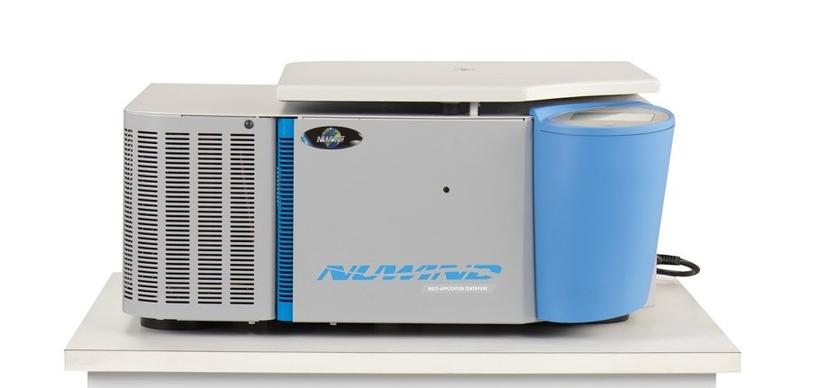
Learn about the unique features of the NuWind Benchtop Centrifuges, including easy initial startup, touchscreen display and Click-Spin technology that allows rotors to be changed in seconds – ideal for multi-application use in cell culture, clinical, and more. Watch the video>>

NuWind Multi-Application Bench Top Refrigerated Centrifuge (NuAire)

"The NuWind bench top refrigerated centrifuge is a uniquely designed, quiet, user friendly addition to our lab. I love the capacity for 50 and 15 ml tubes, the touchscreen technology and the way it lets you know with a green check that your run has ended. It is programmable for different runs and the rotor easily changeable. I would definitely recommend this quality bench top centrifuge for the lab." Kim Ahrens, University of Florida

Write a review about the NuWind Multi-Application Bench Top Refrigerated Centrifuge>>

Check out the range of centrifuges available from NuAire, Inc. here.

Do you use a NuAire centrifuge? Write a review today for a chance to win an iPad® Air or an Amazon voucher worth $400 (or equivalent currency)!

Links

Tags

Refrigerators Freezers and CryogenicsRefrigerators, Freezers & Cryogenics can be used for preservation or experimental purposes. Types of freezers include deep freeze, -80C°C, ultra-low temperature, explosion proof, cryogenic and controlled rate freezers. Freezing is also used in freeze-drying equipment for dehydration processes. Feature to consider in freezers include temperature control and recorders, failure alarms and self-closing mechanisms.CentrifugesCentrifuges are used to separate particulates suspended in a liquid via the application of a centrifugal force including cells, macromolecules, nanoparticles and precipitates. Centrifuges come in three sizes: microcentrifuges, benchtop and floor-standing centrifuges, depending on the volume and number of samples that require separation. When choosing a centrifuge, consider its maximum separation power indicated by its relative centrifugal force (RCF) value. Low force centrifuges reach a maximum RCF of 8,000 g, high-force centrifuges can reach maximum RCF values of 80,000 g. For extremely high forces, consider ultracentrifuges (up to 800,000 g). Refrigerated and vacuum centrifuges also known as concentrators are available for more specialized applications. A range of volumes are available for centrifuge tubes and microfuge tubes, depending on sample sizes. Find the best centrifuges in our peer-reviewed product directory: compare products, check customer reviews and receive pricing direct from manufacturers.Sample ManagementSample management systems include sample storage devices such as freezers and plate storers, sample environment enclosures and sample organization, retrieval and sorter systems. Useful system features include high-throughput, automation, robotic arms, automated liquid handling and associated database systems. Accessories in sample management include barcode scanners, heat sealers and tubes.Robotic InstrumentsRobotic instruments can be used for high-throughput automation of many lab processes. Such processes use instruments for assays like cell based assays and ELISA, for sample preparation like shakers, centrifuges and incubators, and for analysis such as sequencing and western blot analyzers. Useful features of robotic instruments include speed, reproducibility, barcode readers, software and automation.Robotic WorkstationsRobotic workstations are automated platforms enabling the user to perform high-throughput, multi-application processes, from sample preparation tasks such as PCR set-up, DNA purification and NGS library preparation, to integrated sample prep and analysis workstations. Automation makes processes consistent, fast, precise and fully walk-away. Find the best robotic workstations in our peer-reviewed product directory: compare products, check customer reviews and receive pricing direct from manufacturers.Sample PreparationSample preparation can improve the quality and speed of separation techniques. Products to assist sample preparation include filtration equipment, evaporators, membranes and sieves.CentrifugeLaboratory ManagementLaboratory management involves overseeing the operations of a lab, ensuring compliance with safety regulations, optimizing workflows, and maintaining equipment. Efficient lab management is key to ensuring accurate results and minimizing downtime. Technologies like laboratory information management systems (LIMS) and automated lab equipment are helping labs streamline operations. Browse our peer-reviewed product directory to find the best laboratory management tools, compare products, read reviews, and get pricing directly from manufacturers.Lab EssentialsLab essentials include laboratory consumables that are vital to the operation of all laboratories.Sample ProcessingSample processing is required to prepare samples prior to analysis. Technologies used for sample processing include homogenizers, grinders, mills and mixers.