Top Innovations in NMR

Reaction monitoring in the pharmaceutical industry and industrial polymer quality control

12 Aug 2015

Lois Manton-O'Byrne, PhD
Executive Editor

Editorial article

Top news, applications and methods 

NMR has been a standard analytical technique in academia for many years, but has recently been applied to other novel areas. Read on for tips on adjusting pH for optimal spectra acquisition and learn how NMR can perform compared to other conventional methods for solid state and polymer analysis.

1. ARTICLE: The Advantages of Reaction Monitoring by NMR in the Pharmaceutical Industry

The ability to elucidate molecular structure, determine functional groups and monitor reactions through kinetic studies has enabled scientists to confidently understand reactions at a molecular level. While reaction monitoring is a traditional technique, it has significantly gained popularity in the pharmaceutical industry due to initiatives such as process analytical technology (PAT). Learn how Pfizer uses NMR technology from Bruker for reaction monitoring. Read more.

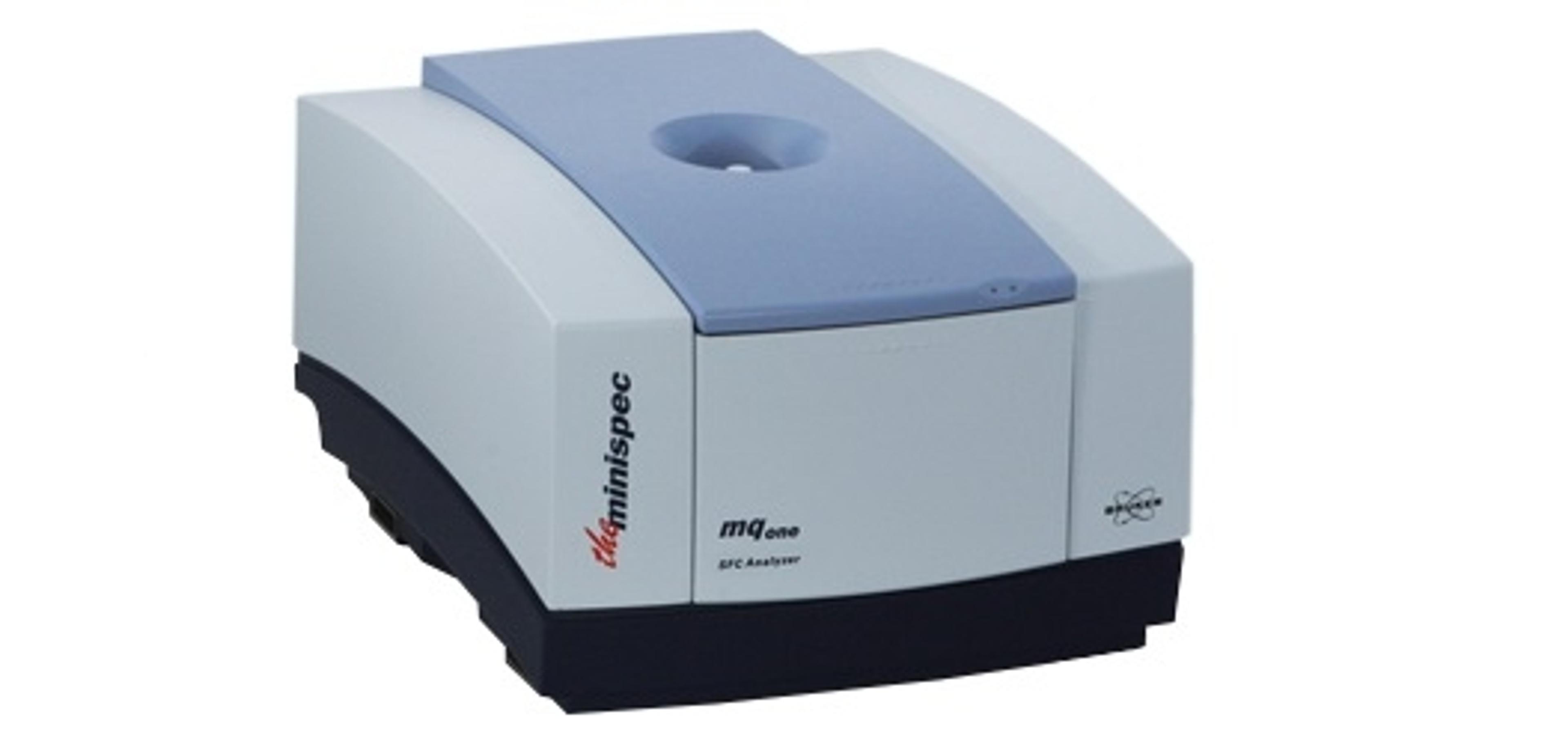
2. APPLICATION NOTE: Process and Quality Control Solutions by Time Domain NMR Analysis for Polymer Industries

Bruker’s versatile TD-NMR applications are widely used in the study of polymerization reaction kinetics, material properties of filled and modified polymers and failure analysis. Discover the range of applications supported by Bruker’s minispec systems and key advantages compared to optical methods. Download application note.

3. APPLICATION NOTE: 2-Thienyllithium in the Solid State and in Solution – Insights from X-Ray Crystallographic and NMR Spectroscopic Data

In this application note, the analysis of various 2-thienyllithium derivatives in the solid state by both X-ray crystallography and NMR is described, demonstrating the potential of a combined approach using both X-ray and NMR. The results demonstrate that this combined approach, using NMR technology by Bruker, allows insights to be gained into the similarities as well as the differences between the solid state and solution structures of these 2-thienyllithium derivatives. Download method.

4. APPLICATION NOTE: pH Adjustment for NMR Applications

The adjustment of the pH value of the sample solution is crucial for the acquisition of NMR spectra. This application note presents the Bruker pH Titration Unit as a solution for the automaton of pH adjustment. Download application note.

5. APPLICATION NOTE: A Robust Solid-State NMR Method for Protein Backbone Assignment: Band-Selective Homonuclear Cross Polarization

A crucial step for solid state NMR site-specific protein characterization and structure elucidation is the time-consuming resonance assignment. This application note presents a set of band-selective homonuclear cross polarization experiments to facilitate the recording of spectra and to simplify the assignment process using the Avance III HD, from Bruker BioSpin. A detailed description of necessary parameters is given. Download method.

Have you used any of these products? Share your experiences with scientists worldwide and leave a review today!

Links

Tags

NMR and EPR SpectroscopyNuclear magnetic resonance (NMR) spectroscopy is used to resolve the local chemical environment of atomic nuclei with spin, revealing information on molecular structure, dynamic processes and chemical reactions of organic molecules, from proteins to synthetics. Electron paramagnetic resonance (EPR) also known as electron spin resonance (ESR) spectroscopy is used to detect and quantify paramagnetic species in a sample, including free radicals as transition metal ions. By immersing the sample in a strong magnetic field, both NMR and EPR spectrometers probe the sample with either radio waves or microwaves respectively. A range of benchtop, solid-state and time domain NMR spectrometers & EPR spectrometers are available, as well as NMR tubes, NMR solvents, software, coils, and magnets. Find the best NMR & EPR equipment in our peer-reviewed product directory: compare products, check customer reviews and receive pricing direct from manufacturers.X-ray CrystallographyX-ray crystallography is an analytical technique used to determine the arrangement of atoms in a crystal. Monochromatic x-rays are produced from a synchrotron or x-ray generator. An x-ray crystallography system uses a detector to measure the x-ray diffraction from the crystal. The information is used to generate a 3D image of the crystal.X-Ray Diffraction and SpectroscopyX-Ray diffraction & spectroscopy are used in material characterization to discern the structure and elemental composition of a sample. X-Ray diffractometers (XRD) are superior instruments in elucidating the dimensional atomic structure of crystalline materials, including powders, thin films and single crystals. For large unit cells or ordered macromolecules, consider small-angle X-ray scattering (SAXS). X-ray spectroscopic techniques include X-ray fluorescence (XRF) and X-ray photoelectron spectroscopy (XPS), both providing simple and accurate methods for determining the elemental composition of a material. Energy dispersive (EDXRF) and wavelength dispersive (WDXRF) XRF spectrometers are available, as well as handheld/portable devices. High-resolution, 3D microstructure characterization of materials can be achieved with X-ray microscopes combining sub-micron resolution imaging with 3D computed tomography. Find the best XRD and XRF spectrometers in our peer-reviewed product directory: compare products, check customer reviews and receive pricing direct from manufacturers.Protein CrystallographyProtein crystallization is the process of crystallizing purified proteins for 3D structure analysis by x-ray crystallography. The main methods of protein crystallization include sitting drop, hanging drop and microbatch. It is important to control parameters such as pH, temperature and concentration. Following crystallization, detectors and software are used for data collection and analysis.Particle CharacterizationParticle characterization instruments are used to determine particle size distribution, shape, surface area, zeta potential, density and porosity of particles and materials. Multiple tecchniques are available for determining particle size, shape and count including dynamic light scattering (DLS), laser diffraction, electrozone (Coulter technique), imaging particle analysis and single particle optical sensing. Determine the density of your material with a gas pycnometer or examine its surface area and porosity with gas adsorption analyzers and mercury porosimeters. Find the best particle characterization instruments in our peer-reviewed product directory: compare products, check customer reviews and receive pricing direct from manufacturers.Protein QuantificationThe detection and quantification of proteins in a sample is vital across life sciences, pharmaceutical research and clinical diagnostics, and a variety of equipment is available to scientists to simplify the workflow. Proteins of interest can be easily labeled and detected on light-based detection instruments. Immunoassay kits allow you to identify a specific protein of interest and protein detection beads or antibody microarrays allow you to identify multiple specific proteins at once. Protein interactions and enzyme activity can also be monitored with protein-protein interaction assays. Additionally, the biophysical characterization of proteins is made easy with biokinetic analyzers. Find the best protein detection and quantification products in our peer-reviewed product directory: compare products, check customer reviews and receive pricing direct from manufacturers.Quality ControlQuality control is needed in all production processes. Quality control is a monitoring procedure or set of procedures that are put in place to ensure that a manufactured product adheres to a defined set of quality criteria. AutomationAutomation in laboratories and manufacturing processes enhances efficiency, precision, and scalability by reducing the need for manual intervention. It plays a critical role in improving productivity, minimizing human error, and accelerating workflows in fields like diagnostics, drug development, and industrial testing. Automation technologies include robotic systems, automated liquid handlers, and process control systems that streamline complex tasks and ensure consistent, reproducible results. Explore our peer-reviewed product directory to discover the best automation solutions, compare options, read user reviews, and get prices directly from manufacturers.PolymersPolymers are large molecules made up of many repeat units. Natural polymers such as DNA and proteins are essential to life, whereas synthetic polymers such as polystyrene and polyethylene are used widely due to their functionality. Typical techniques for analysis include GPC, SEC, DSC, FT-IR and NMR.Protein StructureProtein structure refers to the three-dimensional arrangement of amino acids in proteins, determining their function. Understanding protein structure is key in drug discovery, enzymology, and molecular biology. Explore protein structure analysis tools in our peer-reviewed product directory; compare products, check reviews, and get pricing directly from manufacturers.SpectroscopySpectroscopy is a technique that analyzes the interaction of light with matter to study molecular properties, concentrations, and structural information. Widely used in chemical, pharmaceutical, and environmental analysis, spectroscopy offers insights into molecular composition and helps identify unknown compounds. It plays a key role in quality control, research, and diagnostics. Browse our peer-reviewed product directory to compare spectroscopy tools, read reviews, and get prices directly from manufacturers.Crystallization