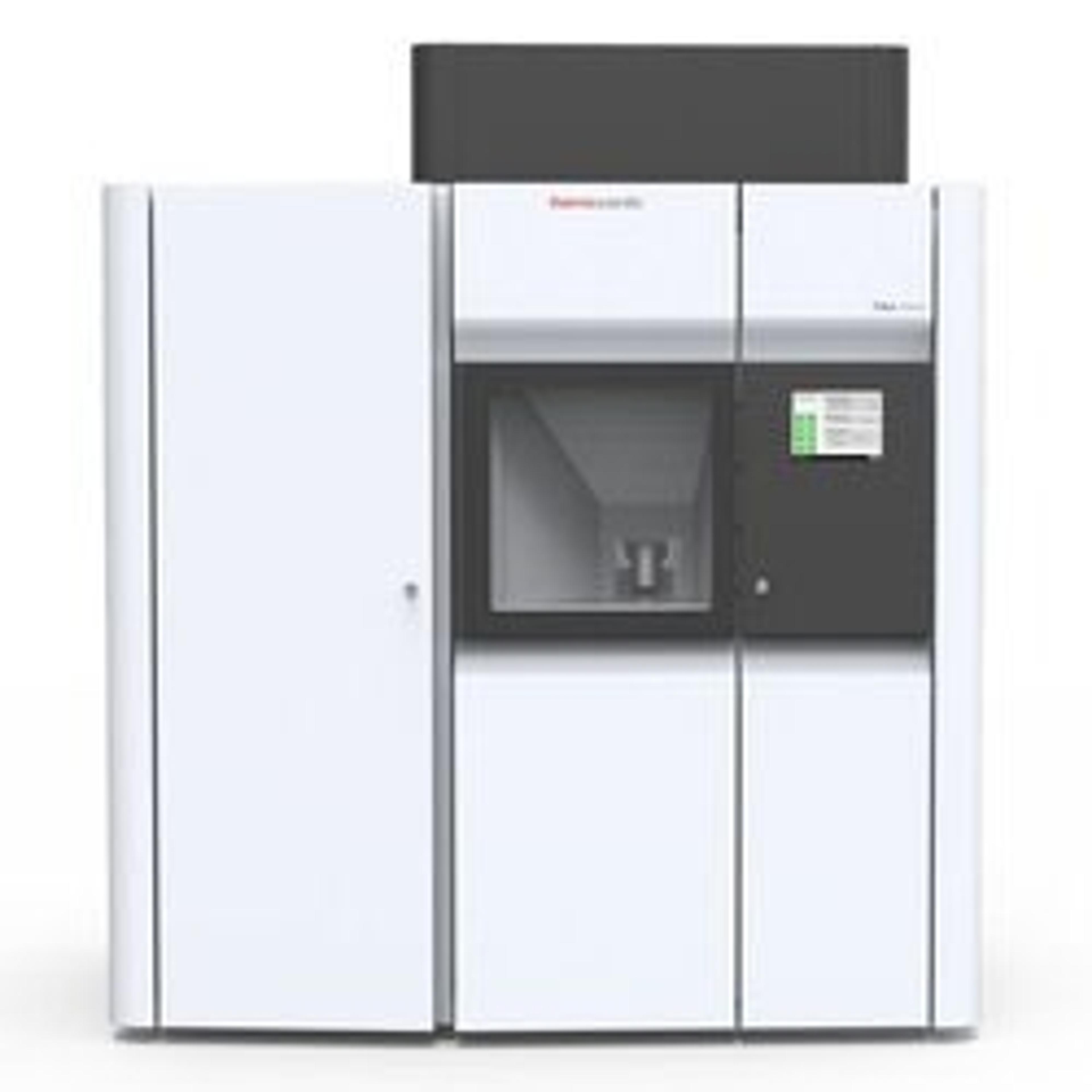
Thermo Scientific Talos F200E (S)TEM combines atomic-level imaging with fast EDS analysis

18 Mar 2021
Edward Carter
Publishing / Media

Product news

Thermo Fisher Scientific has announced the launch of the Talos F200E Scanning Transmission Electron Microscope ((S)TEM), combining atomic-level resolution imaging, fast energy-dispersive X-ray spectroscopy (EDS) analysis, and enhanced data reliability, designed specifically for the semiconductor industry's increasing demand.

Advances in communications technologies supported by the transition to 5G are continuing to spur the need for semiconductor devices that offer greater energy efficiency and performance. Autonomous vehicles, AI, Industry 4.0, smart cities and the Internet of Things (IoT) are all driving development of smaller, more complex semiconductor structures. To deliver the high-volume, reproducible (S)TEM results necessary to support such demands at the atomic scale, the semiconductor industry needs efficient solutions for its research and development labs.

The Talos F200E (S)TEM offers automated alignment with its "Align Genie" feature as well as image distortion of ≤1%, enabling users to obtain quick, reliable and repeatable results. The optional DualX provides a larger EDS detector than previously available on the Talos F200X, enabling 1.5 times faster EDS analyses. The Talos F200E is a cost-effective and easy-to-use system, designed to allow semiconductor labs to achieve fast sample characterization, accelerate time to production, and improve manufacturing yields.

"As the pace of innovation continues to accelerate, semiconductor companies are requiring their analysis labs to speed turnaround times and deliver more reliable and repeatable (S)TEM data on a wide variety of devices and process technologies that support their businesses," said Glyn Davies, vice president of semiconductor at Thermo Fisher. "The Talos F200E enables customers to address these needs by delivering quality image data, fast chemical analysis and industry-leading defect characterization—in an affordable, easy-to-use instrument."

Want the latest science news straight to your inbox? Become a SelectScience member for free today>>

Links

Tags

Atomic Absorption / Emission SpectroscopyAtomic absorption spectroscopy (AAS) and atomic emission spectroscopy (AES) — also called optical emission spectroscopy (OES) — are used to detect the elemental constituents in samples. Both techniques involve the atomization of a sample. Atomic absorption spectrometers may use a flame or furnace to create an atomic vapor of the sample before irradiation with spectral light. Optical emission spectrometers may use a flame, inductively coupled plasma (ICP), microwave plasma (MP) or spark arcs to atomize and excite the sample. At higher excitation energies, electrons can be emitted instead of photons, which can be useful for samples that can’t be atomized and for surface analysis. Explore electron spectroscopy equipment such as Auger spectrometers and photoelectron spectrometers for surface elemental analysis of samples. Find the best atomic absorption, photoelectron and optical emission spectrometers in our peer-reviewed product directory: compare products, check customer reviews and receive pricing direct from manufacturers.X-Ray Diffraction and SpectroscopyX-Ray diffraction & spectroscopy are used in material characterization to discern the structure and elemental composition of a sample. X-Ray diffractometers (XRD) are superior instruments in elucidating the dimensional atomic structure of crystalline materials, including powders, thin films and single crystals. For large unit cells or ordered macromolecules, consider small-angle X-ray scattering (SAXS). X-ray spectroscopic techniques include X-ray fluorescence (XRF) and X-ray photoelectron spectroscopy (XPS), both providing simple and accurate methods for determining the elemental composition of a material. Energy dispersive (EDXRF) and wavelength dispersive (WDXRF) XRF spectrometers are available, as well as handheld/portable devices. High-resolution, 3D microstructure characterization of materials can be achieved with X-ray microscopes combining sub-micron resolution imaging with 3D computed tomography. Find the best XRD and XRF spectrometers in our peer-reviewed product directory: compare products, check customer reviews and receive pricing direct from manufacturers.Electron MicroscopyElectron microscopes (EM) are used to create high-resolution images of samples at the nanoscale by means of an accelerated beam of electrons as a source of illumination. Types of electron microscope include scanning electron microscopes (SEM), transmission electron microscopes (TEM), scanning transmission electron microscopes (STEM) and cryo-electron microscopes. Focused ion beam (FIB) microscopes are useful for modifying or milling a sample surface with nanometer precision, as well as imaging. Find the best electron microscopes in our peer-reviewed product directory: compare products, check customer reviews and receive pricing direct from manufacturers.MicroscopyMicroscopy is a technique used to observe small objects in detail, from cells to materials, using light or electron microscopes. It enables researchers to examine structures with high resolution, aiding in fields such as biology, medicine, and materials science. With advanced microscopy techniques, scientists can gain insights into cellular processes, tissue structures, and material properties. Explore the best microscopy solutions in our peer-reviewed product directory, compare products, read customer reviews, and get pricing directly from manufacturers.Semiconductors