
Thermo Fisher Scientific introduces the 5L DynaDrive single-use bioreactor
First-of-its-kind bench scale bioreactor enabling productivity, scalability and efficiency supporting reduced environmental impact
16 Apr 2025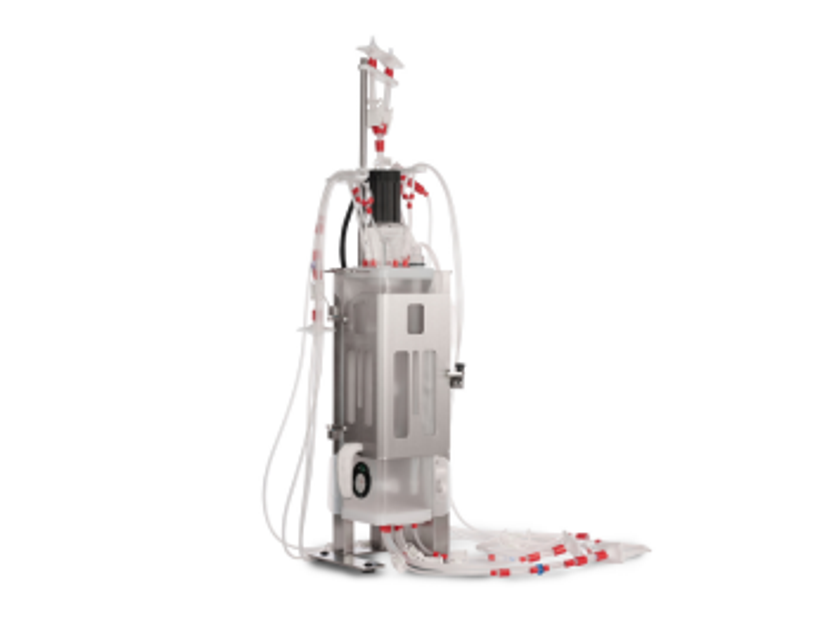
The 5L DynaDrive single-use bioreactor simplifies process development
Thermo Fisher Scientific Inc., the world leader in serving science, announced the 5L DynaDrive Single-Use Bioreactor (S.U.B.), designed to meet the evolving needs of modern bioprocessing. The 5L DynaDrive expands the company's robust portfolio of bioreactors, offering seamless scalability from 1 to 5,000 liters and accelerating bench-scale process development, while facilitating the cost-effective transition from bench to commercialization with consistent reactor design and film across all scales.
"The introduction of the 5L DynaDrive marks a significant advancement in our commitment to helping customers maximize productivity and accelerate time to market," said Ray Mercier, president of Thermo Fisher’s single-use technologies business. "With 25 years of experience in single-use technology, we are dedicated to meeting our customers' evolving needs. Our trusted innovations provide seamless scalability and enhanced efficiency, enabling customers to streamline their bioprocessing workflows and successfully develop and commercialize life-saving therapies."
The 5L DynaDrive single-use bioreactor is engineered to meet the diverse needs of large biopharma, Contract Development and Manufacturing Organizations (CDMOs), and small biotech companies. Its user-friendly design and benchtop size enables use with the HyPerforma™ G3Lab Controller to provide exceptional scalability and scalable proof of concept, affordably. With a 27% increase in productivity compared to glass bioreactors, the 5L DynaDrive combines small size with high performance and offers effective scale-up with consistent design, software, and film across all sizes. The robust, reliable solution utilizes biobased films built on Thermo Fisher’s existing Aegis™ film offerings and BioTitan Retention Devices, enabling minimized product loss and more sustainability.
To learn more about Thermo Fisher’s DynaDrive portfolio, please visit www.thermofisher.com/dynadrive
Want the latest science news straight to your inbox? Become a SelectScience member for free today>>