Thermo Fisher Scientific introduces hematology-oncology portfolio for Ion Torrent Genexus System

The new assays are designed to enable turnaround times for next-generation sequencing results of less than 24 hours

23 Aug 2020

Diane Li
Assistant Editor

Product news

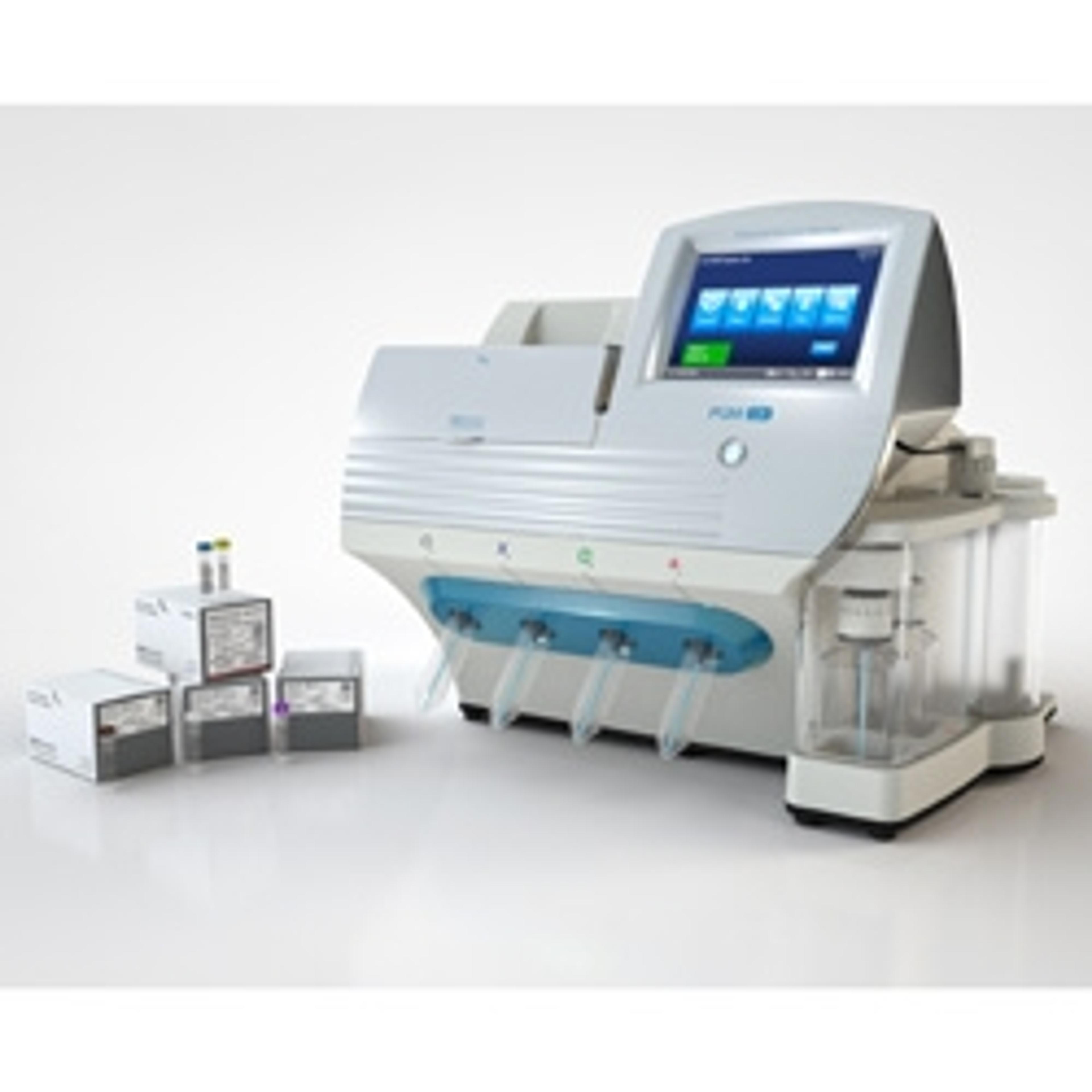
In hematology oncology, it is critically important to understand the genetics driving acute malignancies to quickly determine how best to address the disease. Thermo Fisher Scientific has announced a new portfolio of hematology-oncology assays for the Ion Torrent Genexus System* designed to enable a future in which turnaround times for next-generation sequencing (NGS) results can be reduced to less than 24 hours.

The Oncomine Myeloid Assay GX* is the first in a series of clinical research assays available from the new suite of hematology-oncology solutions. The new panel enables simultaneous analysis of DNA mutations and RNA fusion transcripts in myeloid samples in a single day. It also provides researchers the ability to profile 40 DNA targets and 29 fusion driver genes, enabling detection of more than 600 fusion isotypes to identify biomarkers associated with myeloproliferative neoplasm (MPN), acute myeloid leukemia (AML) and myelodysplastic syndrome (MDS).

Traditionally, analyzing myeloid samples involves serial single-gene testing to determine the mutation's specific genetic drivers, a process that can be laborious and time-consuming as the number of known biomarkers continues to grow. Yet in AML, conditions can deteriorate quickly, driving the need for rapid results. In such cases, clinicians today commonly request STAT testing, which requires pushing the sample to the front of the queue for immediate analysis, potentially disrupting the laboratory's workflow.

"Once histopathological analysis comes back with the diagnosis of AML, in many cases instantaneous decisions have to be made. Commencing appropriate treatment within 24 hours of identifying the disease will represent a significant step towards achievement of improved outcomes," said Kojo Elenitoba-Johnson, M.D., director of the Center for Personalized Diagnostics at the University of Pennsylvania's Perelman School of Medicine. "A simplified, automated workflow that provides comprehensive NGS results in a single day would be a game-changer for laboratories and patients in the future."

The Oncomine Myeloid Assay GX maximizes detection of relevant biomarkers, including TP53, CEBPA, NPM1, RUNX1, PML-RARA, IDH 1, IDH 2 and FLT3-ITD, a common driver mutation that is associated with poor prognosis in AML. The European LeukemiaNet recently recommended FLT3 analysis for AML, with results required in three days. Additionally, hematologists now call for optimized, multigene platform analysis that includes FLT3 mutations.

Thermo Fisher plans to introduce additional hematology-oncology clinical research assays for B-cell and T-cell clonality and somatic hypermutation assessment through immune repertoire sequencing to study lymphoid malignancies, including chronic lymphocytic leukemia (CLL), acute lymphoblastic leukemia (ALL), multiple myeloma (MM), and Hodgkin's and non-Hodgkin's lymphomas. Additionally, Thermo Fisher will introduce a lymphoid gene panel covering a comprehensive set of targets relevant for a range of lymphoid neoplasms. All assays will be available for the Genexus System, the first fully integrated NGS platform to feature an automated workflow that delivers results economically in a single day.

"We are driven to provide solutions that will enable our customers to generate answers faster in areas where NGS can make a real difference for the future of healthcare," said Garret Hampton, president of clinical next-generation sequencing and oncology at Thermo Fisher Scientific. "Heme-oncology is another critical sector that is in need of this game-changing technology, which is why we will continue to innovate by expanding our portfolio of assays and work to democratize NGS."

Want more of the latest science news straight to your inbox? Become a SelectScience member for free today>>

Links

Tags

Combinatorial ChemistryCombinatorial chemistry, also known as combichem, is a technique used in drug discovery to create libraries of structurally related compounds. A library is generated by synthesis with a chemical reactor system or by computer-based modeling of compound combinations. When undertaking combinatorial chemistry consider reagents, buffers, resins and standards.Data AnalysisData analysis hardware and software is available to make data processing straight-forward yet powerful. Data software can be used for math and stats, technical graphing and image analysis. In addition, software is available for specific data analysis of electrophoresis, densitometry, ELISA and DNA sequencing.HematologyIn Haematology / Hematology, complete blood cell counts (or full blood counts) are obtained using automated blood count analyzers to enumerate blood cell types.  Hematology also encompasses haemostasis and coagulation, thrombophilia and hemophilia, plasma viscosity and ESR analysis, hemoglobinopathies, cell morphology and haematinic measurement.ImmunologyImmunological techniques measure and characterize immune responses. Immunology kits and analysis systems often use techniques such as ELISA, radioimmunoassay (RIA) and immunodiffusion assays, Immunohistochemistry, and flow cytometry. Immunologists use equipment such as flow Cytometers, plate readers, plate washers and fluorescent microscopes.Cellular PathologyCellular Pathology deals with the microscopic analysis of tissue samples and cells. Sample preparation and processing includes fixation, staining, sectioning and slide mounting, using equipment such microtomes and cryostats. In choosing immunohistochemistry and immunocytochemistry kits, consider chromogens, staining method, antibodies, microscopes and imaging.Biopharmaceutical AdvancesBiopharmaceutical advances follow the development of pharmaceuticals derived from biotechnology, also known as biotechnology medicines. Biopharmaceuticals may be produced from cell lines, plants, or microbial cells. Important considerations of biopharmaceutical use include application, cost, production process and purification.Clinical ChemistryBiochemistry (or clinical chemistry) involves the analysis of bodily fluids using chemical tests. Techniques used include HPLC, chromatography, spectroscopy, mass spectrometry, immunochemical, electrophoresis, turbidometric / spectrophotometric assay, MRI and ISE analysis. Tests are often carried out on plasma or serum but urine (urinalysis) and fecal specimens are also processed.Clinical GeneticsMolecular Genetics covers the analysis of hereditary genetic disease and chromosomal abnormalities. Genetics can be analysed using DNA, RNA, and protein microarrays, PCR, RT PCR and DNA sequencing. Genetic equipment includes genetic workstations, thermal cyclers, cooling blocks and electrophoresis products. Diagnostic kits are used for DNA / RNA extraction and purification.Next Generation SequencingNext-generation sequencing (NGS), also known as whole-genome sequencing, high-throughput sequencing and massive parallel sequencing, produces and analyses thousands to millions of nucleotide sequences at once. Sequencing systems operate via varying technologies depending on the manufacturer, including sequencing by synthesis, ligation, pyrosequencing, ion semiconductor and single-molecule real-time sequencing. For NGS, library preparation is paramount to successful sequencing. In this section, explore a range of library preparation kits, from targeted, amplicon-based or hybridization-based kits including epigenomic, transcriptomic and genomic workflows to fragmentation kits. Find the best next-generation sequencing products in our peer-reviewed product directory: compare products, check customer reviews and receive pricing direct from manufacturers.Drug DeliveryDrug Delivery refers to dosage form, route of administration, formulations, technologies, and systems for transporting a pharmaceutical compound in the body as needed to safely achieve its desired therapeutic effect. Drug delivery is often approached via the biopharmaceutical or small molecule drug's formulation, but it may also involve medical devices or drug-device combination products. Considerations include instrumentation, software and services. RegulatoryPharmaceutical regulations impact on all areas of drug development, manufacture and control and supply. Services are provided from the early stages of drug development and clinical trials through to dossier submission, approval and marketing. Regulatory also includes submission of analytical studies from the pharmaceutical product and safety. DNA / RNA QuantificationDetection and quantification of nucleic acids is important in molecular biology, cloning, expression, forensics and clinical diagnostics. Nucleic acids can be detected by labeling with colorimetric, fluorescent or radio labels and using in situ hybridization kits to identify specific sequences. Multiple nucleic acids can be detected and quantified at once using RNA / DNA detection beads or RNA / DNA microarrays. Find the best DNA / RNA Quantification products in our peer-reviewed product directory: compare products, check customer reviews and receive pricing direct from manufacturers.Hematology SolutionsHematology solutions involve diagnostic tests and equipment used to analyze blood samples and diagnose blood disorders such as anemia, leukemia, and hemophilia. These tools include automated full blood count analyzers, reagents, and digital morphology systems. Explore hematology solutions in our peer-reviewed product directory; compare products, check reviews, and get pricing directly from manufacturers.Protein DetectionProtein detection techniques are essential for understanding protein expression, localization, and function. Methods such as western blotting, ELISA, and mass spectrometry are commonly used in research and diagnostics. Browse our peer-reviewed product directory to find the best tools for protein detection, compare products, check reviews, and get pricing directly from manufacturers.Clinical NGSNext Generation Sequencing (NGS) refers to the use of massive parallel sequencing of multiple small fragments of DNA. This high-throughput genomic analysis yields enormous amounts of sequence data, which if appropriately analyzed could have huge potential for clinical laboratories. For this to happen there are technique and bioinformatic hurdles to be overcome.