Thermo Fisher Scientific expands hematology oncology NGS portfolio

Immune repertoire assays offer high detection rates of malignant clones, empowering researchers to better assess blood cancers

20 Jul 2021

Diane Li
Assistant Editor

Industry news

Thermo Fisher Scientific has announced a new suite of Ion Torrent Oncomine immune repertoire assays designed to detect potentially malignant clones of T-cells and B-cells, which play a key role in the immune response system*. Using proprietary Ion AmpliSeq technology, the new pan-clonality assays target multiple parts of the B- and T-cell immune receptors using a single reaction with ultra-high sensitivity, thereby increasing the probability of malignant clone detection and decreasing the time to results.

Detection of distinct receptor DNA sequences can inform diagnostic, prognostic and therapy development studies in the progression of lymphoid cancers including leukemias, lymphomas and diseases such as multiple myeloma. Using next-generation sequencing (NGS) technology, detection sensitivity can be increased compared to traditional testing methods such as flow cytometry or qPCR.

"Every three minutes, one person in the U.S. is diagnosed with a blood cancer. Genomic testing can make a significant impact on researching and understanding these cancers – but we need to bring more testing to in-house laboratories where results can be made available quickly to healthcare professionals," said Garret Hampton, president of clinical next-generation sequencing at Thermo Fisher Scientific. "The new Oncomine immune repertoire assays unlock the power of NGS to help researchers rapidly obtain a tremendous amount of insight about a lymphoid cancer sample, including its prevalence and an understanding of how it is evolving."

One of the challenges of current NGS-based immune repertoire analysis has been the need to run multiple secondary tests due to the high test-failure rates of a typical single NGS assay. The new Oncomine pan-clonality assays overcome this challenge by uniquely targeting multiple parts of the receptor to reduce the need for secondary tests and increase the probability that a single assay can detect a potentially malignant clone.

"With the ability to sequence multiple targets in a single reaction, our team can now get much more information from one assay when compared to single-target NGS tests," said Dr. John DeCoteau, medical director, University of Saskatchewan, Advanced Diagnostic Research Laboratory. "Using the Oncomine BCR Pan-Clonality Assay, we were able to achieve a positive clonality detection rate of 93 percent in a cohort of multiple myeloma samples, without the need for secondary testing. That provides a remarkable improvement for laboratory efficiency and allows us to get results faster."

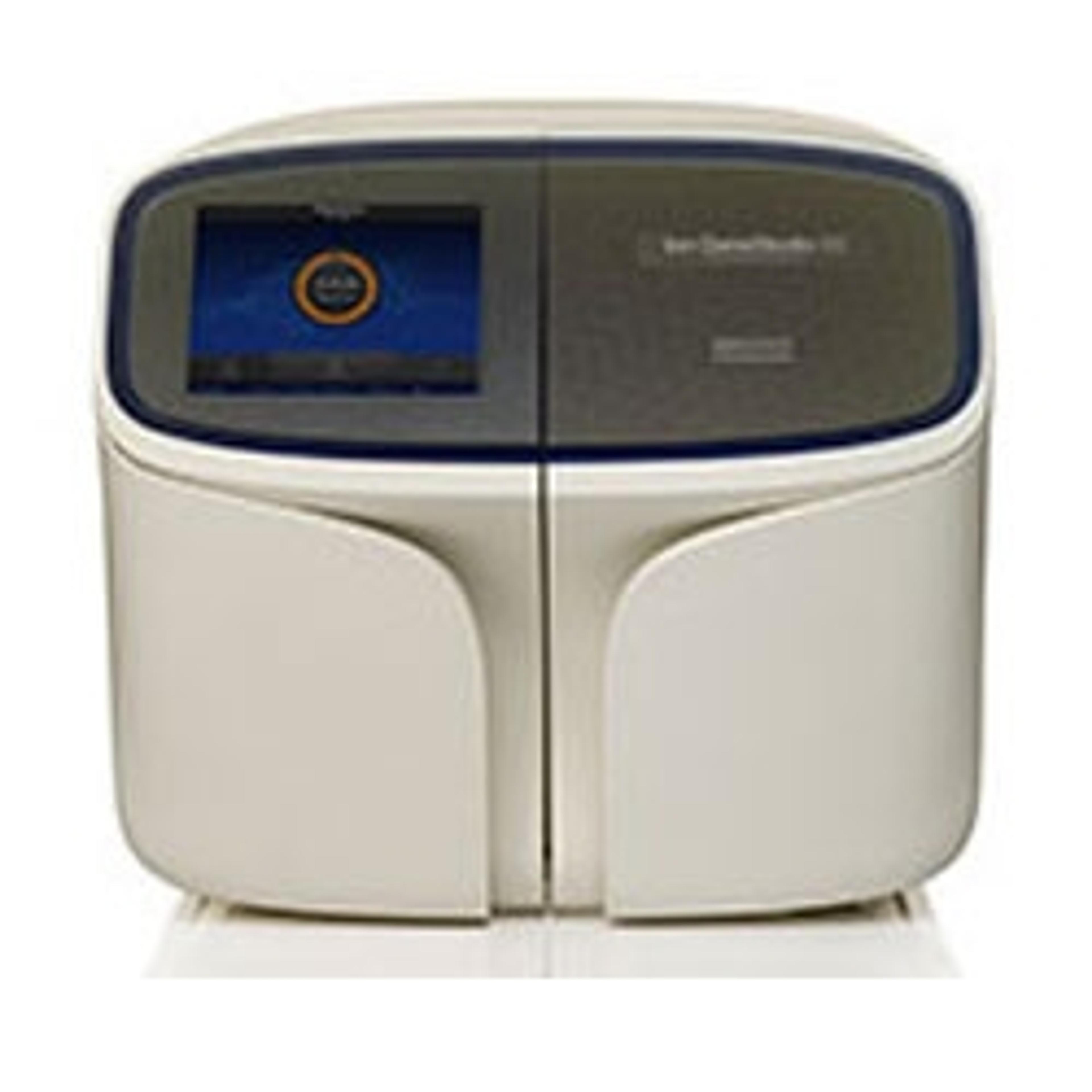
Thermo Fisher's new suite of immune repertoire assays are available on the Ion GeneStudio S5 System and feature integrated analysis and data visualization tools that simplify the interpretation of results for laboratories and healthcare professionals.

For more information on these assays, please visit oncomine.com/clonality.

*For Research Use Only. Not for use in diagnostic procedures.

Do you use Thermo Fisher Scientific products in your lab? Write a review today for your chance to win a $400 Amazon gift card>>

Ion GeneStudio S5 Series

Thermo Fisher Scientific

Achieve speed and throughput flexibility across a broad range of next-generation sequencing (NGS) applications with the Ion GeneStudio™ S5 series of benchtop NGS systems from Thermo Fisher Scientific.

(4)

Links

Tags

HematologyIn Haematology / Hematology, complete blood cell counts (or full blood counts) are obtained using automated blood count analyzers to enumerate blood cell types.  Hematology also encompasses haemostasis and coagulation, thrombophilia and hemophilia, plasma viscosity and ESR analysis, hemoglobinopathies, cell morphology and haematinic measurement.ImmunologyImmunological techniques measure and characterize immune responses. Immunology kits and analysis systems often use techniques such as ELISA, radioimmunoassay (RIA) and immunodiffusion assays, Immunohistochemistry, and flow cytometry. Immunologists use equipment such as flow Cytometers, plate readers, plate washers and fluorescent microscopes.Clinical ChemistryBiochemistry (or clinical chemistry) involves the analysis of bodily fluids using chemical tests. Techniques used include HPLC, chromatography, spectroscopy, mass spectrometry, immunochemical, electrophoresis, turbidometric / spectrophotometric assay, MRI and ISE analysis. Tests are often carried out on plasma or serum but urine (urinalysis) and fecal specimens are also processed.Clinical GeneticsMolecular Genetics covers the analysis of hereditary genetic disease and chromosomal abnormalities. Genetics can be analysed using DNA, RNA, and protein microarrays, PCR, RT PCR and DNA sequencing. Genetic equipment includes genetic workstations, thermal cyclers, cooling blocks and electrophoresis products. Diagnostic kits are used for DNA / RNA extraction and purification.Clinical MicrobiologyMicrobiology is the study of microorganisms including protists, prokaryotes, fungi, and, often, viruses. Microorganisms are a useful research tool as genetic vectors and, in immunology, for antibiotic susceptibility testing, cellular biology and genetics. Microorganisms commonly grow readily in incubators with microbial culture media; this can contain chromogenic supplements to differentiate between cell lines. Estimate your culture’s density of microorganisms with colony counters, or screen and select colonies for desirable clones with automated colony pickers. Additionally, equipment is available to monitor environments for the presence of microbes and identify with microbial identification instruments. Find the best microbiology products in our peer-reviewed product directory: compare products, check customer reviews and receive pricing direct from manufacturers.Next Generation SequencingNext-generation sequencing (NGS), also known as whole-genome sequencing, high-throughput sequencing and massive parallel sequencing, produces and analyses thousands to millions of nucleotide sequences at once. Sequencing systems operate via varying technologies depending on the manufacturer, including sequencing by synthesis, ligation, pyrosequencing, ion semiconductor and single-molecule real-time sequencing. For NGS, library preparation is paramount to successful sequencing. In this section, explore a range of library preparation kits, from targeted, amplicon-based or hybridization-based kits including epigenomic, transcriptomic and genomic workflows to fragmentation kits. Find the best next-generation sequencing products in our peer-reviewed product directory: compare products, check customer reviews and receive pricing direct from manufacturers.Cancer CellsCancer cells are abnormal cells that divide uncontrollably, leading to the formation of tumors and the spread of cancer. Studying cancer cells is crucial for developing new treatments and understanding tumor biology. Explore cancer cell research products in our peer-reviewed product directory; compare products, check reviews, and get pricing directly from manufacturers.Cancer DiagnosticsThere are a wide variety of diagnostic tests for cancer available, and this range continues to expand as our knowledge of cancer improves. Current diagnostic methods include biopsy, imaging and blood tests for known biomarkers. New methods in research development include liquid biopsies and cancer breathalyzers.DNADeoxyribonucleic Acid (DNA) is the main component of chromosomes and the carrier of genetic information of living organisms. Find out here about PCR, NGS, ChIP-Seq, gel imaging, and many other techniques which can be used for the analysis of DNA.Lung CancerLung cancer is a leading cause of cancer-related deaths worldwide, often diagnosed at an advanced stage. Research focuses on early detection, targeted therapies, and personalized treatment strategies. Explore lung cancer research and diagnostic products in our peer-reviewed product directory; compare products, check reviews, and get pricing directly from manufacturers.Cancer ResearchAlthough cancer is often referred to as a single condition, it actually consists of more than 100 different diseases. Microscopy, mass spectrometry, high throughput sequencing and flow cytometry are some of the most common techniques employed in cancer research labs.