
Thermo Fisher Scientific expands family of next-generation centrifuges to deliver optimal sample safety, functionality and ergonomics
23 Mar 2021
Product news
Thermo Fisher Scientific, the world leader in serving science, has further expanded its Thermo Scientific General Purpose Pro Centrifuge Series with the addition of two new models designed to meet the needs of biopharmaceutical, cell and gene therapy, and academic research laboratories, as well as clinical diagnostic facilities, for enhanced sample safety and reproducibility, improved ergonomics and reduced noise levels.
The new 1.6 L benchtop and 4 L floor-standing systems complete the General Purpose Pro Centrifuge Series, completing a comprehensive family of products to address varying sample capacity and laboratory space requirements. Like the other systems in the series, the new models feature a unique full color, glass touchscreen display that facilitates a simple user interface for immediate, effortless workflow and operation monitoring, as well as easy cleaning. As a result, laboratories benefit from an advanced level of functionality and improved efficiencies.
A new high-speed rotor complements the 4 L models providing the ability to run both microplates and tubes. Built with versatility in mind, the complete General Purpose Pro Centrifuge Series offers 24 different rotor options in total — including 11 swinging bucket and 13 fixed angle rotors — which can be used interchangeably to align with various application needs, from cell culture procedures and microplate processing to cell and gene therapy manufacturing and clinical protocols. The systems’ ergonomically enhanced, novel industrial design enables the quick and safe change of any of the 24 rotor types in just three seconds through the Auto-Lock Rotor Exchange function.
“Centrifuges are an integral part of biopharmaceutical, cell and gene therapy, academic research and clinical diagnostic laboratories, but installation can be a time and resource intensive task, requiring manual entry of run parameters, as well as transport and connection of rotors,” said Carlos Sevilla, general manager for centrifugation at Thermo Fisher Scientific. “Drawing from our proven centrifugation expertise, the General Purpose Pro Centrifuge Series address these challenges, boasting technologies designed to push the boundaries of performance and usability for our customers’ unmet needs.”
The General Purpose Pro Centrifuge Series includes the Thermo Scientific Sorvall, Thermo Scientific Multifuge and Thermo Scientific Megafuge systems, all of which meet the latest global IVD standards and medical regulations. Superior sample capacity and performance are enabled through the systems’ Fiberlite Carbon Fiber Rotors, while the certified ClickSeal Biocontainment Lids ensure personnel and laboratory environment safety and security.
Do you use Thermo Fisher Scientific products in your lab? Write a review today for your chance to win a $400 Amazon Gift Card>>
Related products
Request Quote for All Products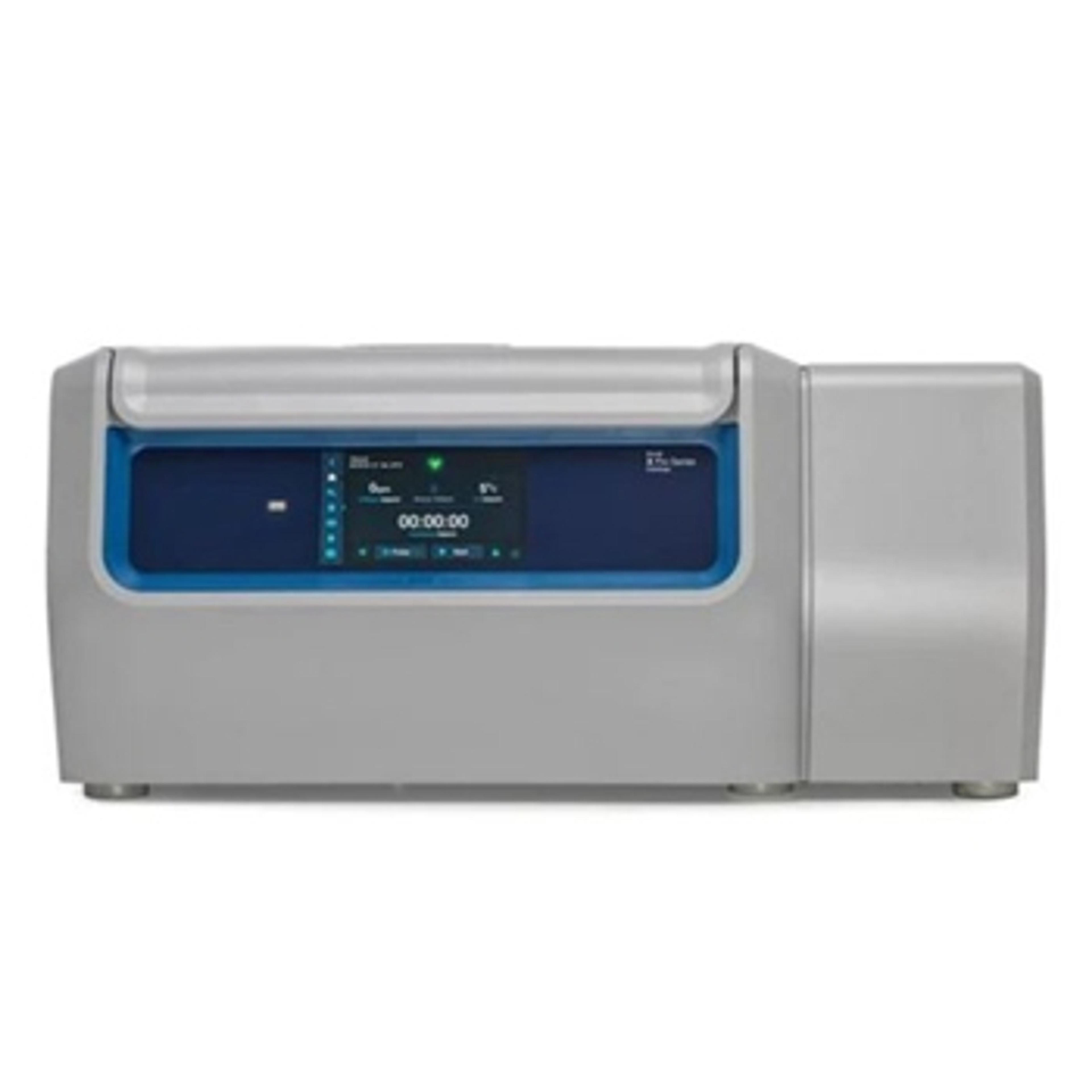
Thermo Scientific™ Sorvall X4 Pro Centrifuge Series
Thermo Fisher ScientificPro series touch screen enables easier programming for quicker results