
Thermo Fisher Scientific Announces New Nanoliter Bulk Reagent Dispenser
15 Apr 2007Product news
Thermo Fisher Scientific Inc., the world leader in serving science, has introduced the Thermo Scientific Multidrop® Combi nL bulk reagent dispenser for nanoliter-to-microliter volumes, at SBS 2007. The Multidrop Combi nL provides accurate, consistent, high-throughput dispensing for all laboratories across a volume range of 50 nL to 50 µL. The Multidrop Combi nL is easy to maintain and can be used to dispense all common reagents, diluents, buffers and solvents as well as viscose solutions, cells and beads, making it ideal for the large variety of assays and protocols.
The Thermo Scientific Multidrop Combi nL uses a pressurized reagent container with valves to provide high precision and accurate control of liquid flow at all volumes, As a result, reagent waste is greatly decreased, minimizing costs and maximizing the utilization of precious samples. The intuitive graphical user interface makes all functions easy to set-up and use. The PC software control option enables greater flexibility, functionality and easier protocol creation. Furthermore, protocols can be downloaded onto the instrument for standalone use. The Multidrop Combi nL can dispense into 96-, 384- and 1536-well plates, adjusting automatically to variation in height and is designed for easy integration with automation solutions, providing low volume dispensing to high throughput laboratories.
As a new member of the Thermo Scientific Multidrop bulk reagent dispenser family, the Multidrop Combi nL brings advanced high precision, low volume dispensing. The Multidrop Combi nL offers nanoliter-to-microliter reagent dispensing for all common laboratory liquids, making it essential for a wide variety of drug discovery, biotechnology and HTS applications. For more information, please visit the article webpage.
Related products
Request Quote for All Products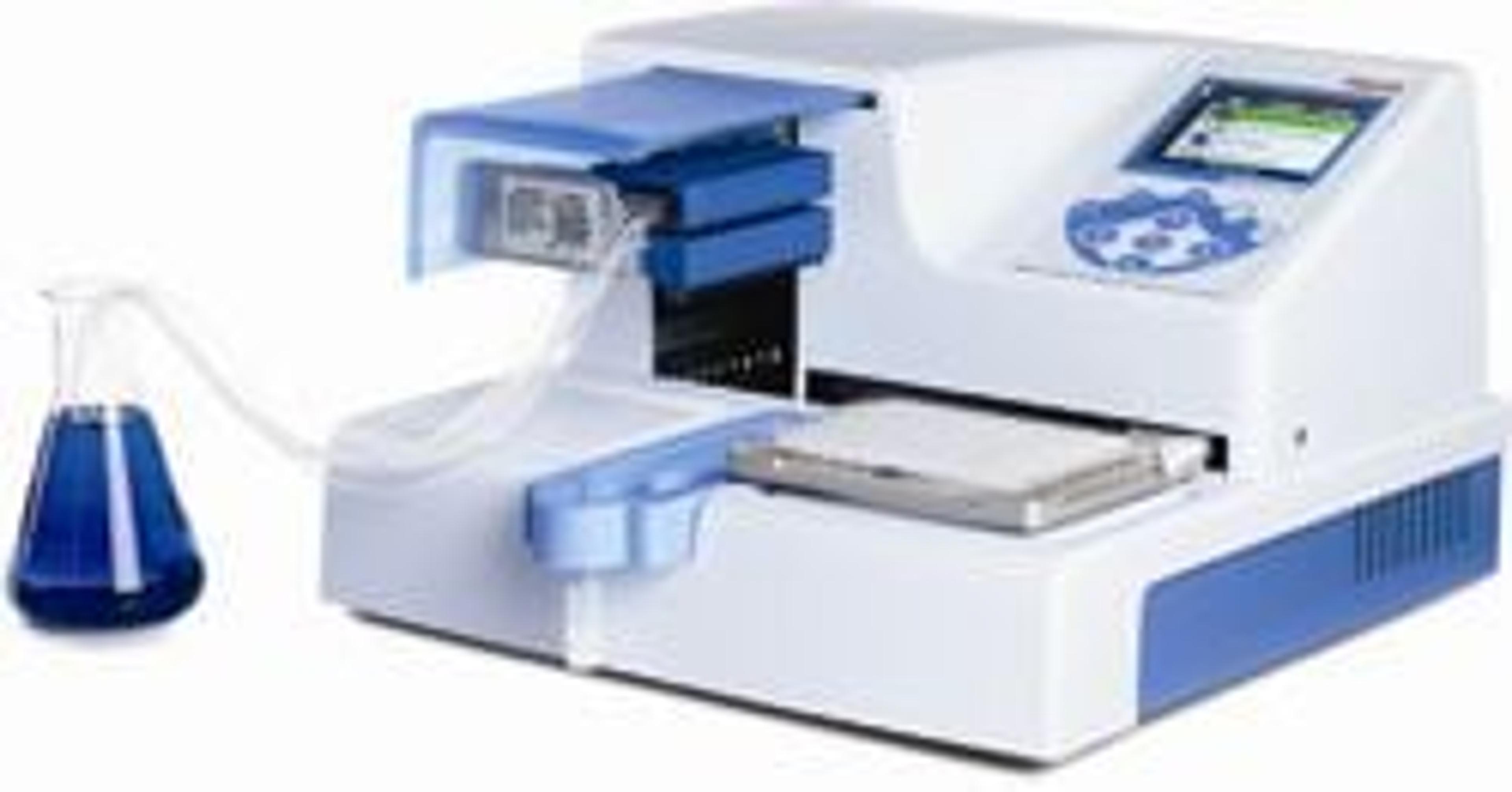
Multidrop™ Combi SMART Reagent Dispenser
Thermo Fisher ScientificMeet your lab's specific needs with outstanding flexibility and performance with the easy-to-use Thermo Scientific™ Multidrop™ Combi SMART + Reagent Dispenser, designed to support the varied requirements of pharmaceutical and biotechnology laboratories.