Thermo Fisher launches centrifugation BioProcess Container for closed-system handling of critical sterile liquids

The Thermo Scientific CentriPAK BPC offers sample protection from contamination and enhanced laboratory productivity

19 Feb 2021

Diane Li
Assistant Editor

Product news

Bioprocess researchers undertaking high-density mammalian, bacterial or microbial cell culture separations can now benefit from a next-generation single-use, sterilized, closed-system BioProcess Container (BPC) designed to offer a highly efficient alternative for harvesting by centrifugation.

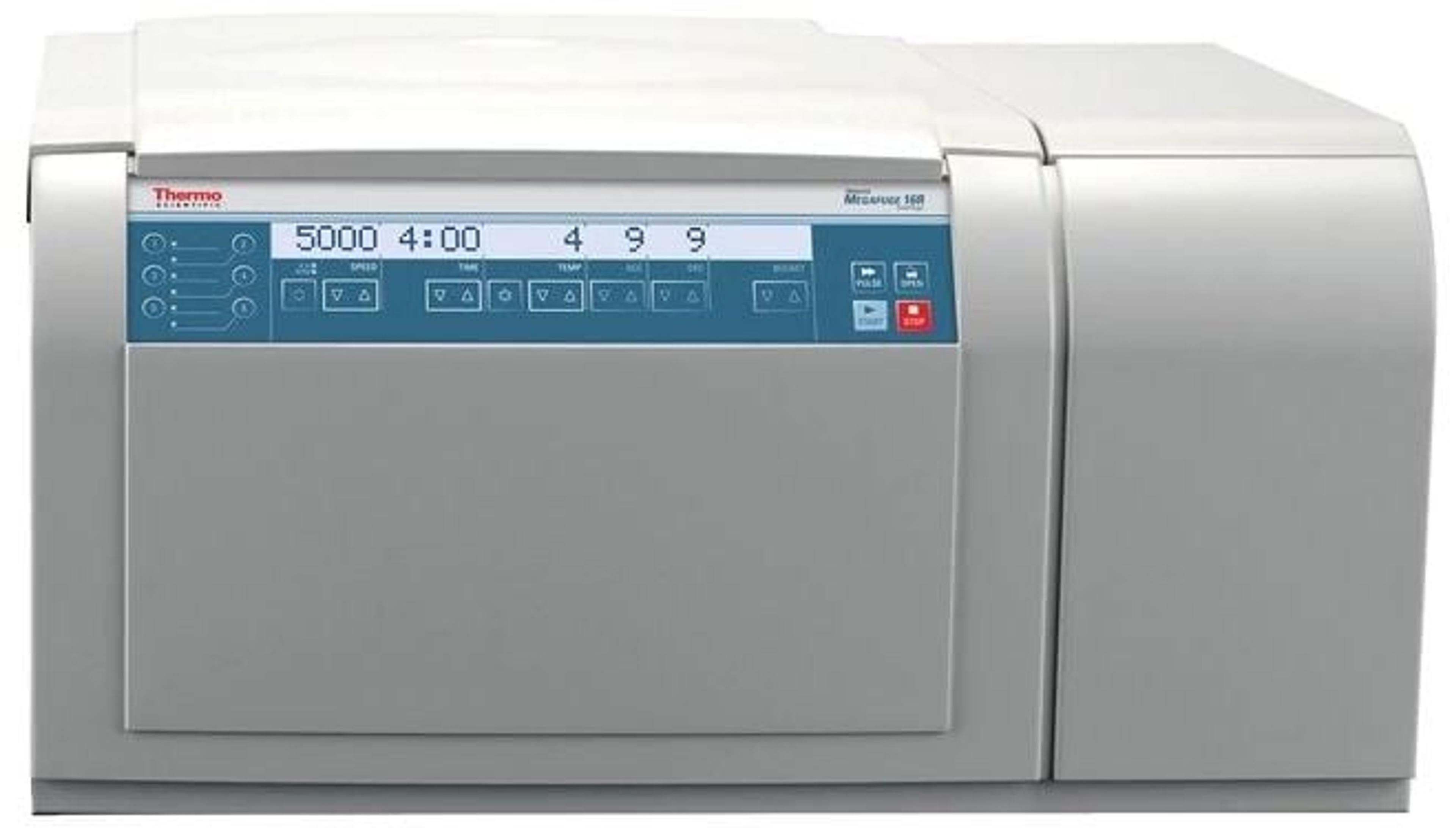
Developed specifically for use with the Thermo Scientific Sorvall BIOS 16 Centrifuge, the single-use, sterilized, closed-system Thermo Scientific CentriPAK BPC enables optimal protection of critical sterile liquids from cross-contamination typically associated with reusable containers. The CentriPAK BPC can be used to process culture volumes of between 3 and 500 L, facilitating high-throughput and high-efficiency cell biomass or clarified supernatant harvesting to maximize laboratory productivity. Furthermore, there are no time-consuming, labor-intensive and costly preparation and post-use cleaning steps involved.

"Filtration — which is commonly used in cell culture applications — poses a number of challenges, the most crucial being the technology is not suitable for handling microbial or bacterial cells, while also requiring constant process monitoring and unplanned interruption due to fowling," explains Carlos Sevilla, strategic business segment general manager for centrifugation at Thermo Fisher Scientific. "Combined with Thermo Fisher’s leading centrifugation technology, the new CentriPAK BPC has been designed to overcome these challenges, offering a next-generation centrifuge container and space-saving solution, that maximizes sample safety and enables faster turnaround times to expedite the development of new cell therapies and biologic treatments. In addition, the CentriPAK BPC is manufactured using industry-accepted films and following current good manufacturing practices (cGMP) standards that enable customers to rapidly validate the systems in their processes."

To ensure it meets the high-quality standards expected in the bioprocessing industry, the CentriPAK BPC is subject to thorough quality control procedures, in compliance with cGMP and ISO 13485:2016. Thermo Fisher’s rigorous production control process provides complete lot traceability for each batch, with relevant documentation accompanying the lot through every step of the manufacturing cycle. At the end of the process, the Certificate of Analysis provided with the CentriPAK BPC reports compliance of all product contact materials and films to USP<88>, USP<87>, USP<661>, EP<3.2.2.1> and EMEA/410/01. Routine testing is performed on representative samples in periodic validations for USP<85>, USP<788> and ANSI/AAMI/ISO 11137.

The CentriPAK BPC is available in various configurations, and comes with a full suite of accessories, including adapters, racks, clips, and spacers.

Do you use Thermo Fisher Scientific products in your lab? Write a review today for your chance to win a $400 Amazon gift card>>

Heraeus Megafuge 16 Centrifuge Series

Thermo Fisher Scientific

Process everyday samples with the Thermo Scientific™ Heraeus™ Megafuge™ 16 Centrifuge Series, which offers exceptional capacity, ergonomics and value.Perfect for clinical protocols, cell culture applications and microplate processing, the refrigerated version is designed for handling temperature-sensitive sample processing between -10° and +40°C.

(16)

Links

Tags

CentrifugesCentrifuges are used to separate particulates suspended in a liquid via the application of a centrifugal force including cells, macromolecules, nanoparticles and precipitates. Centrifuges come in three sizes: microcentrifuges, benchtop and floor-standing centrifuges, depending on the volume and number of samples that require separation. When choosing a centrifuge, consider its maximum separation power indicated by its relative centrifugal force (RCF) value. Low force centrifuges reach a maximum RCF of 8,000 g, high-force centrifuges can reach maximum RCF values of 80,000 g. For extremely high forces, consider ultracentrifuges (up to 800,000 g). Refrigerated and vacuum centrifuges also known as concentrators are available for more specialized applications. A range of volumes are available for centrifuge tubes and microfuge tubes, depending on sample sizes. Find the best centrifuges in our peer-reviewed product directory: compare products, check customer reviews and receive pricing direct from manufacturers.Drug DeliveryDrug Delivery refers to dosage form, route of administration, formulations, technologies, and systems for transporting a pharmaceutical compound in the body as needed to safely achieve its desired therapeutic effect. Drug delivery is often approached via the biopharmaceutical or small molecule drug's formulation, but it may also involve medical devices or drug-device combination products. Considerations include instrumentation, software and services. Bioprocessing / FermentationBioprocessing is the use of biological materials to perform commercial, scientific or medical research processes. Biological materials used include cells, enzymes and organisms. Usually bioprocessing requires a batch or continuous bioreactor such as a fermentor or cell culture system. The advantages of using a reactor include high productivity, easy configuration, adjustable values and automation.Contamination PreventionContamination prevention aims to control and minimize the risk of contamination during experiments. Biological safety cabinets and sterilization equipment are examples of technologies used to prevent contamination.BioprocessingBioprocessing is the use of biological systems for the conversion of raw materials to desired products. This includes the research, development and manufacturing stages of production and can refer to food processing, small-molecule pharmaceutical manufacture, production of recombinant protein therapeutics, or the generation of renewable energy.BiopharmaceuticalsBiopharmaceuticals are proteins and other compounds (such as nucleic acids) produced by living organisms that have uses as therapeutics or for in vivo diagnostics. The most well known example of a biopharmaceutical product, and the first to be approved for therapeutic use, was recombinant human insulin.Cell TherapyCell therapy involves using living cells to treat diseases, often by replacing damaged cells or stimulating regeneration. Stem cell therapy and CAR-T cell therapy are examples of cutting-edge treatments in regenerative medicine and cancer immunotherapy. Browse our peer-reviewed product directory to find the best cell therapy tools, compare products, check reviews, and get pricing directly from manufacturers.Liquid HandlingLiquid handling involves the precise transfer, mixing, and dispensing of liquids in laboratory settings. It is essential for accurate and consistent results in biological, chemical, and pharmaceutical research. Automated liquid handling systems improve efficiency and reduce human error in sample preparation and analysis. Explore liquid handling tools in our peer-reviewed product directory; compare products, read customer reviews, and get pricing directly from manufacturers.Cell CultureCell culture involves growing cells under controlled conditions, typically outside of their natural environment, to study cellular behavior, drug response, and disease models. Cell culture is crucial in biotechnology and biomedical research. Explore cell culture products in our peer-reviewed product directory; compare products, check reviews, and get pricing directly from manufacturers.
Thermo Fisher launches centrifugation BioProcess Container for closed-system handling of critical sterile liquids