Thermo Fisher introduces new handheld XRF analyzer for elemental detection

Niton XL5 Plus, the smallest and lightest handheld XRF analyzer available, delivers unprecedented performance and accuracy

4 Feb 2021

Diane Li
Assistant Editor

Product news

Material verification and contaminant detection are crucial steps in quality assurance. From analyzing oil and gas pipelines to testing polluted soil, if verification isn't accurately and correctly performed, it can pose a potential threat to public safety. As a result, inspection personnel requires a versatile elemental analyzer that provides peak-performance and real-time insights to complete the task at hand and defend against potentially dangerous scenarios.

The new Thermo Scientific Niton XL5 Plus handheld XRF analyzer helps businesses mitigate risk through the use of x-ray fluorescence technology by providing lab-quality elemental analysis directly in the field. The Niton XL5 Plus is the smallest and lightest portable XRF analyzer on the market and weighs only 2.8lbs. It provides users with greater accessibility in hard to maneuver workspaces while reducing operator fatigue. Featuring enhanced software and improved detector technology, the Niton XL5 Plus provides unprecedented analytical performance and accuracy when analyzing both light elements and heavy metals. The versatility of the Niton XL5 Plus makes it an ideal tool for numerous applications where elemental analysis is needed.

"Inspection personnel tasked with material verification or contaminant detection are faced with constant pressure to provide quick and accurate analysis. A challenging task when considering the often harsh or remote environments that these professionals work in," said Chloe Hansen-Toone, vice president and general manager with Thermo Fisher's field and safety instruments business. "With the Niton XL5 Plus, we've made significant advancements to our legacy handheld XRF analyzer that improves the accuracy and accessibility of data, empowering operators to make insightful decisions that enable a safer worksite."

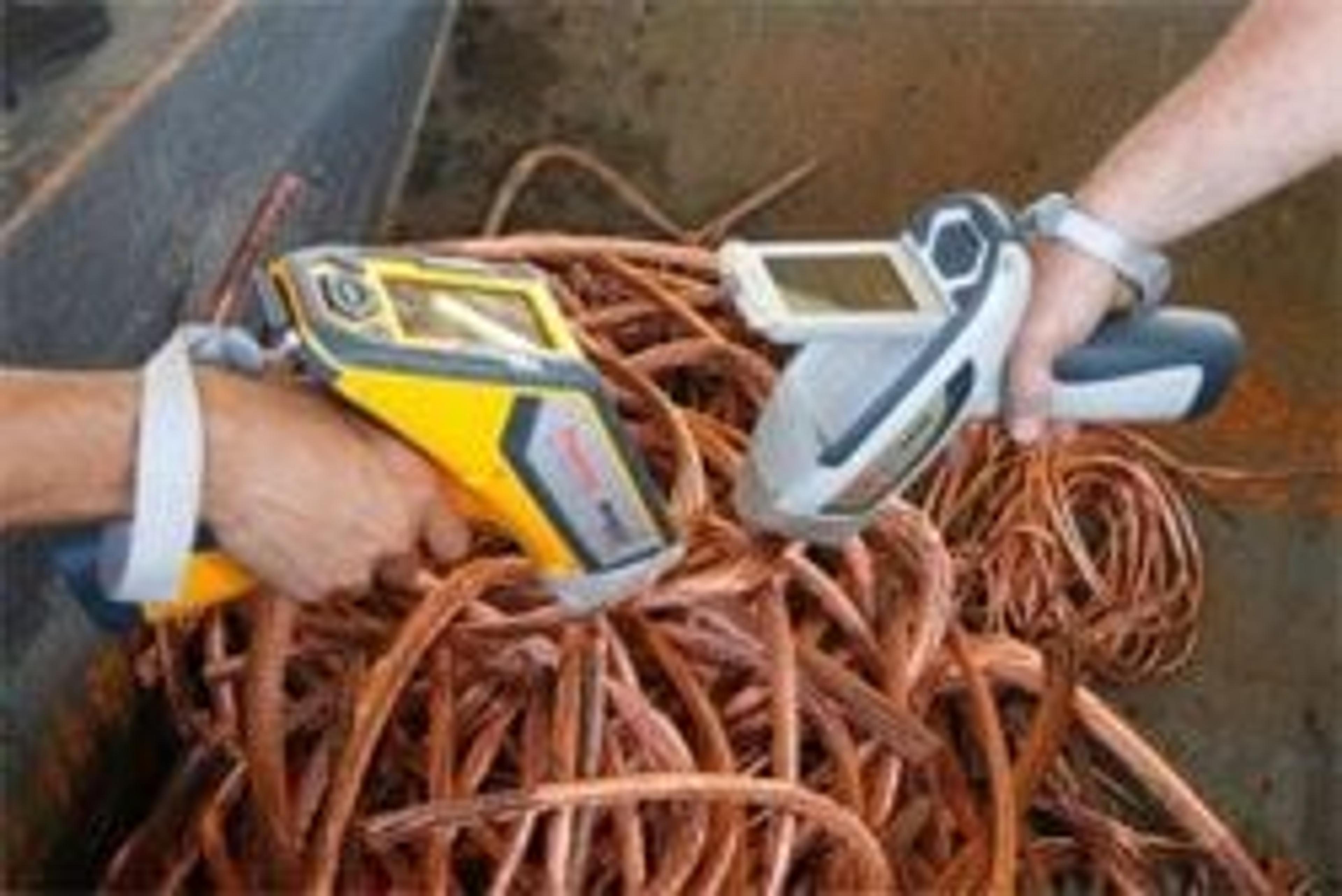
As a go-to resource for organizations in a variety of industrial settings, the Niton XL5 Plus features new detector protection to mitigate the risk of damage to the detector window. This greatly enhances the durability of the XRF analyzer, particularly in recycling and scrap metal settings where punctures from sharp objects is common. As a result, operators can avoid costly repairs and enjoy an extended product lifetime.

Do you use Thermo Fisher Scientific products in your lab? Write a review today for your chance to win a $400 Amazon gift card>>

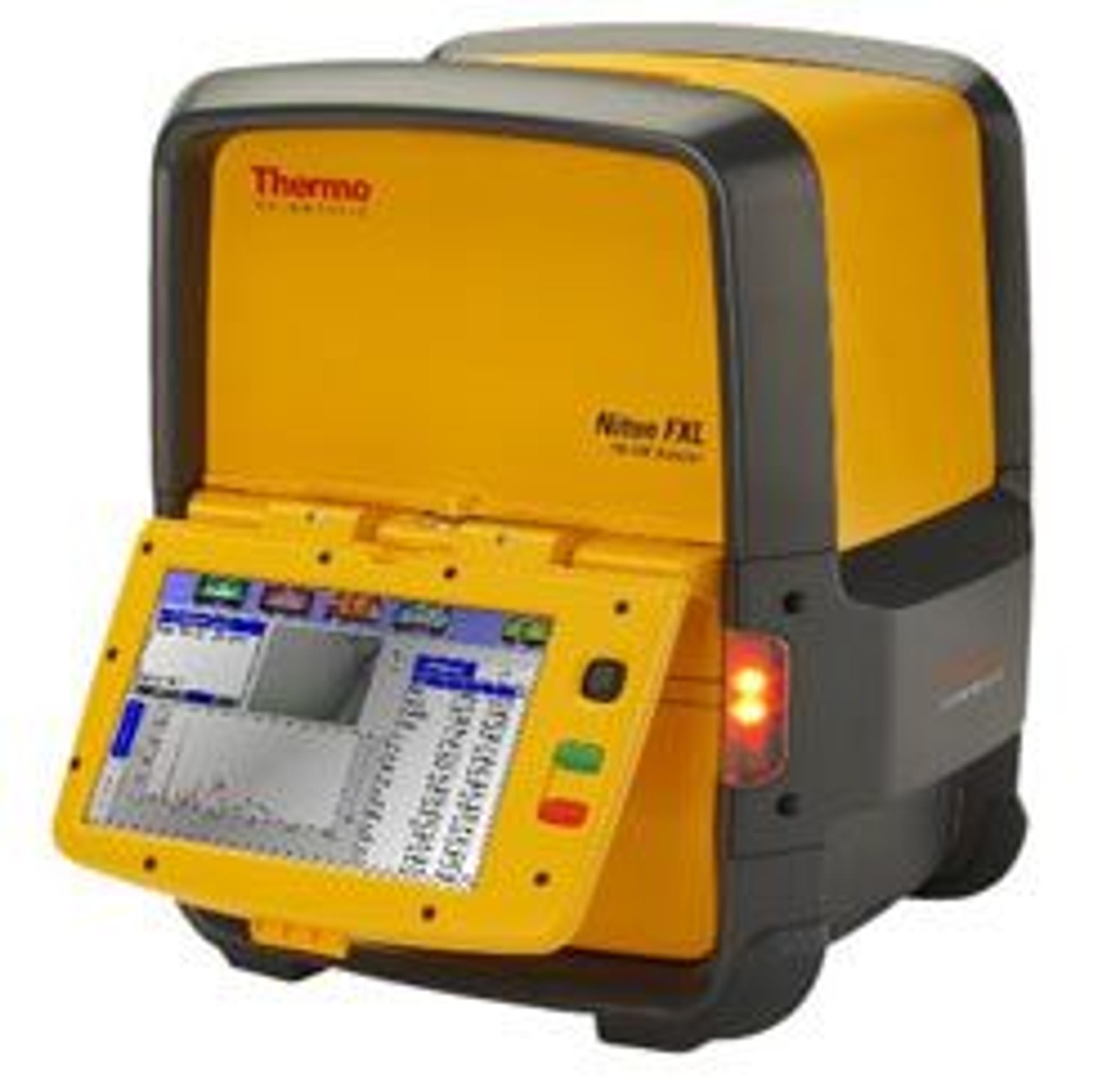
Thermo Scientific Niton FXL Series field x-ray lab

Thermo Fisher Scientific

The Thermo Scientific Niton FXL Series field x-ray lab delivers XRF-based elemental analysis with lab-quality testing performance. Housed in a compact, portable package you can operate virtually anywhere on-site, this elemental analysis lab offers unmatched performance, features, and mobility. True lab-quality performance with superior detection limits Nondestructive with accurate, consistent elemental analysis in minutes - or less Easy to use, with little operator training required Lightweight and ruggedized for field and manufacturing operations Available with 1 mm, 3 mm, and 8 mm spot sizes Closed-beam design requires minimal licensing in most countries
(0)

Thermo Scientific Niton x-ray fluorescence (XRF) analyzers

Thermo Fisher Scientific

A culture of innovation and a distinguished history of breakthrough achievements define Thermo Scientific Niton x-ray fluorescence (XRF) analyzers…purpose-built for the rigorous demands of handheld, nondestructive elemental analysis in the field. • First handheld, lab-quality XRF analyzer for metal alloy analysis • First use of miniaturized x-ray tubes in one-piece handheld analyzers • First and only isotope-based handheld XRF analyzer that never requires source replacement • First handheld analyzer equipped with an He purge for direct analysis of Mg, Al, Si, P, and S in metal alloys • First handheld XRF analyzer with camera and small spot to isolate & measure small components • First and only handheld XRF analyzer to feature a 50kV x-ray tube • First geometrically optimized large area drift detector Count on Thermo Scientific Niton Handheld Analyzers Engineered from the inside out to make you more successful, Thermo Scientific Niton XRF instruments deliver lab-quality results with unmatched speed, precision, and accuracy. Our analyzers are the only handheld XRF analyzers, also known as an XRF gun, to offer you a wide range of sources, models, and configurations. You can count on us to listen to you and recommend the right analyzer for the right application.

(10)

Links

Tags

Atomic Absorption / Emission SpectroscopyAtomic absorption spectroscopy (AAS) and atomic emission spectroscopy (AES) — also called optical emission spectroscopy (OES) — are used to detect the elemental constituents in samples. Both techniques involve the atomization of a sample. Atomic absorption spectrometers may use a flame or furnace to create an atomic vapor of the sample before irradiation with spectral light. Optical emission spectrometers may use a flame, inductively coupled plasma (ICP), microwave plasma (MP) or spark arcs to atomize and excite the sample. At higher excitation energies, electrons can be emitted instead of photons, which can be useful for samples that can’t be atomized and for surface analysis. Explore electron spectroscopy equipment such as Auger spectrometers and photoelectron spectrometers for surface elemental analysis of samples. Find the best atomic absorption, photoelectron and optical emission spectrometers in our peer-reviewed product directory: compare products, check customer reviews and receive pricing direct from manufacturers.Fluorescence SpectroscopyFluorometers and spectrofluorometers (also called fluorescence spectrometers) are used to measure the intensity and wavelength of fluorescent light emitted from a sample after excitation by illumination. Spectrofluorometers utilize monochromators to select the desired wavelengths, whereas filter fluorometers employ a set of filters. Spectrofluorometers for measuring steady-state fluorescence and lifetime fluorescence (or time-resolved fluorescence) are available, as well as fluorescence microscopes and microplate readers. Find the best fluorescence spectroscopy products in our peer-reviewed product directory: compare products, check customer reviews and receive pricing direct from manufacturers.Mass SpectrometryMass spectrometry (MS) is a powerful analytical technique used to identify and quantify molecules based on the mass-to-charge ratio of gas-phase ions. It provides detailed information about the structure, composition, and properties of compounds and is widely used across fields such as environmental monitoring, materials science, drug discovery and development, food and beverage testing, and wider chemical research. Key MS techniques include tandem mass spectrometry (MS/MS), liquid chromatography–mass spectrometry (LS-MS) and inductively coupled plasma (ICP-MS). Choosing from these wide range of techniques and technologies can be a daunting task, so keep up to date with scientific applications, performance expectations, and customer reviews here all in one place. Visit our product directory to receive quotes direct from the manufacturer. X-Ray Diffraction and SpectroscopyX-Ray diffraction & spectroscopy are used in material characterization to discern the structure and elemental composition of a sample. X-Ray diffractometers (XRD) are superior instruments in elucidating the dimensional atomic structure of crystalline materials, including powders, thin films and single crystals. For large unit cells or ordered macromolecules, consider small-angle X-ray scattering (SAXS). X-ray spectroscopic techniques include X-ray fluorescence (XRF) and X-ray photoelectron spectroscopy (XPS), both providing simple and accurate methods for determining the elemental composition of a material. Energy dispersive (EDXRF) and wavelength dispersive (WDXRF) XRF spectrometers are available, as well as handheld/portable devices. High-resolution, 3D microstructure characterization of materials can be achieved with X-ray microscopes combining sub-micron resolution imaging with 3D computed tomography. Find the best XRD and XRF spectrometers in our peer-reviewed product directory: compare products, check customer reviews and receive pricing direct from manufacturers.Particle CharacterizationParticle characterization instruments are used to determine particle size distribution, shape, surface area, zeta potential, density and porosity of particles and materials. Multiple tecchniques are available for determining particle size, shape and count including dynamic light scattering (DLS), laser diffraction, electrozone (Coulter technique), imaging particle analysis and single particle optical sensing. Determine the density of your material with a gas pycnometer or examine its surface area and porosity with gas adsorption analyzers and mercury porosimeters. Find the best particle characterization instruments in our peer-reviewed product directory: compare products, check customer reviews and receive pricing direct from manufacturers.Data AnalysisData analysis hardware and software is available to make data processing straight-forward yet powerful. Data software can be used for math and stats, technical graphing and image analysis. In addition, software is available for specific data analysis of electrophoresis, densitometry, ELISA and DNA sequencing.Contamination PreventionContamination prevention aims to control and minimize the risk of contamination during experiments. Biological safety cabinets and sterilization equipment are examples of technologies used to prevent contamination.X-Ray FluorescenceX-ray fluorescence (XRF) is an analytical technique used to determine the elemental composition of materials. It is widely used in geology, materials science, and environmental testing for detecting heavy metals and other elements. Browse our peer-reviewed product directory to find the best XRF systems, compare products, check reviews, and get pricing directly from manufacturers.Environmental ContaminationContaminants in the environment are harmful chemicals that are present in the air, land and water. These include pesticides, pharmaceuticals, persistent organic pollutants (POPs) and many more.Elemental AnalysisElemental analysis involves determining the elemental composition of a sample, often used in environmental, pharmaceutical, and material sciences. Techniques like ICP-MS, X-ray fluorescence, and atomic absorption spectroscopy allow precise quantification of elements such as metals and nonmetals in complex matrices. Browse our peer-reviewed product directory to find the best elemental analysis tools, compare products, check reviews, and get pricing directly from manufacturers.
Thermo Fisher introduces new handheld XRF analyzer for elemental detection