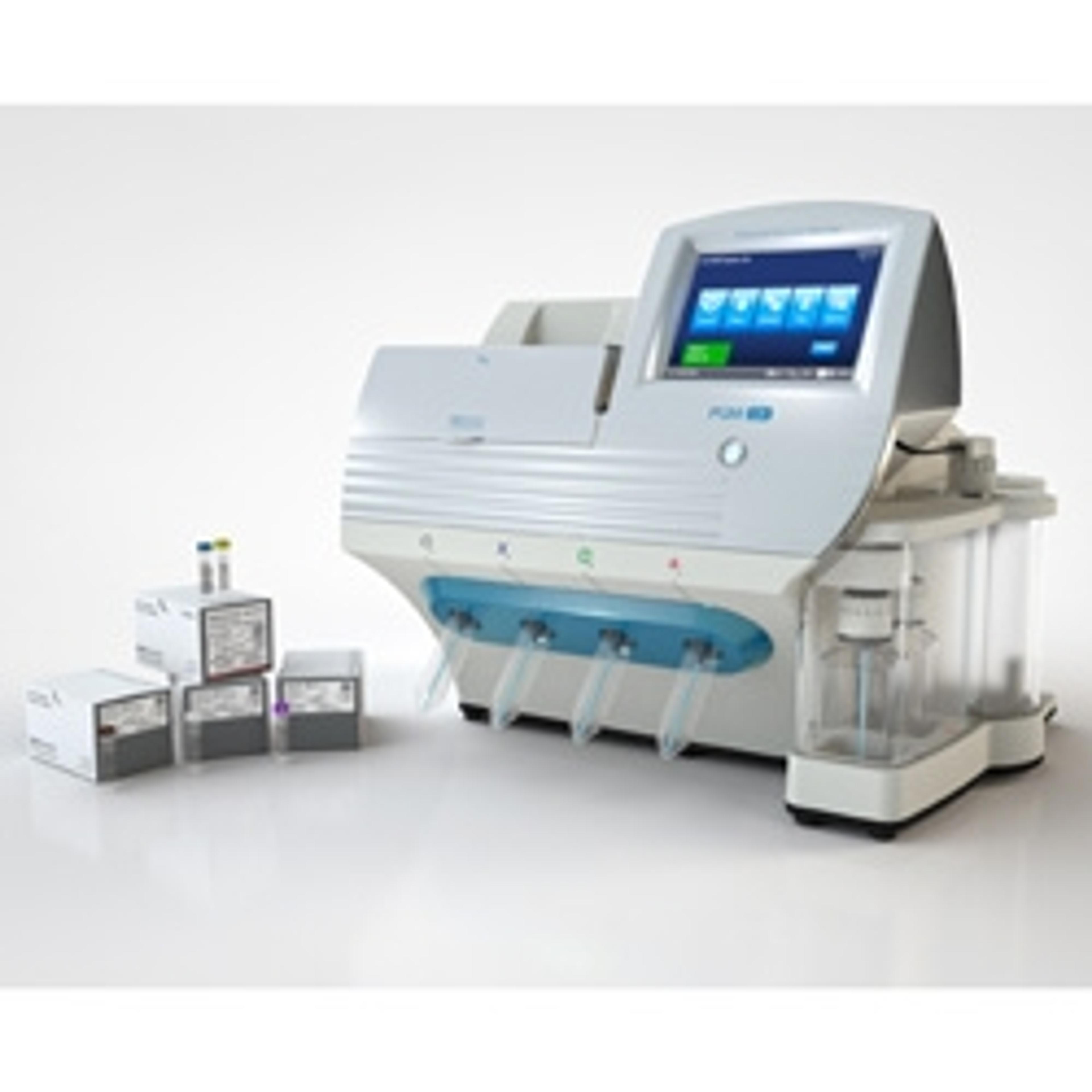
Thermo Fisher, Daiichi Sankyo partner on global companion diagnostic device

The Oncomine Dx target test aims to identify HER2 gene mutations in non-small lung cancer patients

23 Jun 2020
Edward Carter
Publishing / Media

Industry news

Thermo Fisher Scientific and Daiichi Sankyo has expanded their partnership by signing a new agreement to co-develop a companion diagnostic (CDx) that will utilize Thermo Fisher's next-generation sequencing (NGS)-based Oncomine Dx Target Test. The CDx will be designed to identify non-small cell lung cancer (NSCLC) patients with human epidermal growth factor receptor 2 (HER2) mutations who may be eligible for Enhertu, a HER2 directed antibody drug conjugate (ADC), which is currently in global phase 2 development for HER2 mutated or HER2 overexpressing NSCLC.

Enhertu has demonstrated a strong response rate in patients with HER2 positive metastatic breast cancer and preliminary results show a similar response in patients with metastatic NSCLC with HER2 mutations. HER2 mutations have long been implicated in breast cancers, but they are considered a rare event in NSCLC. Recent studies have found that HER2 mutations are the key drivers in about 1-3 percent of NSCLC cases.

Under the terms of the agreement, Thermo Fisher will retain rights to commercialize the test globally and will seek approval from regulatory agencies. The announcement follows a 2018 agreement between the companies to expand the clinical utility of the test in support of clinical trials and drug development programs at Daiichi Sankyo.

The Oncomine Dx Target Test is the first targeted NGS in vitro diagnostic test approved by the U.S. Food and Drug Administration (FDA) for NSCLC. It is designed to evaluate multiple biomarkers associated with cancer and identify patients who are eligible for multiple FDA-approved targeted therapies using a single sample with results available in days.

"Our latest partnership with Daiichi Sankyo is focused on helping to solve an unmet medical need for a growing number of patients with HER2-mutated non-small cell lung cancer," said Garret Hampton, president of clinical next-generation sequencing and oncology at Thermo Fisher Scientific. "This agreement underscores our continued commitment to working with global pharmaceutical partners to efficiently identify more patients who may benefit from the latest targeted therapies in their drug pipelines."

U.S. FDA-Approved Indication for ENHERTU

ENHERTU is a HER2-directed antibody and topoisomerase inhibitor conjugate indicated for the treatment of adult patients with unresectable or metastatic HER2-positive breast cancer who have received two or more prior anti-HER2-based regimens in the metastatic setting.

This indication is approved under accelerated approval based on tumor response rate and duration of response. Continued approval for this indication may be contingent upon verification and description of clinical benefit in a confirmatory trial.

Do you use Thermo Fisher products in your lab? Write a review today for your chance to win a $400 Amazon gift card>>

Links

Tags

Data AnalysisData analysis hardware and software is available to make data processing straight-forward yet powerful. Data software can be used for math and stats, technical graphing and image analysis. In addition, software is available for specific data analysis of electrophoresis, densitometry, ELISA and DNA sequencing.HematologyIn Haematology / Hematology, complete blood cell counts (or full blood counts) are obtained using automated blood count analyzers to enumerate blood cell types.  Hematology also encompasses haemostasis and coagulation, thrombophilia and hemophilia, plasma viscosity and ESR analysis, hemoglobinopathies, cell morphology and haematinic measurement.ImmunologyImmunological techniques measure and characterize immune responses. Immunology kits and analysis systems often use techniques such as ELISA, radioimmunoassay (RIA) and immunodiffusion assays, Immunohistochemistry, and flow cytometry. Immunologists use equipment such as flow Cytometers, plate readers, plate washers and fluorescent microscopes.Cellular PathologyCellular Pathology deals with the microscopic analysis of tissue samples and cells. Sample preparation and processing includes fixation, staining, sectioning and slide mounting, using equipment such microtomes and cryostats. In choosing immunohistochemistry and immunocytochemistry kits, consider chromogens, staining method, antibodies, microscopes and imaging.Clinical TrialsClinical Trials, an essential part of drug discovery process, assess the safety and effectiveness of a new medication or device in the pharmaceutical industry. Clinical Trials are a phased process (Phase 0, Phase I, Phase II, Phase III and Phase IV) which begins after initial preclinical testing.Clinical ChemistryBiochemistry (or clinical chemistry) involves the analysis of bodily fluids using chemical tests. Techniques used include HPLC, chromatography, spectroscopy, mass spectrometry, immunochemical, electrophoresis, turbidometric / spectrophotometric assay, MRI and ISE analysis. Tests are often carried out on plasma or serum but urine (urinalysis) and fecal specimens are also processed.Clinical GeneticsMolecular Genetics covers the analysis of hereditary genetic disease and chromosomal abnormalities. Genetics can be analysed using DNA, RNA, and protein microarrays, PCR, RT PCR and DNA sequencing. Genetic equipment includes genetic workstations, thermal cyclers, cooling blocks and electrophoresis products. Diagnostic kits are used for DNA / RNA extraction and purification.Clinical MicrobiologyMicrobiology is the study of microorganisms including protists, prokaryotes, fungi, and, often, viruses. Microorganisms are a useful research tool as genetic vectors and, in immunology, for antibiotic susceptibility testing, cellular biology and genetics. Microorganisms commonly grow readily in incubators with microbial culture media; this can contain chromogenic supplements to differentiate between cell lines. Estimate your culture’s density of microorganisms with colony counters, or screen and select colonies for desirable clones with automated colony pickers. Additionally, equipment is available to monitor environments for the presence of microbes and identify with microbial identification instruments. Find the best microbiology products in our peer-reviewed product directory: compare products, check customer reviews and receive pricing direct from manufacturers.Drug DeliveryDrug Delivery refers to dosage form, route of administration, formulations, technologies, and systems for transporting a pharmaceutical compound in the body as needed to safely achieve its desired therapeutic effect. Drug delivery is often approached via the biopharmaceutical or small molecule drug's formulation, but it may also involve medical devices or drug-device combination products. Considerations include instrumentation, software and services. RegulatoryPharmaceutical regulations impact on all areas of drug development, manufacture and control and supply. Services are provided from the early stages of drug development and clinical trials through to dossier submission, approval and marketing. Regulatory also includes submission of analytical studies from the pharmaceutical product and safety. Companion DiagnosticsCompanion diagnostics are tests, often <i>in vitro</i>, that are used to determine whether a therapeutic product will be safe and effective for use on an individual. They also identify which patients will benefit most from them. Companion diagnostic tests are often developed in conjunction with the pharmaceutical industry.Cancer DiagnosticsThere are a wide variety of diagnostic tests for cancer available, and this range continues to expand as our knowledge of cancer improves. Current diagnostic methods include biopsy, imaging and blood tests for known biomarkers. New methods in research development include liquid biopsies and cancer breathalyzers.Lung CancerLung cancer is a leading cause of cancer-related deaths worldwide, often diagnosed at an advanced stage. Research focuses on early detection, targeted therapies, and personalized treatment strategies. Explore lung cancer research and diagnostic products in our peer-reviewed product directory; compare products, check reviews, and get pricing directly from manufacturers.Clinical NGSNext Generation Sequencing (NGS) refers to the use of massive parallel sequencing of multiple small fragments of DNA. This high-throughput genomic analysis yields enormous amounts of sequence data, which if appropriately analyzed could have huge potential for clinical laboratories. For this to happen there are technique and bioinformatic hurdles to be overcome.Collaboration
Thermo Fisher, Daiichi Sankyo partner on global companion diagnostic device