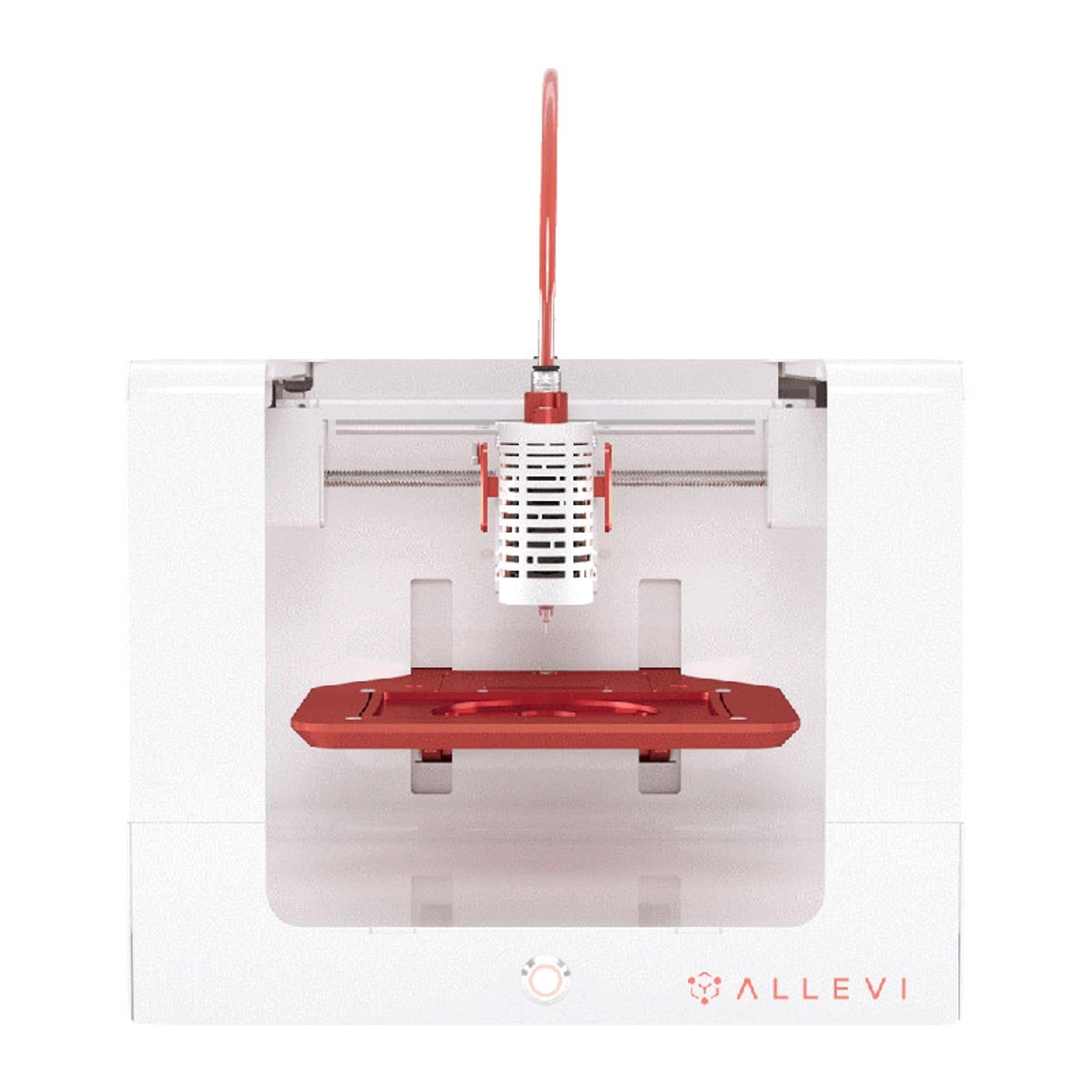
The Wistar Institute and Allevi collaborate on 3D bioprinting project to advance COVID-19 research
5 Jul 2020
Industry news
The Wistar Institute and Allevi have announced a collaboration to use 3D bioprinting to help combat COVID-19.
In a time where the coronavirus pandemic has led to nearly 8 million infections and more than 437,000 deaths worldwide1, scientific research is more important than ever. Allevi will apply its patented 3D bioprinting platform to create three-dimensional lung models that Wistar scientists will use to study SARS-CoV-2, the virus that causes COVID-19. The goal will be to investigate the mechanisms deployed by this pathogen to infect humans and identify potential ways in which it may be blocked.
Wistar expertise in immunology and virology and its state-of-the-art biosafety level 3 capabilities to safely study pathogens combined with Allevi’s platform technology will be essential to the success of this collaboration.
"We are accompanying the spectacular work from our peers in the scientific community and have identified tremendous potential for our platform to enable COVID-19 research in a much faster, yet physiologically relevant manner,” said Taciana Pereira, Allevi Vice President of Life Sciences and a co-principal investigator on the project. “We believe that scientists from all areas need to unite now to solve this crisis, so we are ecstatic to work with Wistar and Dr. David Weiner.”
The collaboration will be led by David B. Weiner, Ph.D., Executive Vice President, director of the Vaccine & Immunotherapy Center (VIC) and W.W. Smith Charitable Trust Professor in Cancer Research. “We have been advancing scientific investigations aimed at the treatment and prevention of COVID-19, and we believe that Allevi's innovative approach is an exciting modality to gain unique insights into the inner workings of the novel coronavirus,” stated Weiner, also a co-principal investigator on the project.
“This project has the potential to be a significant asset in the fight against COVID-19, and the scientific community will benefit greatly from this endeavor,” said Robert Langer, Sc.D., David H. Koch Institute Professor at the Massachusetts Institute of Technology (MIT) and Allevi Scientific Advisory Board member.
Want more of the latest science news straight to your inbox? Become a SelectScience member for free today>>