The transformative benefits of automation in high-throughput drug discovery workflows

Learn how unique automation of some of the most routine processes in a workflow can transform emerging biotechnology companies

17 May 2020

Sarah Thomas
Associate Editor

Editorial article

Dr. Vlad Zarayskiy

The key to achieving high-throughput workflows in drug discovery is reliable automation and reproducibility. Reducing the probability of human error and opportunities for samples to become cross-contaminated is an important goal which can make a big difference to the fortunes of specialist biotechnology companies focused on specific targets. Small gains in automation can remove bottlenecks and enhance repeatability and consistency.

Take the PCR plate or microplate for example, integral to any biochemical assay and requiring of heat sealing and peeling. The removal of manual steps here can lead to higher throughput and a lower risk of sample contamination. To this end, technology provider Brooks Life Sciences has developed a unique solution that just might be the gold standard in automated plate heat sealing and peeling. Its benchtop 4titude® a4S Automatic Roll Heat Sealer and XPeel® Automated Plate Seal Remover have been added to the workflows at new US-based biotechnology company Jnana Therapeutics in Boston, Massachusetts. Principal Scientist, Dr. Vlad Zarayskiy, is in no doubt about the cumulative benefits the a4S and XPeel® brought to the company’s drug discovery programs.

Insights from the lab

Zarayskiy is an experienced industrial cell biologist with expertise in assay development. His workflows at Jnana Therapeutics faced two major hurdles – firstly, adhesive seals were needing to be attached manually, which was time-consuming, and secondly, those seals were not compatible with some instruments’ autosamplers. Brooks’ automated equipment solved his problems. “Having the a4S on site allows much more flexibility with experiments,” he says. “Additionally, an advantage of the a4S is that it is powered by electric motors, with no requirement for any air supply. This allows us to move the instrument around the lab when a lot of plate processing is required.”

Zarayskiy subsequently added the XPeel® to the company’s compound management workflow and the result was transformative. “Now all the sealing and removal of seals is done by instruments, which allows us to have sealed source plates at the beginning of the process, and resealed source plates and sealed destination plates at the end,” he says. “This has the added benefit of minimizing any evaporation of samples or any chance of foreign substances falling into the microplates from the air,” Zarayskiy adds. A further benefit has been realized through the integration of the XPeel® in the workflow – it has eliminated the need for additional culture plate lid disposal.

He concludes that the combination of the a4S and the XPeel® “allows for truly automated and rapid compound addition, and the preparation of assay-ready plates.”

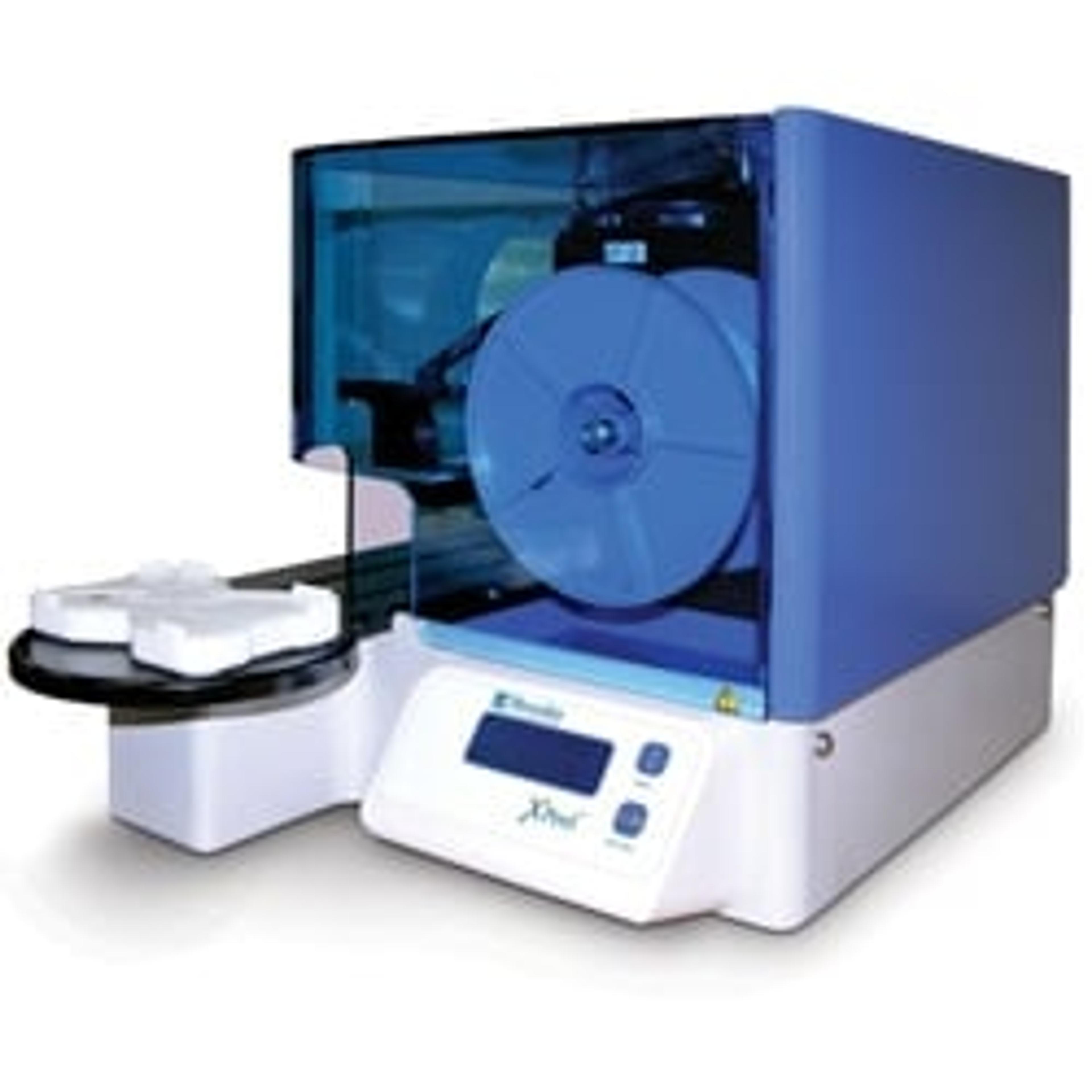
The benchtop 4titude® a4S Automatic Roll Heat Sealer and XPeel® Automated Plate Seal Remover from Brooks Life Sciences.

Unexpected Benefits

In these uncertain times resulting from the COVID-19 pandemic, Zarayskiy closes with an observation about the impact of the instruments have on the company’s high-throughput screens and medicinal chemistry campaigns: “Our workflow was created to increase throughput and autonomy of compound management operations. Utilizing the a4S sealer and XPeel®, we are able to process dozens of plates in walk-away fashion, which has become especially handy in COVID-19 times when only a few people are allowed in the lab.”

Find out how Brooks Life Sciences’ 4titude® a4S Automatic Roll Heat Sealer and XPeel® Automated Plate Seal Remover could help you in our new downloadable application eBook.

XPeel® Automated Plate Seal Removal

Brooks Life Sciences

The XPeel ® automatically removes seals from a wide range of microplate types with the single touch of a button eliminating the need for repetitive, manual plate seal removal. The robust and elegantly-simple automated system allows for the adoption of the gold-standard operating model (sealed plates, no lids).

(3)

Links

Tags

Sample PreparationSample preparation can improve the quality and speed of separation techniques. Products to assist sample preparation include filtration equipment, evaporators, membranes and sieves.MicroplatesMicroplates are multi-well plates used to increase the throughput of biological investigations. The number of wells microplates contain can range from 6 to 3243 wells, with the 96-well format being the most commonly used. Microplates can come tailored for a range of applications including cell culture, PCR, filtration, storage, non-binding surface, protein crystallization, as well as pre-coated, deep well and normal Standard microplates. Additionally, options for microplate colors include clear , black, white or black with clear bottom and white with clear bottom for absorbance microplate reader applications. Find the best microplates for your lab in our peer-reviewed product directory: compare products, check customer reviews and receive pricing direct from manufacturers.Cell-Based AssaysCell-based assays are used to monitor the presence, quantity and activities of a desired cellular analyte including drug molecules or biomarkers. This can reveal information on cell health (apoptosis, cytotoxicity, viability and proliferation assays), cell metabolism, cell migration and cell signaling mechanisms. Find the best cell-based assay products, kits and equipment with our peer reviewed product directory: compare products, check customer reviews and receiving pricing direct from manufacturers.Robotic InstrumentsRobotic instruments can be used for high-throughput automation of many lab processes. Such processes use instruments for assays like cell based assays and ELISA, for sample preparation like shakers, centrifuges and incubators, and for analysis such as sequencing and western blot analyzers. Useful features of robotic instruments include speed, reproducibility, barcode readers, software and automation.Robotic WorkstationsRobotic workstations are automated platforms enabling the user to perform high-throughput, multi-application processes, from sample preparation tasks such as PCR set-up, DNA purification and NGS library preparation, to integrated sample prep and analysis workstations. Automation makes processes consistent, fast, precise and fully walk-away. Find the best robotic workstations in our peer-reviewed product directory: compare products, check customer reviews and receive pricing direct from manufacturers.AutomationAutomation in laboratories and manufacturing processes enhances efficiency, precision, and scalability by reducing the need for manual intervention. It plays a critical role in improving productivity, minimizing human error, and accelerating workflows in fields like diagnostics, drug development, and industrial testing. Automation technologies include robotic systems, automated liquid handlers, and process control systems that streamline complex tasks and ensure consistent, reproducible results. Explore our peer-reviewed product directory to discover the best automation solutions, compare options, read user reviews, and get prices directly from manufacturers.High ThroughputHigh throughput experiments allow the simultaneous processing of several samples. This parallelization reduces the cost per experiment and increases reproducibility and output volume of data.PCR AutomationPCR automation describes the process of using a thermocycler to complete the polymerase chain reaction (PCR) process quickly and efficiently.Drug DiscoveryDrug discovery is the process of identifying potential new medications, involving stages such as target identification, compound screening, and preclinical development. It relies on cutting-edge technologies like high-throughput screening, artificial intelligence, and molecular modeling to accelerate the identification of drug candidates. Drug discovery plays a pivotal role in developing new therapies for diseases ranging from cancer to rare genetic disorders. Browse our peer-reviewed product directory to find the latest drug discovery technologies, compare options, check customer feedback, and get pricing directly from manufacturers.ScreeningUsing robotics, data processing and control software, liquid handling devices and sensitive detectors, screening allows a researcher to quickly conduct millions of chemical, genetic or pharmacological tests.Compound ScreeningCompound screening is a method used to discover specific compounds that could be promising candidates for pharmaceutical use. This potential is identified when compounds interact with the target protein during screening and could therefore be carried forward in the drug development process.Cell Based Automation