
The new option for vacuum filtration in 50 ml cell cultures: faster multiparallel filtration using a multistation
Options to vacuum filter smaller volumes of 50mL at high speeds resolve time-consuming steps in cell line development
27 Nov 2019
Editorial article

Vacuum filtration is one of the most common steps in cell culture filtration, typically the second step after sedimenting cells by centrifugation. If the dozens of 50 mL tubes inside a cell culture hood are any evidence, researchers in cell line and molecule development labs often need options to filter smaller volumes. Even better, if there’s a way to perform multiple filtrations simultaneously and save time.
In this article, we speak with Dr. Noushin Delmdahl, Head of Product Management Lab Consumables at Sartorius Lab Instruments, who introduces us to a newly available vacuum filtration system catering for 50 mL volumes and speeding up the filtration process, especially in high-density cell cultures.
Vacuum filtration for smaller volumes
“We had launched a product portfolio for high-density cell culture filtration where the filters were all for volumes larger than 150 milliliters. We needed to have a bottle top filter for smaller volumes because we saw that cell cultures of 50 milliliters were frequently utilized in cell line development and molecule development. That is why we developed the Sartolab RF 50,” says Delmdahl.
Filter up to 6 samples at a time
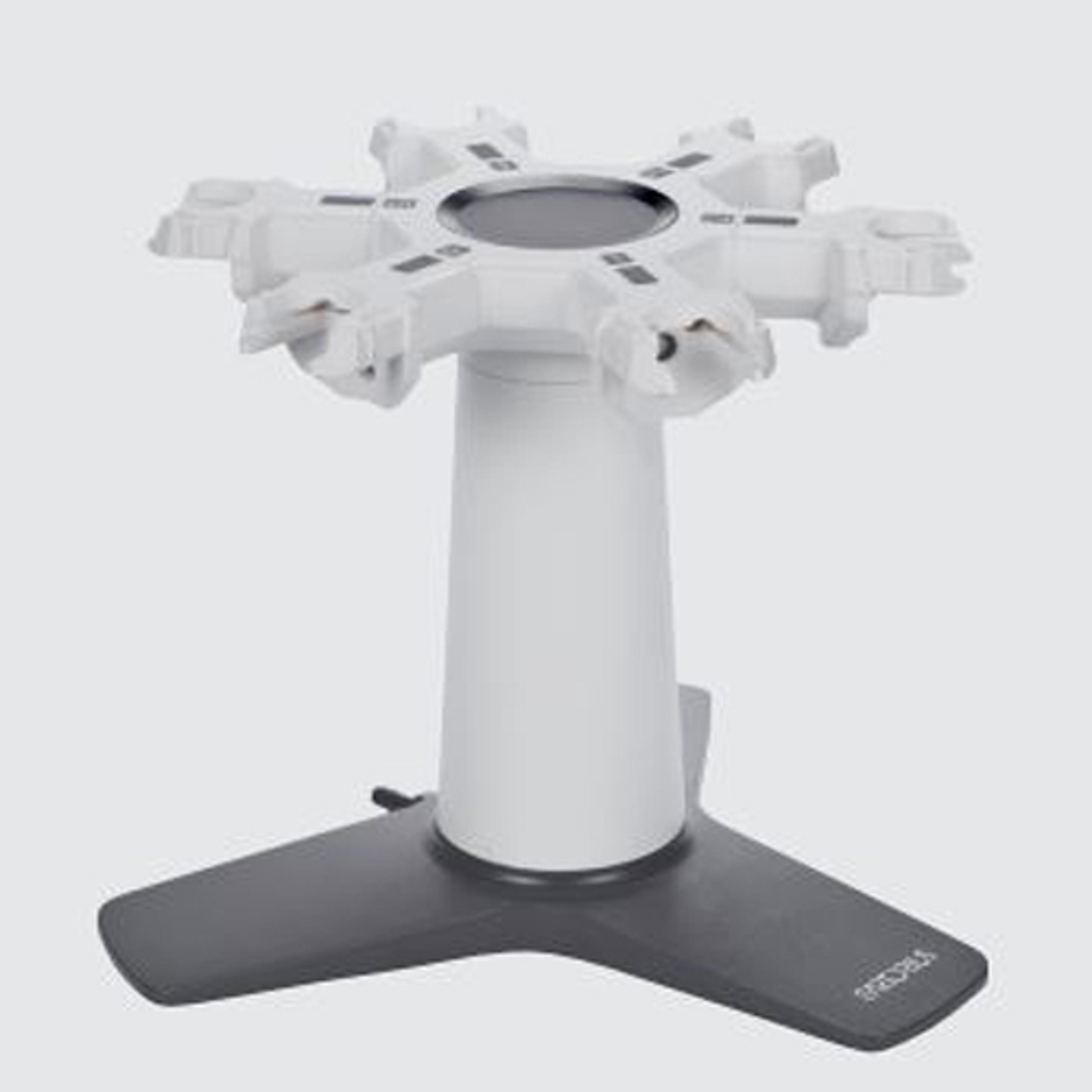
The filter units can either be used as a standalone system or may be coupled with the Sartolab Multistation, providing parallel filtration of up to six samples using one vacuum source. “We saw, especially in the cell line development industry, that people were filtering many different samples at the same time. So, they needed a way of parallel processing as they were going through so many samples,” says Delmdahl. “This is why we developed the RF 50 to basically be plugged into the Multistation so that you can filter a lot of different samples at the same time.”
The Multistation setup provides the benefit of a simple plug-and-play system to process up to six samples at once. “You can click the Sartolab RF 50 into the Multistation without the need for a stand,” explains Delmdahl. “The setup isn't wobbly; you don't have to be afraid that your cell culture is going to spill all over. It's very clean. You can also work with it under a laminar flow.”
Speed up the filtration process
Additional filter aids such as diatomaceous earth (DE) can be used for clarification of samples along with the Sartolab RF 50 filter units. “When using DE, it can filter in seconds what you would have to first centrifuge, then filter for several minutes with other devices,” says Delmdahl.
A ready to use kit, Sartoclear Lab V50, consisting of the Sartolab RF unit and an additional DE pouch, optimized for different cell densities, facilitates the whole filtration process.
The RF 50 vacuum filtration units are equipped with a polyethersulfone (PES) membrane with two options in pore sizes: 0.22μm and 0.45µm. “We designed the RF 50 to have the largest membrane area that a bottle top vacuum filtration device offers in this volume range,” says Delmdahl.
The large membrane area facilitates a high filtration flow rate and fast speeds. “When using it with the diatomaceous earth variant DE, it's super-fast. It is so fast that you don't need to pellet the cells before filtering. You can filter the high-density cell culture in one step,” Delmdahl explains, presenting a solution to the most time-consuming step in protein purification from mammalian cell cultures.

Applications for high-density cell culture
The small volume filtration at high speeds offers instant benefits to applications such as antibody production and cell culture. “The higher the cell densities get, the more difficult it is to clarify them,” says Delmdahl. “That is where you'd benefit from a large filter area.”
Delmdahl explains the detailed method for rapid harvesting of high-density mammalian cell cultures in monoclonal antibody production in this webinar.
“One of the bottlenecks in antibody purification is the clarification because it takes a long time,” notes Delmdahl. “The Sartolab RF 50 solves this bottleneck which means researchers can find antibodies to be moved to clinical phase potentially faster.”
Learn more about the Sartolab RF 50 and Sartolab Multistation. If you’re interested in receiving news about the latest lab technologies direct to your inbox, join SelectScience for free today.
Related products
Request Quote for All Products
Sartolab® RF|BT Vacuum Filtration Units
Sartorius GroupVacuum filtration units are designed for the convenient clarification & sterile filtration of tissue culture media and components, biological fluids, and other aqueous solutions.
Sartolab® MultiStation
Sartorius GroupSartolab® MultiStation is a stand specially designed to hold 1 to 6 vacuum filtration units, allowing simultaneous hands-free filtration of up to 6 samples.
