
The most influential SelectScience video interviews of the past 10 years
Watch exclusive video interviews with industry experts on advances in biomarker discovery, breakthroughs in cancer diagnostics, and more
31 May 2023
Over the past decade, SelectScience® has been at the forefront of sharing groundbreaking scientific research and innovations through exclusive video interviews with scientists. These interviews have provided valuable insights into various fields of scientific exploration, ranging from mass spectrometry and cancer diagnostics to stem cell research and liquid biopsy advancements.
In this article, we highlight some of the most influential video interviews of the past 10 years published on SelectScience, showcasing the cutting-edge discoveries and technologies that have shaped the scientific community. Read on to explore videos on biomarker discovery, precision medicine, quantitiave proteomics, and more.
Interviewee: Dr. Chis Whelan, Chair and Principal Investigator of the UK Biobank – Pharma Proteomics Project
Topic: Enabling new biomarkers for disease diagnosis and treatment

Video: Population scale proteomics accelerates the search for effective new drug targets
Dr. Chris Whelan discusses how data from the UK Biobank – Pharma Proteomics Project has revealed new insights into associations between gene variants and protein concentrations. Whelan explains how this project is enabling new causal biomarkers for diseases to be identified as well as new drug targets with higher probabilities of success. The interview sheds light on how proteomics techniques can revolutionize drug discovery by enabling the identification of protein biomarkers and pathways associated with diseases.
Interviewee: Dr. Marzia Del Re, University of Pisa
Topic: Liquid biopsies for personalized medicine
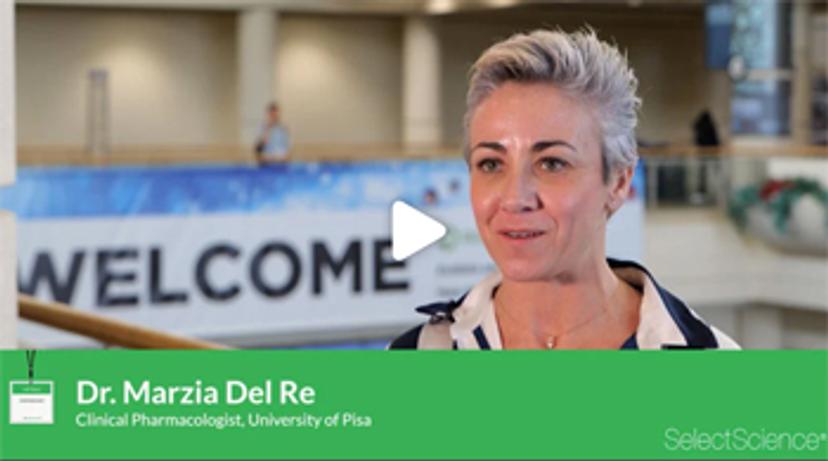
Video: Advances in liquid biopsy research for predictive biomarkers in solid tumors
Dr. Marzia Del Re from the University of Pisa discusses the potential of liquid biopsies for non-invasive cancer monitoring and personalized treatment selection. The interview underscores the importance of liquid biopsies in revolutionizing cancer diagnostics and treatment strategies.
Interviewee: Dr. Fay Nicolson, Dana-Farber Cancer Institute and Harvard Medical School
Topic: Revolutionizing early cancer detection with nanoparticles
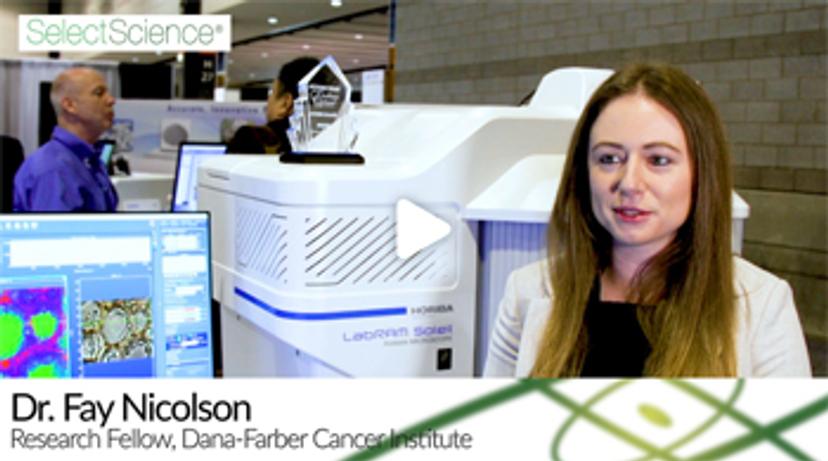
Video: How to detect cancer in vivo using nanoparticles
Dr. Fay Nicolson, from the Dana-Farber Cancer Institute and Harvard Medical School, shares how she uses nanoparticles to precisely image cancer in pre-clinical animal models. Nicolson also explains why the lack of harmful, ionizing radiation makes Raman spectroscopy the technique of choice over other existing methods. This breakthrough has the potential to revolutionize early cancer detection and improve patient outcomes.
Interviewee: Jennifer O’Sullivan, MRC Weatherall Institute of Molecular Medicine
Topic: Stem cell research for the development of new cancer therapies
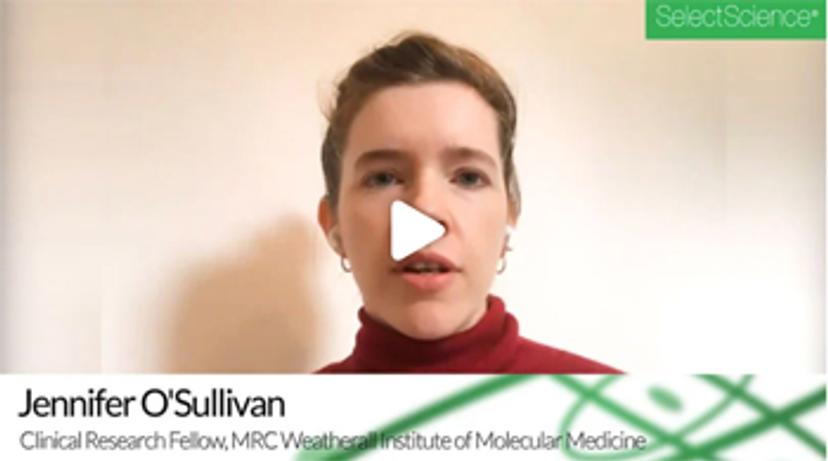
Video: Detecting and isolating rare bone marrow stem cells
Jennifer O’Sullivan, MRC Weatherall Institute of Molecular Medicine, discusses her work researching why some blood cancers progress to a more advanced stage where there are currently limited therapies. O’Sullivan explains how by looking for changes within rare bone marrow stem cells it may be possible to target and develop new therapies for blood cancers.
Interviewee: Dr. Richard Kay, Wellcome-MRC Institute of Metabolic Science at the University of Cambridge
Topic: Mass spectrometry in diabetes research
Video: Analysis of low-abundant gut hormone peptides using mass spectrometry
Dr. Richard Kay, Senior Research Associate at the Wellcome-MRC Institute of Metabolic Science at the University of Cambridge, talks about how he uses mass spectrometry to measure gut hormone peptides related to diabetes. Kay outlines the challenges of detecting low-abundant peptides and explains the benefits of mass spectrometry over immunoassays. The interview highlights the significance of sensitive mass spectrometry methods in unraveling the complexities of gut hormone signaling.
Interviewee: Lukas Uebbing and Vera Cornet, Johannes Gutenberg University of Mainz
Topic: mRNA-based therapeutics in precision medicine
Video: Reprogramming the immune system: mRNA lipoplex particles as the basis of therapeutic gene delivery systems
Lukas Uebbing and Vera Cornet, pharmacists and Ph.D. students at the Johannes Gutenberg University of Mainz, Germany, discuss their research using liposomal formulations and the creation of mRNA lipoplex preparations to deliver mRNA to target cells. The interview sheds light on the transformative role of mRNA-based therapeutics in precision medicine.
Interviewee: Michael MacCoss, University of Washington
Topic: Quantitative proteomics research

Video: Proteomics: The unprecedented potential of capillary electrophoresis-mass spectrometry
Michael MacCoss, professor of genome sciences at the University of Washington describes his work developing technologies to quantitatively measure proteins in complex matrices, and how his collaboration with 908 Devices is aiming to improve the speed and robustness of these measurements using capillary electrophoresis-mass spectrometry (CE-MS). The interview showcases the versatility of CE-MS and its role in advancing proteomics investigations.
Interviewee: Corbin Occhino, Tyra Biosciences
Topic: Advances in high-throughput screening for drug discovery
Video: Streamlining compound library preparation with an integrated sample management platform
Corbin Occhino, Senior Scientist at Tyra Biosciences, shares how automation has transformed the way the precision oncology company manages its compound libraries, bringing increased throughput and reduced labor. The interview showcases how automation and advanced sample handling technologies can accelerate drug discovery workflows, enabling high-throughput screening and efficient compound management.