The ICPMS-2030: Expanding Solutions for Elemental Impurity Analysis in Pharmaceutical Products

European launch during “Critical Mass Tour” starting in March

18 May 2016
Weylan Kiam-Laine
Microbiologist

Product news

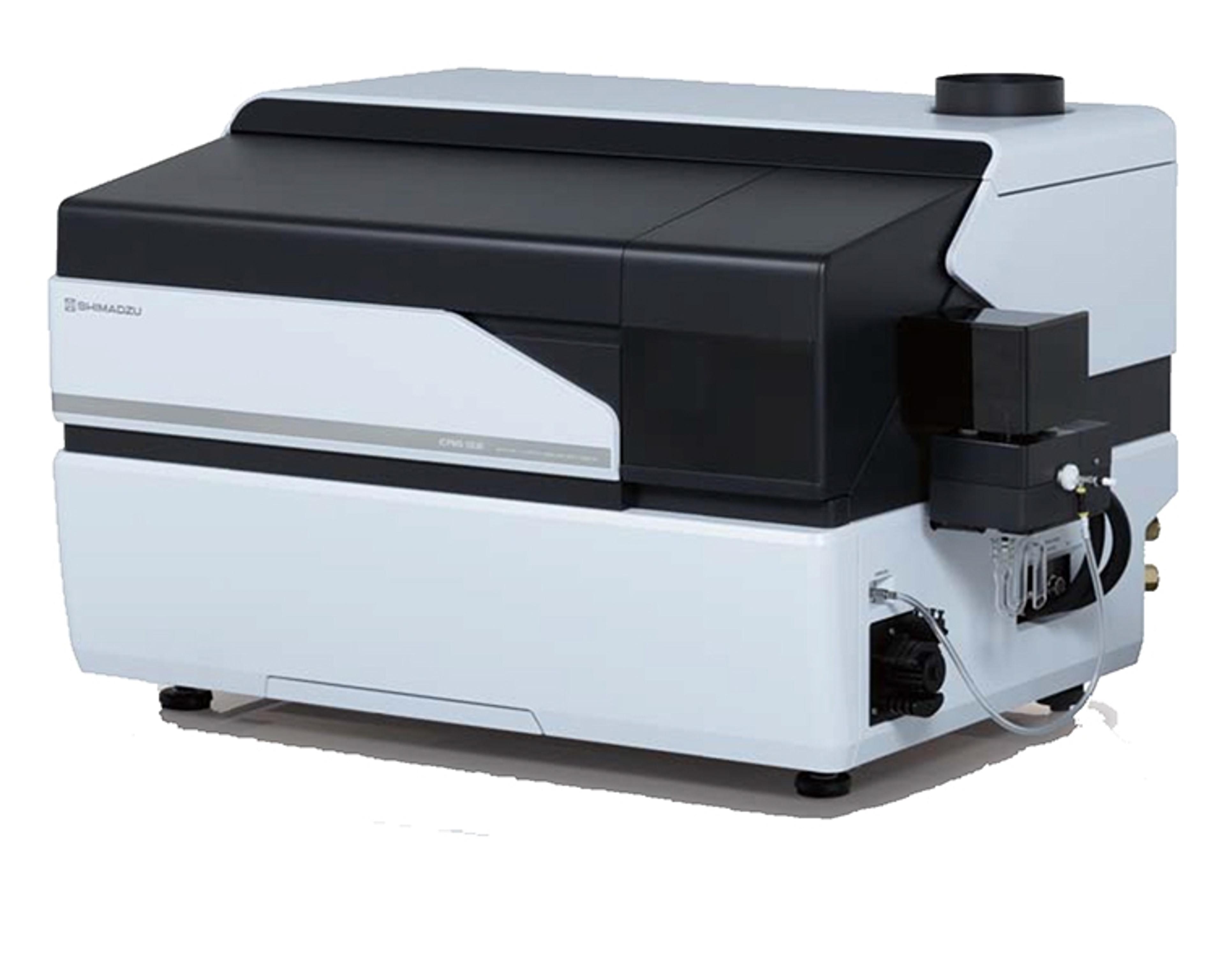
Shimadzu, one of the world leaders in analytical instrumentation, has released its ICPMS-2030 Inductively Coupled Plasma Mass Spectrometer. The new ICPMS-2030 is designed to meet the requirements of the ICH (International Council on Harmonization of Technical Requirements for Registration of Pharmaceuticals for Human Use) Q3D guidelines for elemental impurities in pharmaceutical products. The ICH Q3D specifies allowable limits of daily intake of 24 elements of toxicological concern, and requires highly sensitive and high-precision measurement of such elements.

The ICPMS-2030 satisfies these requirements with ppt level high sensitivity. This is achieved by the newly developed collision cell and the optimized internal structure, offering FDA 21 CFR Part 11 compliance, automated analytical method development function, and unique measurement result evaluation function to provide analytical results with exceptionally high reliability.

The US pharmacopoeia indicates limits of elemental impurities (USP<232>) and detection techniques using ICP-MS (USP<233>), which will be in effect in January 2018. In USP <735>, X-ray Fluorescence Spectrometry is adopted as general analytical method. For those demands, Shimadzu offers total solution for elemental impurities analysis from screening without sample preparation using the EDX-7000/8000, FDA 21 CFR Part 11 compliant Energy Dispersive X-ray Fluorescence Spectrometers, to highly sensitive and high-precision analysis using the ICPMS-2030.

“Critical Mass Tour” – The ICPMS-2030 European Launch Tour

Newly released during the Pittcon Expo in March 2016, the ICPMS-2030 will be launched in Europe as of March. During the “Critical Mass Tour” Shimadzu will travel to several countries such as Belgium, Hungary, France, and others. In Germany, the ICPMS-2030 was introduced during the analytica trade fair in Munich, May 10-13.

Features

The ICPMS-2030 combines benefits covering performance features such as sensitivity and reliability, as well as operational, handling and economic aspects.

1. Designed for high sensitivity and easy maintenance

The optimized internal structure including the newly developed collision cell enables analysis at ppt-level sensitivity; depending on the elements even sub-ppt levels can be reached. This outstanding sensitivity is achieved by minimized spectral interference and improved transmission efficiency of atomic ions, so that precise quantitation results in elemental impurity analysis become more reliable. The sample injection unit and interface unit, where ionized atoms go through can be easily removed for maintenance so that stable analysis for longer period can be ensured.

2. Simplified analysis and higher data reliability by assistant functions and LabSolutions software

In ICP-MS analysis, conventionally users needed to be skillful and often spent a long time to find the ions that interfere with spectra, select the optimum mass number of the elements to be measured, and determine the calibration curve sample concentration.

Using the “Development Assistant" function, users can now simply perform qualitative analysis by selecting the elements to be measured. The software then automatically sets the suitable analysis conditions. When performing routine analysis, the “Diagnosis Assistant” automatically checks if there is spectral interference and indicates problems if there are any. Shimadzu’s FDA 21 CFR Part 11 compliant LabSolutions software provides ensured analytical data management.

3. Reduction of argon gas consumption and lower running cost via the mini-torch and Eco mode

Shimadzu’s unique mini-torch plasma unit significantly reduces the consumption of argon gas. The Eco mode automatically reduces the argon gas flow during standby. In addition, the use with 99.95 % purity argon gas is guaranteed. Therefore, analysis can be performed using the relatively lower cost argon gas, instead of 99.999 % or higher purity argon gas generally used. These features greatly reduce costs in laboratory operations.

Tags

Fluorescence SpectroscopyFluorometers and spectrofluorometers (also called fluorescence spectrometers) are used to measure the intensity and wavelength of fluorescent light emitted from a sample after excitation by illumination. Spectrofluorometers utilize monochromators to select the desired wavelengths, whereas filter fluorometers employ a set of filters. Spectrofluorometers for measuring steady-state fluorescence and lifetime fluorescence (or time-resolved fluorescence) are available, as well as fluorescence microscopes and microplate readers. Find the best fluorescence spectroscopy products in our peer-reviewed product directory: compare products, check customer reviews and receive pricing direct from manufacturers.Mass SpectrometryMass spectrometry (MS) is a powerful analytical technique used to identify and quantify molecules based on the mass-to-charge ratio of gas-phase ions. It provides detailed information about the structure, composition, and properties of compounds and is widely used across fields such as environmental monitoring, materials science, drug discovery and development, food and beverage testing, and wider chemical research. Key MS techniques include tandem mass spectrometry (MS/MS), liquid chromatography–mass spectrometry (LS-MS) and inductively coupled plasma (ICP-MS). Choosing from these wide range of techniques and technologies can be a daunting task, so keep up to date with scientific applications, performance expectations, and customer reviews here all in one place. Visit our product directory to receive quotes direct from the manufacturer. X-Ray Diffraction and SpectroscopyX-Ray diffraction & spectroscopy are used in material characterization to discern the structure and elemental composition of a sample. X-Ray diffractometers (XRD) are superior instruments in elucidating the dimensional atomic structure of crystalline materials, including powders, thin films and single crystals. For large unit cells or ordered macromolecules, consider small-angle X-ray scattering (SAXS). X-ray spectroscopic techniques include X-ray fluorescence (XRF) and X-ray photoelectron spectroscopy (XPS), both providing simple and accurate methods for determining the elemental composition of a material. Energy dispersive (EDXRF) and wavelength dispersive (WDXRF) XRF spectrometers are available, as well as handheld/portable devices. High-resolution, 3D microstructure characterization of materials can be achieved with X-ray microscopes combining sub-micron resolution imaging with 3D computed tomography. Find the best XRD and XRF spectrometers in our peer-reviewed product directory: compare products, check customer reviews and receive pricing direct from manufacturers.FDAThe Food and Drug Association (FDA) is an agency within the U.S. Department of Health and Human Services. Among other things, it is responsible for ensuring the safety, effectiveness and quality of drugs, vaccines and other biological products, and medical devices. analyticaAnalytica is a leading international trade fair for laboratory technology, analysis, and biotechnology, showcasing innovations and solutions in the scientific community. Stay updated with the latest trends and products in the industry. X-Ray FluorescenceX-ray fluorescence (XRF) is an analytical technique used to determine the elemental composition of materials. It is widely used in geology, materials science, and environmental testing for detecting heavy metals and other elements. Browse our peer-reviewed product directory to find the best XRF systems, compare products, check reviews, and get pricing directly from manufacturers.ICP-MSInductively Coupled Plasma Mass Spectrometry (ICP-MS) is a powerful analytical technique used to determine the concentrations of elements and their isotopes in a variety of samples, including water, soil, and biological tissues. It involves ionizing elements in the samples with extremely high-temperature Argon (Ar) plasma and then using a mass spectrometer to measure the number of ions based on their mass-to-charge ratio (m/z). Explore ICP-MS systems in our peer-reviewed product directory; compare products, check reviews, and get pricing directly from manufacturers.Trace Level ImpuritiesTrace level impurities refer to low concentrations of unwanted substances found in chemicals, pharmaceuticals, and other products. Detecting and removing these impurities is crucial for product safety and regulatory compliance. Explore trace impurity analysis tools in our peer-reviewed product directory; compare products, check reviews, and get pricing directly from manufacturers.Elemental AnalysisElemental analysis involves determining the elemental composition of a sample, often used in environmental, pharmaceutical, and material sciences. Techniques like ICP-MS, X-ray fluorescence, and atomic absorption spectroscopy allow precise quantification of elements such as metals and nonmetals in complex matrices. Browse our peer-reviewed product directory to find the best elemental analysis tools, compare products, check reviews, and get pricing directly from manufacturers.PharmaceuticalsPharmaceuticals are medicinal drugs used in healthcare to diagnose, prevent, cure and treat illnesses. Pharmaceuticals that are excreted after use appear in wastewater and can have detrimental effects on the environment.Toxicology Screening
The ICPMS-2030: Expanding Solutions for Elemental Impurity Analysis in Pharmaceutical Products