
The Future of Cancer Diagnostics: The Development of Liquid Biopsies
The CEO of EKF Molecular discusses the use of PointMan technology in recent clinical studies
31 Aug 2015
Editorial article
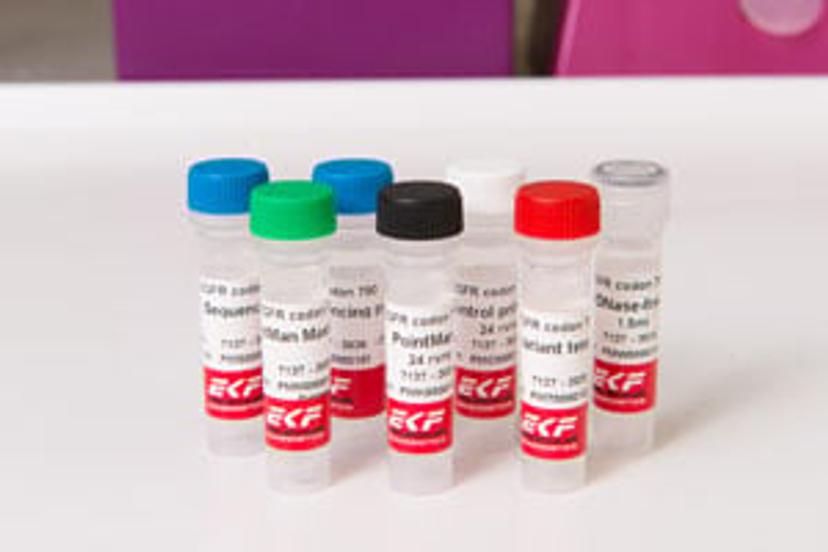
PointMan works by enriching the DNA sample for the point-mutated sequence, using a simple reagent set that combines with standard DNA extracts and runs on a real time thermocycler platform.
The application of this technology will allow deeper understanding of individual patients’ disease.
Andrew Webb CEO of EKF Molecular
Although tissue biopsy is the standard method of detecting cancerous changes in the body, it is not a ‘gold standard’ diagnostic method. Traditional biopsies rely on the fact that the sample taken is a representative cross section of the tumor. Unfortunately, tissue biopsies may contain low level and variable quantities of mutated DNA sequences that are difficult to distinguish from wild type DNA (WT DNA). Some tumors such as lung cancer are very difficult to access and yield very small tissue samples; most current tests require a minimum amount of tissue and this level is not always reached using a biopsy.
When cancer cells die they release circulating tumour DNA (ctDNA) into the bloodstream. If we could identify these tumor signatures in the blood, then we might be able to identify cancer using a blood test, or ‘liquid biopsy’, rather than an invasive tissue biopsy.
EKF Molecular, a division of EKF Diagnostics, is currently investigating the ability of its PointMan technology to enrich tumor DNA in blood samples. I spoke to Andrew Webb, CEO of EKF Molecular, to find out more.
SN: Can you start by telling me about EKF PointMan technology?
AW: PointMan is a simple and effective solution for the identification of genetic changes in patients. PointMan works by enhancing and enriching the DNA sample for the point-mutated sequence, and repressing the WT DNA. This is done using a simple reagent set that combines with standard DNA extracts and runs on a thermocycler or real time PCR platform. The enriched products can then be used in combination with standard detection methodologies such as PCR, Sanger sequencing or Next Generation Sequencing (NGS). The resulting product is amplified amounts of tumor DNA (approximately 1,000 fold amplifications of the variant DNA) with a much lower background of WT DNA.
SN: What are the advantages of using PointMan kits?
AW: Anything that we can do to avoid traditional biopsies is beneficial to facilitate the monitoring of very sick patients. Analyzing ctDNA is gaining acceptance as a reliable way of detecting tumor DNA when compared to the random accessing of tissue samples for such analyses. This technology complements the important role of the histology department. The advantages of PointMan technology are as follows:
Introduces a novel approach to overcome the challenge of genotyping patients from a liquid biopsy.
Enables identification of ultra-low-level somatic mutations, which current routine diagnostic assays are unable to detect.
Blood-based testing removes the uncertainty associated with the heterogeneity of tissue biopsy.
Opens the door to the implementation of non-invasive patient testing utilising existing laboratory workflows.
The application of this technology will allow deeper understanding of individual patients’ disease, such as the routine monitoring of tumor development and response to therapy.
SN: Can you tell us more about the liquid biopsy studies that you are involved in?
AW: Our collaborations at the moment are based on generating clinical data and determining the clinical utility and sensitivity of the test.
University of Swansea
We have been working in collaboration with the Institute of Life Sciences at the University of Swansea, UK, to confirm the effectiveness of using PointMan technology to identify and characterize low level mutations in melanoma, endometrial cancer and lung cancer patients.
Early last year we successfully detected ctDNA mutations in melanoma patients. Following that, we were then able to demonstrate the sensitivity of PointMan in detecting ctDNA mutations in the BRAF gene (in endometrial cancer specimens) and EGFR gene (in lung cancer specimens), which could potentially serve as biomarker tests for the early detection, treatment and monitoring of patients with these cancers.
ctDNA is now being investigated using next generation sequencing (NGS). The data is looking very promising and will be published soon.
Massachusetts General Hospital (MGH)
Last year we entered into a two-year collaboration with MGH to evaluate PointMan technology in lung, breast and skin cancers. MGH will be using PointMan kits to help genotype isolated circulating tumor cells (CTCs) using their CTC-iChip instrument.
The main difficulty in successfully analyzing CTCs with the CTC-Chip instrument has been the ability to detect low level mutations sufficiently and to create assays that are sensitive enough to provide meaningful data; difficulties that PointMan may be able to effectively overcome.
ANGLE
The latest collaboration to be announced by EKF Diagnostics is a partnership with ANGLE plc to investigate the combination on ANGLE’s Parsotix CTC harvesting platform with PointMan DNA enrichment technology, for use as a liquid biopsy. The initial work will be undertaken on colorectal cancer patients and then be expanded to cover other cancer types. CTCs will be harvested from cancer patients and analyzed to identify genetic variations in the cancer.
SN: What is the immediate future of EKF Molecular Diagnostics in the oncology arena?
AW: Our collaborations at the moment are based on generating clinical data and determining the clinical utility and sensitivity of the test.
SN: At what point can you use a liquid biopsy rather than a tissue biopsy?
AW: We are still in the early stages of developing these blood tests. A large amount of work still needs to be carried out to improve confidence levels and this takes time. We have six collaborations planned to help us to generate this data. I would like to think that if all goes well, we might have a liquid biopsy test available for use in the next few years. NGS is increasingly recognised as an extremely important tool for cancer diagnosis. Currently, the technology is capable of providing a detailed assessment of a patient’s genotype at diagnosis; however, it remains a costly, in the absence of reimbursement, and time consuming process. We see PointMan as being a cost-effective, efficient way of monitoring these cancer patients following their initial diagnosis.
Watch EKF Molecular PointMan™ Technology in Action