
The fight against coral disease: How automated liquid handling is enabling marine biology research
Find out how automated liquid handling is being used to aid research into coral reef disease outbreaks and the development of pioneering treatments
7 Dec 2021
Editorial article
Worldwide, coral reefs provide important habitats for a diverse array of aquatic life and promote vast ecosystems capable of supporting tropical and subtropical coastal communities, providing them with a source of food, a means of carbon sequestration, and protection from storms.
However, these same reefs face significant negative impacts from factors such as climate change, overfishing, and disease, with scientists observing a loss of over half of all living coral globally since the 1950s.1 Given this substantial decline in reef coverage, scientists are continuously searching for ways to reduce the cumulative loss of species.
In this SelectScience® interview, we speak with Dr. Blake Ushijima, Assistant Professor at the University of North Carolina Wilmington, to briefly explore his lab’s research tackling coral disease outbreaks, and hear from both himself and BrandTech® Scientific Life Science Specialist, Dr. Chris Hooper, on how the implementation of a new BRAND® Liquid Handling Station at the university’s Department of Biology and Marine Biology has helped to facilitate this work.
Understanding outbreaks
With a general decline in water quality and bleaching associated with global temperate changes, the impact of diseases such as white plague, black band disease, and stony coral tissues loss disease (SCTLD) on coral populations has been further exacerbated.2 Ushijima and his team have been focusing their efforts on the latter. “Our lab’s main research is understanding coral disease outbreaks and developing treatment tools,” he explains. “At the moment, we are focusing on trying to develop a probiotic treatment for stony coral tissue loss disease, as we are currently experiencing the worst recorded outbreak.”
Top tips for automated liquid handling:
Plan. Plan. Plan. Write, review, and finalize the automation procedure before execution.
Know the properties of the liquid you are working with.
Use a filter tip if aspirating near the nominal volume of the robotic tip.
Dispense near/at the surface of the liquid level.
Pre-wet tips for consistent liquid transfer.
Mixing volume should be between 50-80% of the total volume in the well.
Use an air cushion to prevent accidental liquid drops between transfers.
SCTLD was first reported in Florida in 2014, and since then multiple outbreaks have been confirmed across the Caribbean.3 Little is known about the mechanisms causing these severe outbreaks amongst reef populations, but the causal agent is largely thought to be an infectious microbe.4 The disease affects over 20 species of coral, destroying the soft tissue and ultimately leading to death within weeks or months of becoming infected.
In an attempt to mitigate the effects of the disease, Ushijima and his lab are working on what he says will be the world’s first bacterial probiotic capable of treating infected coral. “This is a cutting-edge project as this also involves the first bacterial probiotic ever tested in situ on reefs,” shares Ushijima. “If we succeed, we may be able to save significant proportions of Caribbean reefs threatened by this disease.”
Optimizing workflow
To perform this research, Ushijima’s lab has completed thousands of assays to supplement its probiotic library. Manually preparing these assays would have been an extensive task for his lab, taking up precious time. “We needed a way to accurately and efficiently set up these plates of experiments,” Ushijima states.
This led his team to liquid handling, seeking a new automated pipetting robot that was up to the task. Ultimately, Ushijima decided on the BRAND® Liquid Handling Station (LHS) from BrandTech® Scientific. “What drew me to this system was its ease of use, the very nice user interface, and its relatively affordable price compared to other LHS systems,” says Ushijima. “I would suggest other scientists use the simulation feature for the experimental setup - it is a lifesaver.”
Personalized support

Dr. Chris Hooper, Life Science Specialist at BrandTech® Scientific, provided additional insight on the LHS and its unique features; “When a customer first approaches us we work with them to ensure it’s going to be the right fit for their needs, we give a formal software demonstration which can be done either virtually or in person, and show them the different consumables they can use,” shares Hooper. “Upon purchase, we will then travel to the site to set up the LHS, make sure the software is configured to the customers’ needs, and may even run some test protocols .”
Hooper explains that the simplicity of the system is of particular benefit to Dr. Blake Ushijima’s lab in alleviating pressure on his team; “He didn't need a lot of the other things you might see on much bigger, more complex instruments. He needed good throughput, good repeatability, and he needed to move a lot of specific liquids for dilution series or setting up his assays.”
As well as taking advantage of this quick learning curve, Ushijima was also keen to utilize the 3D simulation feature of the software, where all the different components are animated in 3D and the entire protocol is simulated as if it was running next to the LHS - a great visual feature to answer questions such as: Is it getting tips in between these samples? Or how long will the protocol take exactly? “It was a huge selling point for him because he also wants his students to use this instrument, whilst having a way to double check configurations before they run the actual experiments,” Hooper explains.
Following the install of the LHS at Ushijima’s lab, Hooper has been on hand both virtually and in person to help with any challenges they have been facing. “With our ongoing support, I get to see the sort of equipment, the types of samples, and the type of buffers they were actually running, so I’m able to give them tips and tricks about programming or liquid handling,” explains Hooper. “For example, they're going from a reservoir to putting media in plates, whilst also doing plate reformatting, and I have been able to advise on how best to reformat from 96-well plates into 384-well plates on the LHS.” Hooper concludes; “We really try to tailor our offering and make sure the end users are comfortable with those major use cases.”
Learn more about the BRAND® Liquid Handling Station from BrandTech® Scientific >>
References:
Eddy T, Lam V, Reygondeau G, et al. Global decline in capacity of coral reefs to provide ecosystem services. One Earth, 4(9):1278-1285 (2021). CellPress
Australian Institute of Marine Science. 2021. Available at: https://www.aims.gov.au/docs/research/biodiversity-ecology/threats/coral-disease.html
Ocean Research & Education Foundation, Inc. & Atlantic and Gulf Rapid Reef Assessment. 2021. Available at: https://www.agrra.org/coral-disease-outbreak/
Estrada-Saldívar N, Quiroga-García B, Pérez-Cervantes E, et al. Effects of the stony coral tissue loss disease outbreak on coral communities and the benthic composition of Cozumel reefs. Frontiers in Marine Science, 8:306 (2021). Frontiers
Aeby G, Ushijima B, Campbell J, et al. Pathogenesis of a tissue loss disease affecting multiple species of corals along the Florida reef tract. Frontiers in Marine Science, 6:678 (2019). Frontiers
Related products
Request Quote for All Products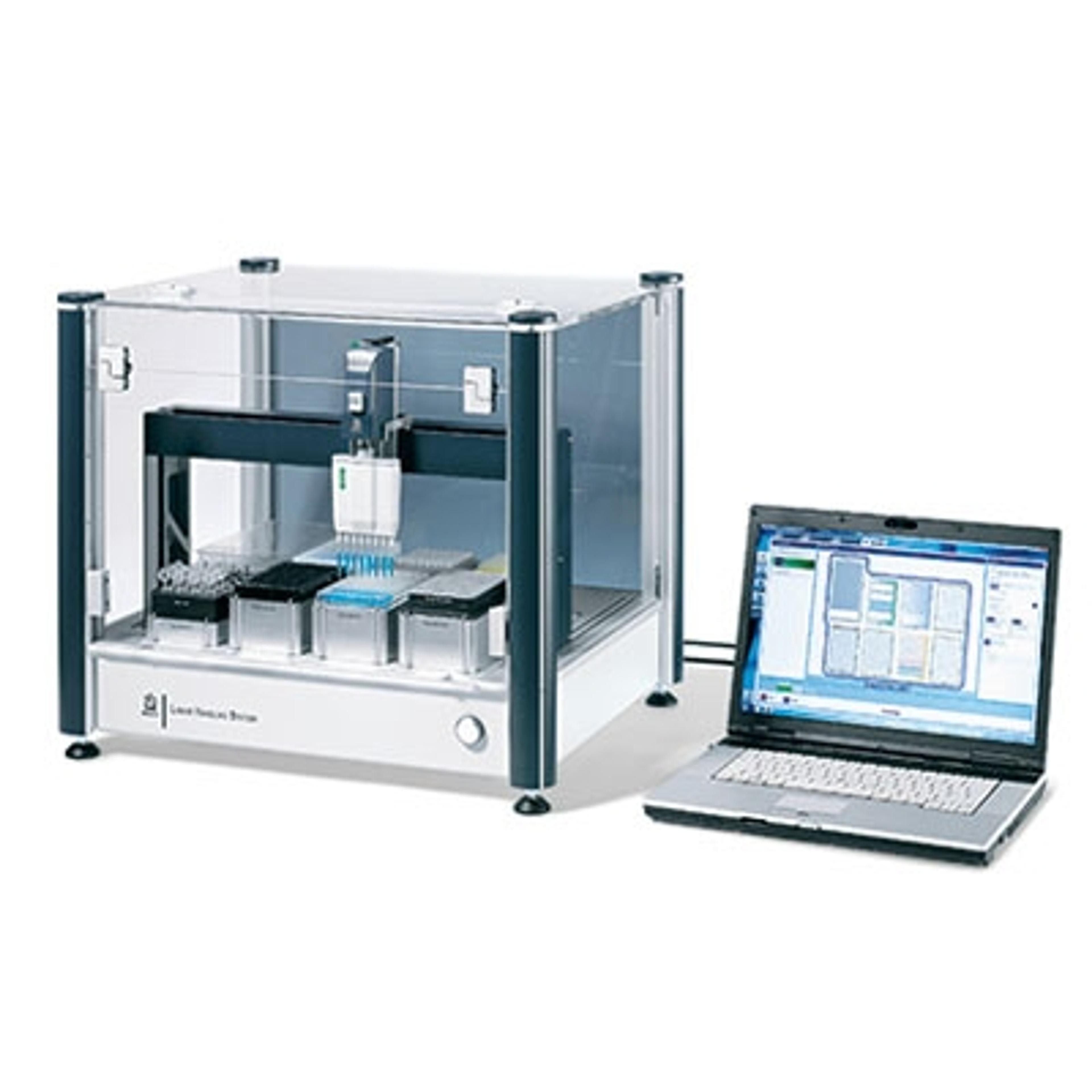
Liquid Handling Station
BRANDTECH® Scientific, Inc.The BRAND Liquid Handling Station pipetting robot handles routine tasks at high speed and with the highest precision. The LHS closes the gap between electronic pipettes and highly complex, expensive pipetting robots. It is a quiet and compact instrument with a unique front door allowing it be set up in tight quarters. The instrument has 7 working positions and 5 available liquid ends with single channel volumes up to 1000uL and multichannel volumes up to 300uL. The system has the flexibility to move liquids between reservoirs, tubes, and plates. Adapters and racks bring the consumables to an even height, reducing unnecessary vertical movements to save time during pipetting. Applications: Preparation of ‘assay ready’ plates PCR, qPCR, and ELISA Set-up Serial dilutions Microplate Replication and Reformatting DNA Normalization Cherry Picking Cell Cultures General Liquid Transfers