
The Connected Laboratory and the Role of IoT – Internet of Things
Gilson Connect and SciNote aim to overcome the lack of reproducibility across scientific articles
8 Feb 2019
Industry news
An alarming study showed that out of 238 published scientific articles, barely 46% could be reproduced. News also reported on the replication efforts which were successful for only two of five cancer papers. Furthermore, more than 70% of researchers have failed to reproduce a colleague’s experiment and more than 50% have failed to reproduce their own.
Over 35% of irreproducibility has been attributed to manual errors in the performance of experiments and data reporting.
“Facing the seriousness of today’s reproducibility crisis, we see that it is becoming absolutely crucial that observations made in the lab get associated with electronic records as soon as possible, preferably in real time”, explains Klemen Zupancic, CEO of SciNote LLC.
Using the concept of Internet of Things, SciNote LLC and Gilson Inc. combined strong scientific and liquid handling background with the latest software development expertise to connect the data flow while doing experiments in the lab, in a traceable manner.
Gilson Connect devices can record and track pipette performance in real-time and transmit data to SciNote, a top-rated platform for researchers in academia or industry, who need electronic lab notebook, inventory management and project management functionalities.
Gilson Connect includes the company’s first Internet of Things (IoT) products: TRACKMAN® Connected, an all-in-one kit that includes a tablet with the PipettePilot™ tracker application, and PIPETMAN® M Connected, a Bluetooth-enabled smart electronic pipette. Researchers have the ability to check their pipetting data to detect errors and help improve traceability and experiment reproducibility.
By partnering with SciNote, the Gilson Connect platform makes it possible for researchers to store data and consolidate records in a secure location that is easily accessible and sharable, effectively eliminating lost data, a significant contributor to the irreproducibility crisis.
“Technology is already playing an important part in the future of science by providing scientists with useful and convenient software. Aside from that, we also have the responsibility to raise awareness about the problems related to data reproducibility and time management in labs, while providing solutions available to the global scientific community”, concludes Zupancic.
Related products
Request Quote for All Products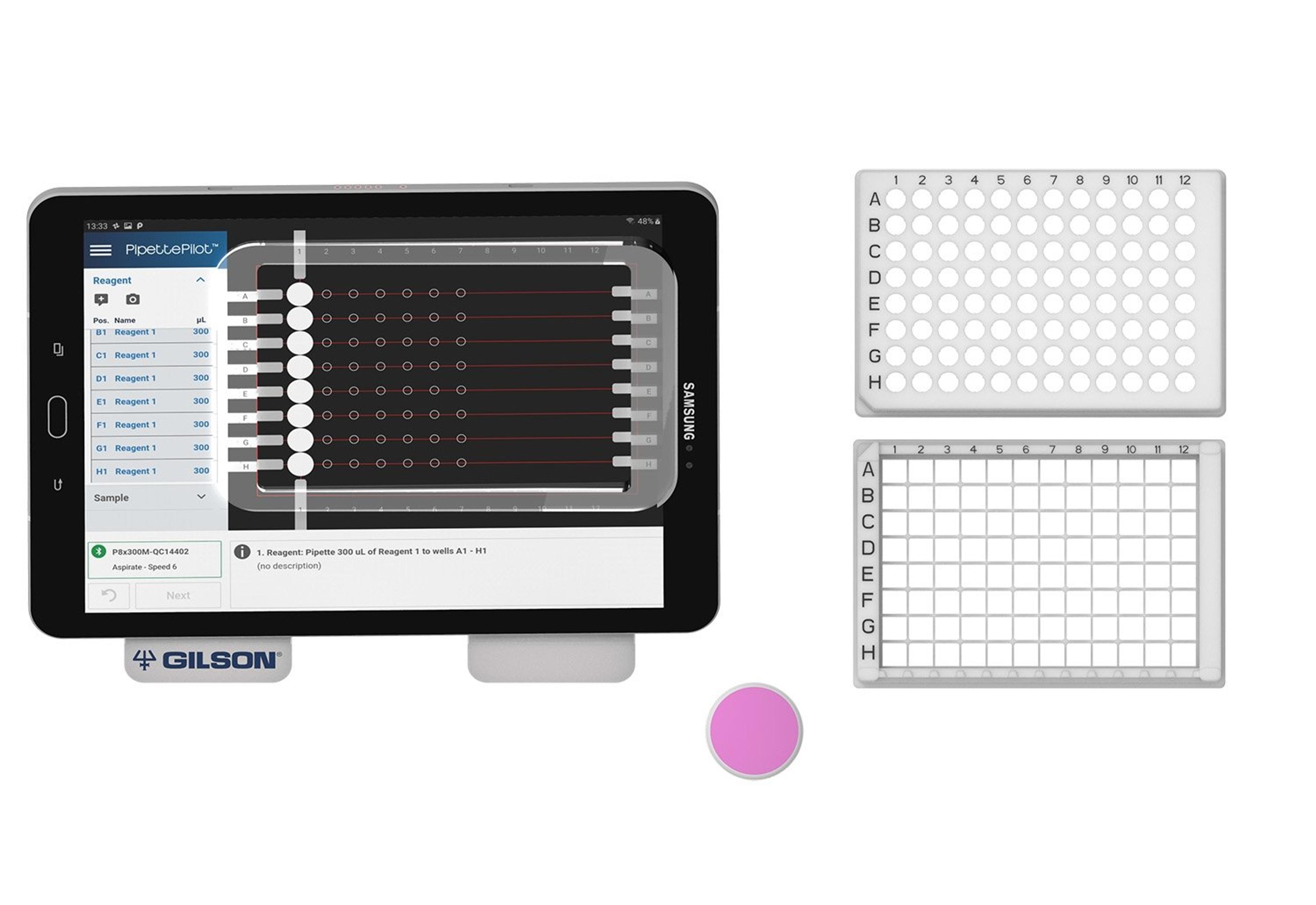

PIPETMAN® M Connected
Gilson, Inc.Connected electronic pipettes: pipette smarter, report faster, confidently