Teledyne FLIR launches new 16 MP Blackfly S that breaks through GigE barriers

28 Jul 2021

Cameron Smith-Craig
Cameron Smith-Craig
Pharma and Applied Sciences Editor

Product news

Teledyne FLIR has introduced the latest addition to its Blackfly S GigE camera lineup – the BFS-PGE-161S7M and BFSPGE -161S7C promise to deliver a high-resolution sensor in a compact form factor, superior price to performance ratio and exceptional low-light performance.

The 16 MP Sony IMX542 (Pregius S series) features back-illuminated sensor pixel (BSI) technology, significantly improved quantum efficiency (QE), reduced pixel sizes, and enables the use of less expensive and more compact optics. The new Blackfly S cameras also take advantage of a new Lossless Compression feature, delivering up to 60% higher frame rates without compromising on image quality.

This value-driven combination enables further cost reductions by replacing several low-resolution cameras with a single unit, delivering higher frame rates, lower bandwidth utilization and lower lighting system requirements. The new Blackfly S global shutter cameras with BSI technology are suitable for a range of applications – from PCB and semiconductor inspections to metrology and scientific research among several others. Read below for more detailed specs:

  • 16 MP global shutter enables precise measurement of large objects
  • Lossless Compression enables 60% higher FPS (from 7FPS to 12 FPS @ full resolution)
  • High QE and low noise yield a low Absolute Sensitivity Threshold (4.1 photon AST)
  • Superior quantum efficiency (69% QE @ 525nm)
  • Excellent low-light performance (2.34 e- read noise)
  • BSI pixels enable less expensive, more compact optics
  • High sensitivity (High QE and Low AST) reduces lighting system requirements
  • Replace multiple low-resolution cameras with this single high-resolution camera

Want the latest science news straight to your inbox? Become a SelectScience member for free today>>

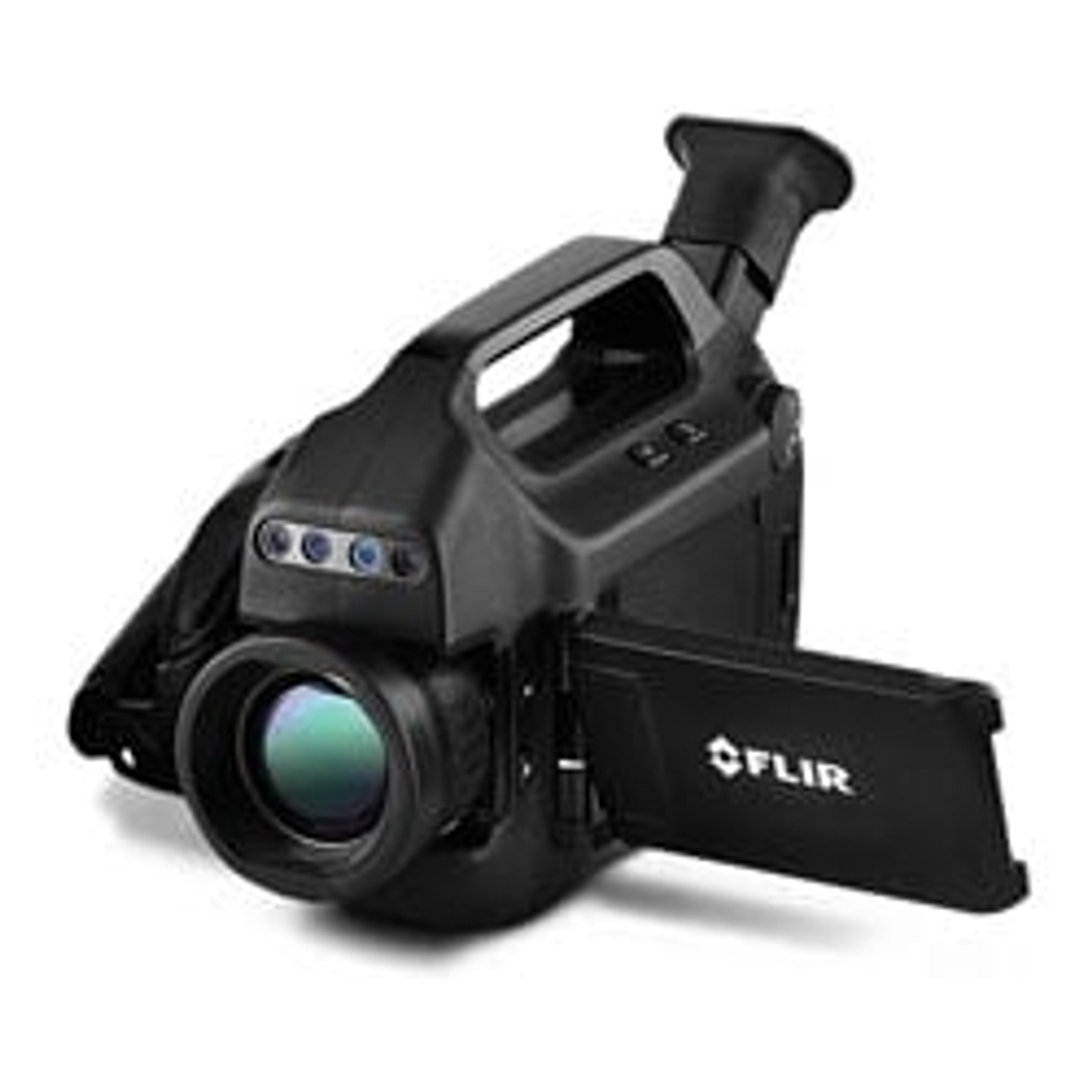
FLIR GF620

FLIR Systems, Inc.

The FLIR GF620 is the first high-resolution, handheld camera from FLIR to detect methane and other volatile organic compound (VOC) emissions. With its ground-breaking 640 x 480 resolution IR detector, inspectors can check thousands of components and safely scan for gases from greater distances. It's also the first FLIR OGI camera to offer Quantification mode (Q-Mode) for streamlined set-up of the optional QL320 gas quantification system.
(0)

Links

Tags

BiosensorsBiosensors are devices used to detect an analyte using biological molecules specific to the analyte coupled to a detector. Biosensor instruments may be photometric, typically using surface plasma resonance (SPR), electrochemical or QCM (quartz crystal microbalance) biosensors. Biosensors should be selective, portable, robust and sensitive and have a fast response time. Systems may be manual or automated and usually have associated software.In Vivo Imaging Systems<i>In vivo</i> imaging systems, including pre-clinical imaging systems and medical imaging systems are used to non-invasively visualize and capture images of live animals and plants. Monitor the natural processes or diseases of your subjects using small-animal pre-clinical imaging systems, including single photon positron emission tomography (SPECT), positron emission tomography (PET), computed tomography (micro-CT), magnetic resonance imaging (MRI), X-ray radiography, ultrasound, fluorescence and bioluminescence imagers. Multimodal systems and software solutions are also available for correlative analysis of organ, tissue, cell, or molecular-level processes. Find the best in vivo imaging products in our peer-reviewed product directory: compare products, check customer reviews and receive pricing direct from manufacturers.Cell ImagingCell imaging can be achieved using a number of techniques including confocal microscopy, transmission electron microscopy, atomic force microscopy, and light sheet microscopy.ImagingImaging techniques are essential for obtaining visual representations of samples to understand structures, processes, and function in biological, chemical, and physical research. These tools range from traditional light microscopy to advanced imaging modalities like MRI and electron microscopy, providing researchers with valuable data for diagnostics, drug discovery, and material analysis. Explore imaging solutions in our peer-reviewed product directory to compare products, check reviews, and get pricing directly from manufacturers.3D Imaging3D imaging technologies allow for the visualization and analysis of three-dimensional structures at high resolution. These systems are used in fields like molecular biology, material science, and medical diagnostics. 3D imaging can be applied to visualize cells, tissues, and organs, providing valuable insights into their structure and function. Browse our peer-reviewed product directory to find the best 3D imaging solutions, compare products, check reviews, and get pricing directly from manufacturers.Digital ImagingDigital imaging is a technique that captures images of biological and chemical samples in high resolution, often using advanced cameras and sensors. This technology is crucial in microscopy, diagnostics, and quality control. Explore digital imaging systems in our peer-reviewed product directory; compare products, check reviews, and get pricing directly from manufacturers.
Teledyne FLIR launches new 16 MP Blackfly S that breaks through GigE barriers