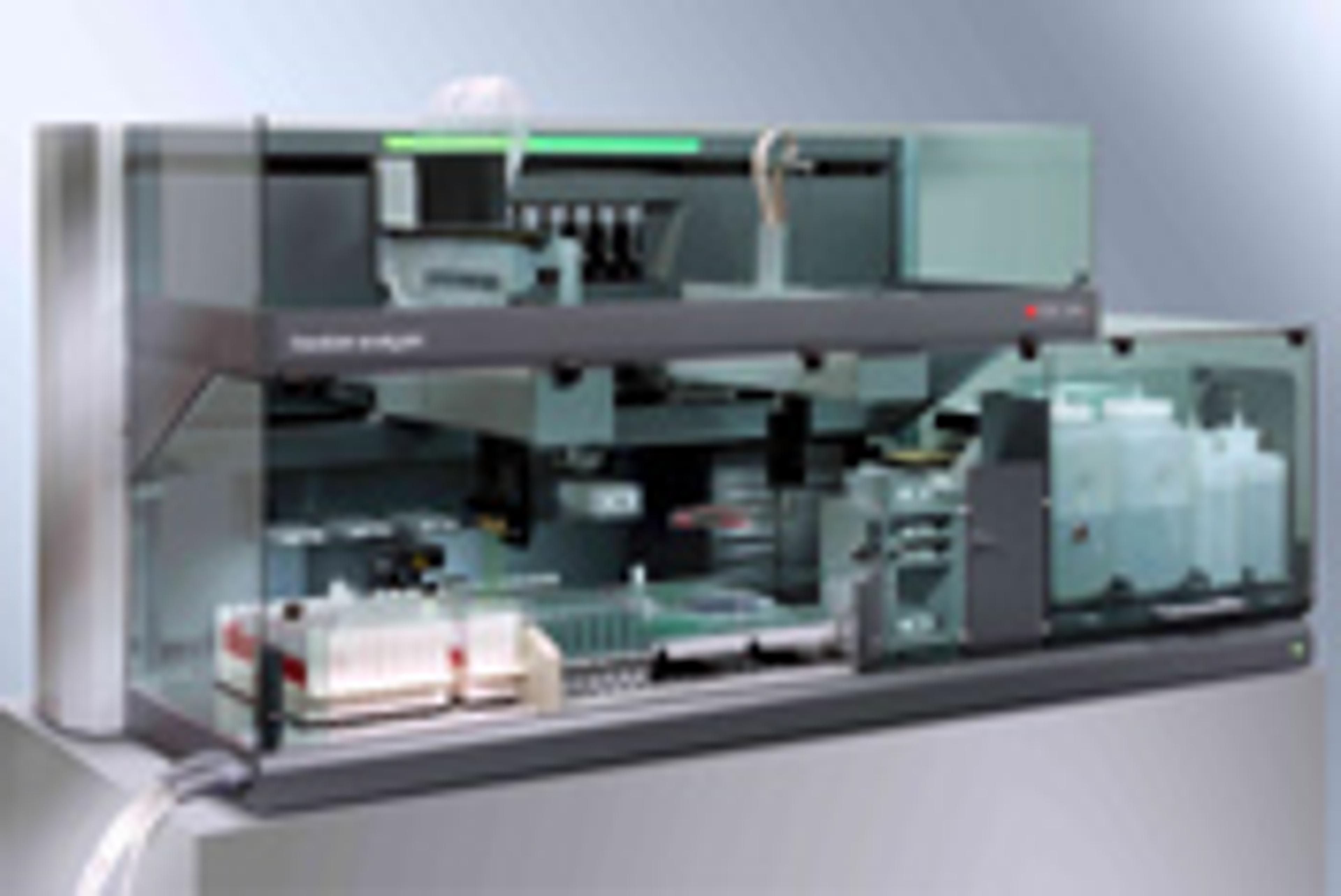
Tecan's Freedom EVOlyzer becomes SFDA-compliant in China

16 Jan 2007

Product news

Tecan has successfully registered its automated ELISA analyzer, the Freedom EVOlyzer®, with the State Food and Drug Administration (SFDA) in China.

New Chinese National Standards for medical electrical equipment were introduced in May 2006 and the Freedom EVOlyzer is one of the first clinical devices to become SFDA-compliant, meaning that Tecan is leading the field in its rapid implementation of the new regulations.

Seven Freedom EVOlyzer workstations were immediately ordered for customers in China following the registration. The instrument's high speed, flexibility and walkaway features are proving to be particularly important for hospitals and blood bank laboratories, and the automated ELISA platform is currently unrivaled in China.

Mark Wang, Chief Representative of Tecan China, explained: "Tecan is well equipped to serve customers in China, with a permanent office in Beijing established in 2005, as well as a strong distribution network and nine highly trained application specialists to support the customer base."

The Freedom EVOlyzer has been designed to comply with the 98/79/EC directive on in vitro diagnostic medical devices. The workstation already has plenty of satisfied customers in Europe, offering a wide range of automation options for all typical ELISA steps, including sample distribution, reagent pipetting, incubation, washing, reading and data generation. The new Freedom EVOlyzer software version 1.5, released in July 2006, includes improved error handling, more flexible scheduling and 20 per cent faster pipetting capabilities.

Freedom EVOlyzer®

Tecan

The Freedom EVOlyzer is a dedicated sample-to-result solution for microplate-based ELISAs.

(0)

Links

Tags

ELISAEnzyme-linked immunosorbent assays (ELISA), also known as enzyme immunoassays (EIA), are used for the detection and quantification of proteins, peptides and antibodies in a sample. ELISA often comes in kit format, with pre-selected antibody pairs to detect specific proteins or biomarkers of diseases such as diabetes and obesity, or cardiovascular and neurological disorders. Detection is made possible with chemiluminescent, fluorescent or colorimetric substrates and detection instruments such as microplate / ELISA readers. Other kits available include: Enzyme-linked immunospot (ELISPOT) assays for the quantification of protein-producing cells and chemiluminescent immunoassays (CLIA) kits. Find the best ELISA kits and products in our peer-reviewed product directory: compare products, check customer reviews and receive pricing direct from manufacturers.Microplate Readers / DetectorsMicroplate readers are used to automate the detection and analysis of labeled or label-free components in microplates during assays or live-cell monitoring. Microplate readers are generally distinguished by their mode of detection. Types include absorbance, luminescence, fluorescence intensity, fluorescence polarization, TRF / FRET and multimode microplate readers. Microplate readers deliver a high throughput of samples by reading multiple wells simultaneously, with the 96-well format the most commonly used. As a result, microplate readers are often used in the drug discovery, bioassays, research and pharmaceutical industries for screening applications. Microplate loading can also be automated, with robotic microplate stackers to increase throughput. Find the best microplate readers in our peer-reviewed product directory: compare products, check customer reviews and receive pricing direct from manufacturers.Clinical TrialsClinical Trials, an essential part of drug discovery process, assess the safety and effectiveness of a new medication or device in the pharmaceutical industry. Clinical Trials are a phased process (Phase 0, Phase I, Phase II, Phase III and Phase IV) which begins after initial preclinical testing.