Tecan and ForteBio Automate Label-Free Assays for Bioprocess and Drug Discovery Applications

4 Mar 2010
Sarah Sarah
Marketing / Sales

Product news

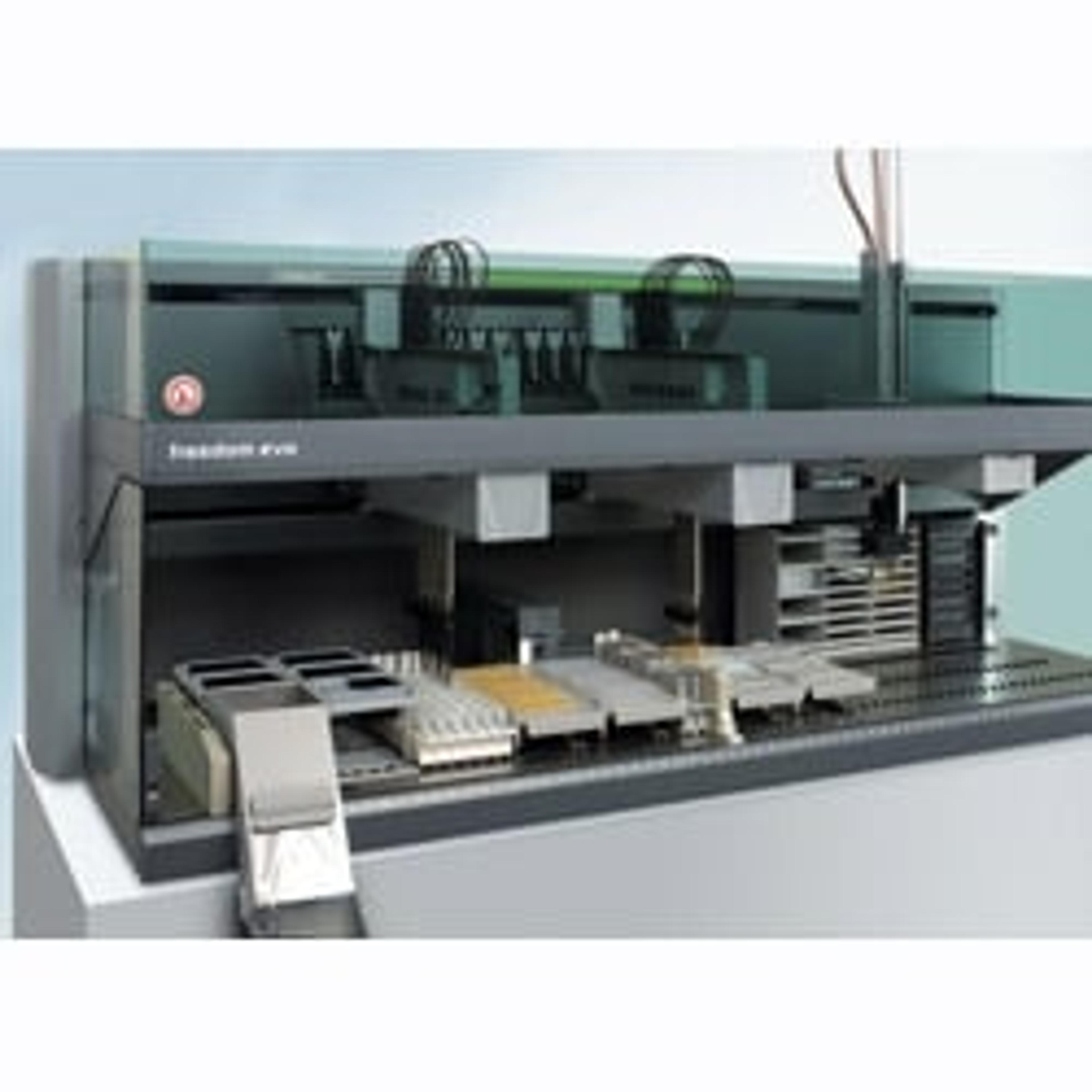
Tecan has become ForteBio’s preferred automation partner for real-time, label-free assays to support bioprocess and drug discovery workflows. The two companies have worked together to integrate the new ForteBio Octet® 384 platform, consisting of the Octet RED384 and the Octet QK384, on Tecan’s Freedom EVO® liquid handling workstation. The result is a robust, off-the-shelf integration that offers increased walkaway time and optional liquid handling for assay plate set-up.

Tecan has designed a Freedom EVO deck extension plate to mount the Octet 384 instrument securely on the right hand side of the workstation. A robotic manipulator arm performs automated transport and handling of plates and sensor trays, and an 8-channel liquid handling arm with fixed or disposable tips is used to prepare assay plates. A MultiChannel Arm™ (MCA), with a 384- or 96-channel pipetting head, can also be specified for higher throughput applications. Kevin Moore, Tecan’s Director of Market and Application Management for BioPharma, said: “We are very pleased to be working with ForteBio to bring an automation solution to customers in this fast growing area of label-free detection.”

ForteBio’s Octet platform enables reliable high throughput measurements for protein-protein, protein-peptide, protein-small molecule and fragment screening assays, using the innovative Dip and Read™ biosensors. The Octet systems use proprietary biolayer interferometry (BLI) to provide real-time, label-free analysis of biomolecular interactions. “We are delighted to partner with Tecan, enabling Octet customers to process batches of assay plates and automate sample handling for Dip and Read biosensor assays, allowing greater throughput and increased efficiency,” concluded Christopher Silva, ForteBio’s Vice President of Marketing.

Tecan Freedom EVO® Workstation

Tecan

The Freedom EVO platform offers fully automated liquid handling and robotics for life sciences and diagnostics. This flexible system offers virtually unlimited options, which can be tailored to provide individual solutions.

(67)

Links

Tags

High-Throughput ScreeningHigh-throughput screening (HTS) is an automated drug discovery technique for identification of active compounds against a compound library. Use HTS readers and integrated assay preparation / analysis workstations to screen your compounds. Identify active compounds against various HTS libraries, including membranes, proteins and peptides and HTS cell lines. Find the best high-throughput screening products in our peer-reviewed product directory: compare products, check customer reviews and receive pricing direct from manufacturers.Assay AssemblyAssay Assembly is technique used in drug discovery to develop assays to test the cytotoxicity, genotoxicity, or other activities of a compound on a cell. Assay assembly requires chip assembly, a delivery system and a detection and analysis method. Beneficial features of assay kits or automated systems include high-throughput, high speed and sensitivity and low signal to noise ratio.Microarray AnalysisMicroarrays, also known as biochips, are used for the detection and analysis of multiple genes, proteins, antibodies, or biomarkers on a single microchip. This can reveal information on protein or gene expression, single nucleotide polymorphism (SNP), copy number variation (CNV), epigenetics and patient health in clinical diagnostic tests. Discover a range of microarray scanners and prefabricated antibody, protein, RNA and DNA microarrays for your analysis or consider creating your own custom microarrays with a microarray printer. Find the best microarray products in our peer-reviewed product directory: compare products, check customer reviews and receive pricing direct from manufacturers.High-Content ScreeningHigh-content screening (HCS), also known as high-content analysis (HCA), is a high-throughput technique used in drug discovery to identify substances that alter the phenotype of cells. HCS uses fluorescent microscopic imaging and automated image analysis to investigate cellular events such as apoptosis, cell viability, GPCR activation, oxide production, neurite outgrowth, and cell signaling. Find the best fluorescent labeling reagents, cellular assays, and high-content imaging systems in our peer-reviewed product directory: compare products, check customer reviews and receive pricing direct from manufacturers.Automated Liquid HandlingAutomated liquid handling equipment is used to mix, dilute and dispense allotted volumes of liquid into microplates and other vessels automatically. The robotic, liquid handling arms can dispense from single channel to 3456 multichannel as well as operate nanoliter dispensing, enabling high throughput of samples. Find the best automated liquid handlers in our peer-reviewed product directory: compare products, check customer reviews and receive pricing direct from manufacturers.
Tecan and ForteBio Automate Label-Free Assays for Bioprocess and Drug Discovery Applications