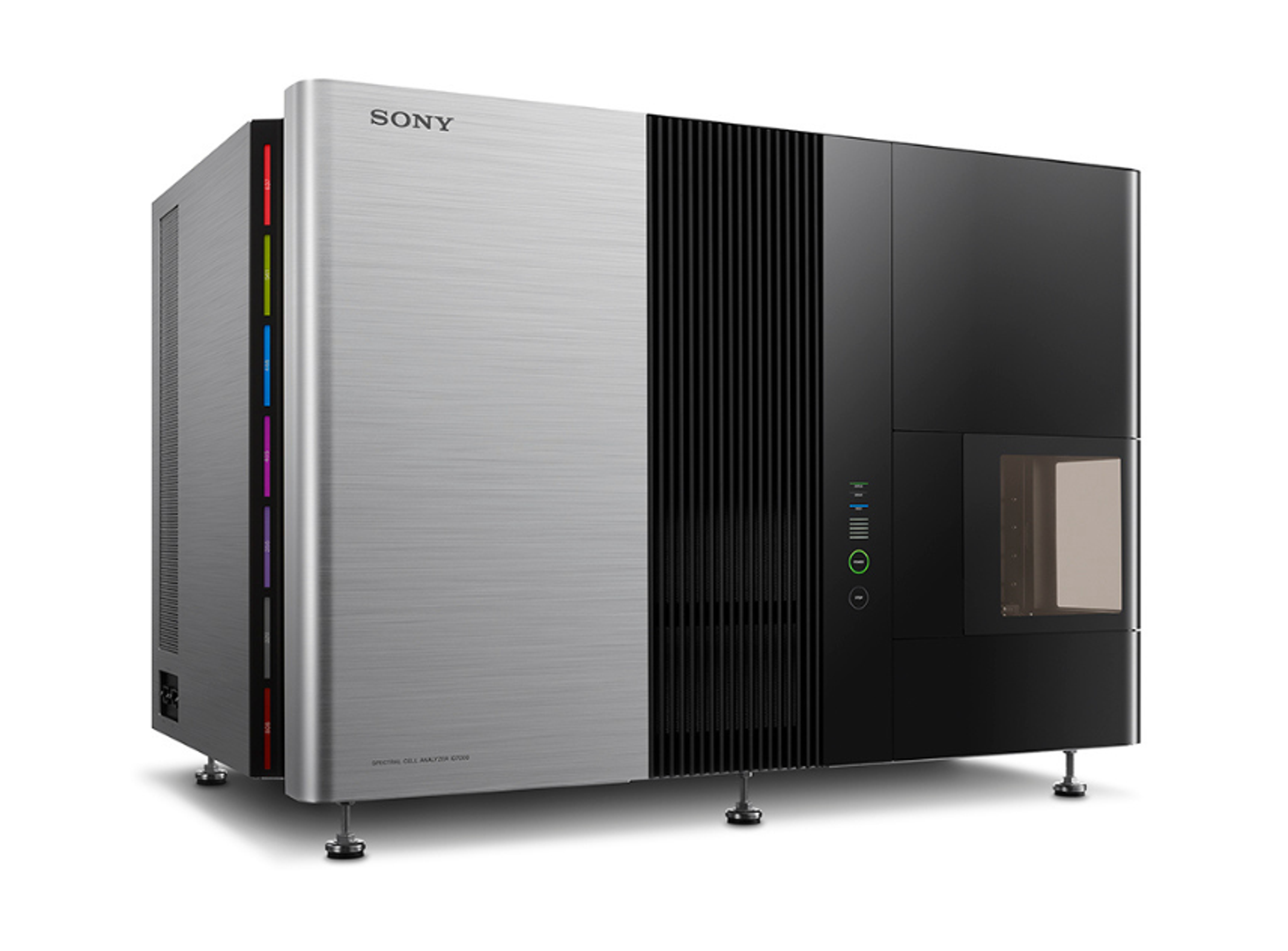
Taking multicolor flow cytometry to the next level with spectral cell analysis

Join this webinar for an insight on the fundamentals of advanced spectral cell analysis using the new ID7000™ system

29 Mar 2020

Diane Li
Assistant Editor

Expert insights

Karla Paulson, Abbot Informatics
Jeff Clapper, Senior Field Applications Scientist at Sony Biotechnology

In this webinar, hear from Jeff Clapper, Senior Field Applications Scientist at Sony Biotechnology, to learn all about spectral cell analysis fundamentals, and find out how parametric data can be derived from spectral data via spectral unmixing. The key aspects of spectral cell analysis discussed will be centered on the new ID7000™ spectral cell analyzer from Sony.

In this webinar, Clapper will also outline the fundamentals of generating reference spectra and its application within spectral unmixing. He will summarize the benefits of incorporating an autofluorescence reference spectrum during unmixing and highlight the value of employing highly standardized measurements available in the Sony spectral systems, in your research.

Register Now

In this webinar, you will cover:

  • The fundamentals of acquiring and analyzing spectral data
  • How parametric data is derived from spectral data via spectral unmixing
  • How reference spectra including autofluorescence can be generated and applied for spectral unmixing

Who should attend?

  • Researchers who want to take multicolor flow cytometry to the next level with spectral cell analysis

The live webinar and Q&A session will take place on Thursday, April 9, at:

  • 15:00 BST
  • 10:00 EDT
  • 07:00 PDT
  • 16:00 CEST

Register to watch the full webinar>>

SelectScience runs 3-4 webinars a month across various scientific topics, discover more of our upcoming webinars>>

Links

Tags

Cell Adhesion AssaysCell adhesion assays are used to quantitate attachment and analyze the molecular mechanisms for extracellular matrix adhesion, cell migration and sensitivity to inhibitors. Find the best cell adhesion assay equipment in our peer-reviewed product directory: compare products, check customer reviews and receive pricing direct from manufacturers.Cell / Tissue CultureCell culture or tissue culture is used to study the biology of cells or tissues and to isolate cellular products in an environment which can be manipulated and well defined. Accurately control your culture environment with bioreactors or culture incubators, bind your cells to a surface or together with an extracellular matrix. Distinguish cell types with differential media or proliferate cells with certain characteristics using selective media. Enrich your media with supplements such as growth factors, sera and vitamins. Find the best cell and tissue culture products, kits and equipment in our peer-reviewed product directory: compare products, check customer reviews and receive pricing direct from manufacturers.Flow Cytometry / Cell CountingFlow cytometers are used to count, sort and examine multiple characteristics of cells. Other cell analysis equipment includes image cytometers, cell counters, fluorescence-activated cell sorters (FACS), magnetic-activated cell sorters (MACS), and a range of flow cytometry assay kits. Flow cytometers can reveal information on cell viability, cell proliferation, apoptosis and cell cycle progression, as well as identify cell populations and intracellular or cell-surface molecules. Additionally, some flow cytometers, known as FACS, have an additional sorting function after analysis. Cell counters and image cytometers count live and dead cell populations and can also conduct cell proliferation assays. Find the best flow cytometers, cell counters and cell sorters in our peer-reviewed product directory: compare products, check customer reviews and receive pricing direct from manufacturers.Cellular PathologyCellular Pathology deals with the microscopic analysis of tissue samples and cells. Sample preparation and processing includes fixation, staining, sectioning and slide mounting, using equipment such microtomes and cryostats. In choosing immunohistochemistry and immunocytochemistry kits, consider chromogens, staining method, antibodies, microscopes and imaging.Cell-Based AssaysCell-based assays are used to monitor the presence, quantity and activities of a desired cellular analyte including drug molecules or biomarkers. This can reveal information on cell health (apoptosis, cytotoxicity, viability and proliferation assays), cell metabolism, cell migration and cell signaling mechanisms. Find the best cell-based assay products, kits and equipment with our peer reviewed product directory: compare products, check customer reviews and receiving pricing direct from manufacturers.FluorescenceThe emission of fluorescence occurs when a photon of energy is supplied to a fluorescent chemical compound by an external source, causing it to become excited. Fluorescence can be detected and measured for different purposes using microplate readers, fluorescence microscopes, fluorescence scanners, and flow cytometers.Fluorescence MicroscopyFluorescence microscopy has become an essential tool in biology, as well as in materials science. The application of many fluorochromes has made it possible to identify cells and sub-microscopic cellular components with a high degree of specificity. Using multiple fluorescence labels, different probes can simultaneously identify several target molecules.Cell AnalysisThe analysis of cells allows researchers to understand the factors which contribute to cell health and function. These influencing processes can then be predicted and altered, leading to the development of medication and disease treatments.Single Cell AnalysisSingle-cell analysis involves studying individual cells to gain insights into their behavior, gene expression, and function. This approach is valuable in cancer research, stem cell biology, and immunology. Explore single-cell analysis products in our peer-reviewed product directory; compare products, check reviews, and get pricing directly from manufacturers.Spectral Scanning