Synbiosis Introduces aCOLyte 3, A New Affordable Automated Colony Counter for Delivering Accurate Results Up to Ten Times Faster than Manual Counting

14 May 2013

Product news

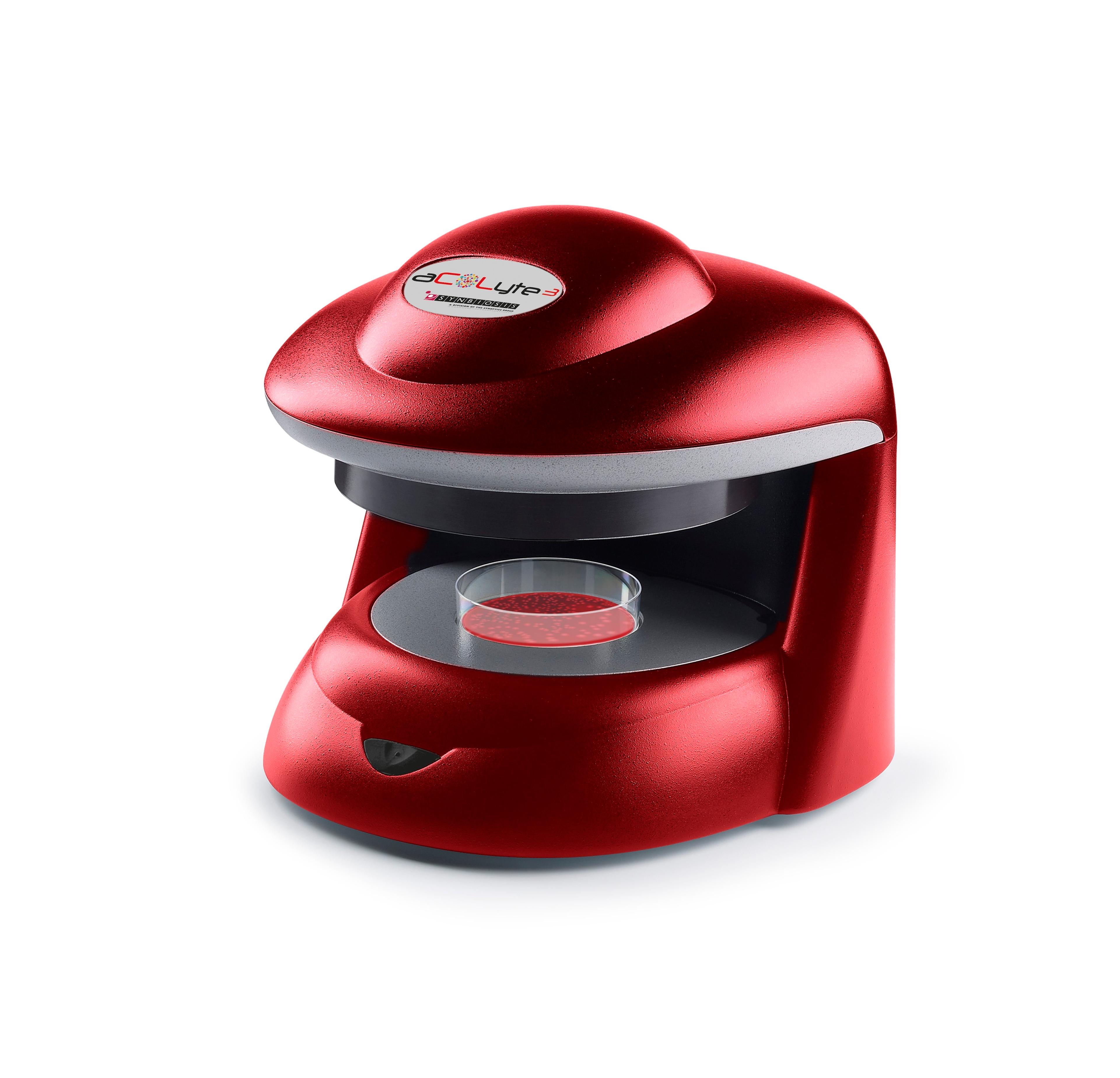
Synbiosis, a world-leading manufacturer of automated microbiological systems, today introduced its aCOLyte 3 cost-effective colony counting system, which is ideal for microbiologists that need to significantly increase their throughput, as well as improve count accuracy.

The new aCOLyte 3 is a low-cost automated colony counter, designed for a rapid count of pour, spread and spiral plates. The system can read plates of up to 90mm in seconds, generating precise plate count results up to ten times faster than manual counts. The numerical count data and plate images can be directly transferred to Excel or Open office to avoid errors in data transfer, ensuring accurate GLP compliant result reporting and archiving every time.

The aCOLyte 3 provides full color image display and comes complete with software based on Synbiosis’ powerful ProtoCOL 3 software (independently validated as a highly accurate colony counting package). The system can be supplied with a computer or scientists can utilize their own laptop or desktop PC and simply connect the aCOLyte 3 via a USB port.

The aCOLyte 3 is lit by white LEDs mounted above and below the plate, enabling accurate detection of colonies as small as 0.3 mm. For laboratories where strong ambient light could interfere, there is also the option to have a detachable screen fitted to prevent any reflection or glare affecting the count.

Martin Smith of Synbiosis stated: “Microbiologists often have to count hundreds of colonies every day. This can be time consuming, tiring and error prone. What they need is simple to set up, yet inexpensive automation for detecting difficult to see colonies, so they can put the plates in a device and quickly obtain accurate counts.”

Martin added: “Our design team has listened. After a year of development work, we are confident that our resulting aCOLyte 3 system is the best value technology available and will significantly increase microbial testing throughput in any food, environmental or clinical laboratory which chooses an aCOLyte 3 colony counter.”
Links

Tags

MicrobiologyMicrobiology is the study of microorganisms including protists, prokaryotes, fungi, and, often, viruses. Microorganisms are a useful research tool as genetic vectors and, in immunology, for antibiotic susceptibility testing, cellular biology and genetics. Microorganisms commonly grow readily in incubators with microbial culture media; this can contain chromogenic supplements to differentiate between cell lines. Estimate your culture’s density of microorganisms with colony counters, or screen and select colonies for desirable clones with automated colony pickers. Additionally, equipment is available to monitor environments for the presence of microbes and identify with microbial identification instruments. Find the best microbiology products in our peer-reviewed product directory: compare products, check customer reviews and receive pricing direct from manufacturers.Flow Cytometry / Cell CountingFlow cytometers are used to count, sort and examine multiple characteristics of cells. Other cell analysis equipment includes image cytometers, cell counters, fluorescence-activated cell sorters (FACS), magnetic-activated cell sorters (MACS), and a range of flow cytometry assay kits. Flow cytometers can reveal information on cell viability, cell proliferation, apoptosis and cell cycle progression, as well as identify cell populations and intracellular or cell-surface molecules. Additionally, some flow cytometers, known as FACS, have an additional sorting function after analysis. Cell counters and image cytometers count live and dead cell populations and can also conduct cell proliferation assays. Find the best flow cytometers, cell counters and cell sorters in our peer-reviewed product directory: compare products, check customer reviews and receive pricing direct from manufacturers.Clinical MicrobiologyMicrobiology is the study of microorganisms including protists, prokaryotes, fungi, and, often, viruses. Microorganisms are a useful research tool as genetic vectors and, in immunology, for antibiotic susceptibility testing, cellular biology and genetics. Microorganisms commonly grow readily in incubators with microbial culture media; this can contain chromogenic supplements to differentiate between cell lines. Estimate your culture’s density of microorganisms with colony counters, or screen and select colonies for desirable clones with automated colony pickers. Additionally, equipment is available to monitor environments for the presence of microbes and identify with microbial identification instruments. Find the best microbiology products in our peer-reviewed product directory: compare products, check customer reviews and receive pricing direct from manufacturers.Colony Counting