Straightforward determination of carbohydrates with anion exchange chromatography and electrochemical detection
10 Sept 2019Product news
Carbohydrates are among the most widespread organic compounds in the living nature. As monosaccharides and di-saccharides, they primarily serve the direct supply of energy in the organism. In the form of oligomers or polymers, they are used more for storage of energy or information, or take over tasks as a structural element in cell walls, primarily of plants. Because of their great importance in the field of ecological, biological, clinical and nutritional research, the determination of sugars and other carbohydrates is of great interest. There are a number of different methods of determination which are often costly in terms of equipment, such as HPLC-MS or complicated to carry out such as GC with derivatization.
Why isn’t standard HPLC sufficient for sensitive sugar analysis?
The separation of the sugars is not the biggest challenge. It works very well on an HPLC system using high-performance anion exchange chromatography (HPAEC), because slight differences in the pKa values of the carbohydrate hydroxyl groups of the saccharides cause differences in retention on an anion exchange resin with strongly alkaline eluents.
The challenge is detection. UV or fluorescence detection, which is widely used in liquid chromatography, generally can’t be used for sugars because of a lack of chromophores. Refractive index detection is very easy to use, but not very sensitive and thus can’t be used for the determination of low sugar concentrations. With a derivatization step that forms a chromophore, the spectroscopic methods can indeed be used for sugar analysis, but this requires additional equipment, chemicals and work steps.
An alternative approach makes use of the fact that carbohydrates can react electrochemically. As a result, they can be detected very sensitively and selectively by amperometry.
Amperometry is one of the most sensitive detection methods in quantitative analysis. In this case, an electrolysis current is measured at a working electrode under a constant electrochemical potential. The electrolysis current is proportional to the concentration of the oxidized / reduced analyte. Classical amperometry is a discontinuous process: measurement / titration, emptying the reactor, cleaning, regenerating, next measurement ... and therefore not applicable with HPLC.
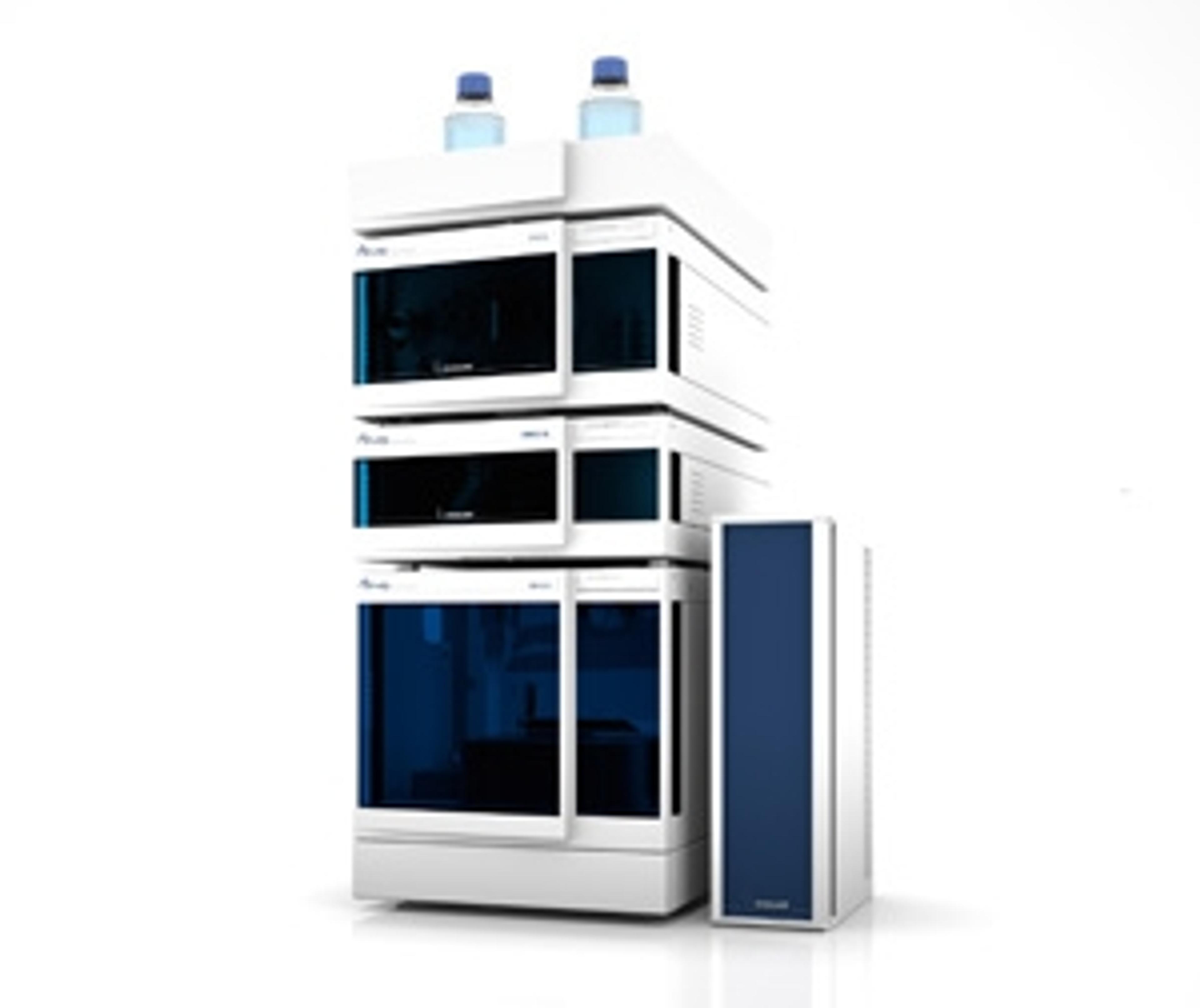
Pulsed amperometric detection (PAD) is used in the KNAUER sugar analysis chromatography system, a variant that enables rapid measurement in a small cell, including regeneration of the electrode, which is required in sugar detection. A cycle of measurement, desorption and regeneration of the electrode takes only half a second and is constantly repeated during the analysis. Thus, as with other flow detectors, a chromatogram can be recorded. The process does not require additional chemicals except for the freshly prepared aqueous basic eluent.
Application example: Sensitive analysis of monosaccharides and uronic acids derived from wood.
In the research for renewable raw materials and fuels, which should not compete with food production, sugars from wood and plant waste play an important role. In order to monitor the processes or to determine the quality of the products, a sensitive and reliable analysis is necessary.
In the present example, a mixture of seven monosaccharides and two uronic acids is baseline-separated using high-performance anion exchange chromatography (HPAEC) with pulsed amperometric detection (PAD) and determined with a very high signal-to-noise ratio (S/N).
The easy-to-use method with different NaOH concentrations is suitable for simple and reproducible analysis even at low analyte concentrations. In addition to research on biofuels, the studied sugars are also part of numerous processes in natural and food applications. Thus, this application is suitable for different areas in which carbohydrates must be specifically separated and analyzed.
For more science news, straight to your inbox, join SelectScience today >>